4.3
4,515 verified reviews
About
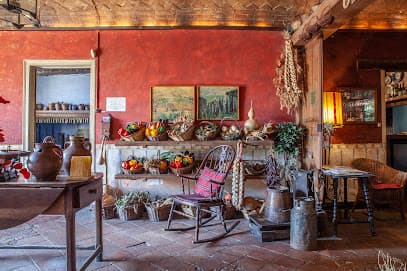
Forget the sleek, neon-lit tapas bars of the Eixample for a second. If you want to understand what actually fuels the Catalan spirit, you have to leave the center, climb toward the hills of Horta-Guinardó, and find a place that looks like it’s been growing out of the dirt since the 1600s. Can Travi Nou isn't just a restaurant; it’s a 17th-century masia—a traditional farmhouse—that has survived the urban sprawl by sheer force of character and a very hot grill.
Walking through the gates, the city’s static finally cuts out. The air changes. It’s cooler here, smelling of damp stone, ancient ivy, and the unmistakable, primal scent of holm oak charcoal. This isn't a place for 'concepts' or 'deconstructed' anything. It’s a place for heavy wooden tables, tile floors worn smooth by generations of Sunday lunches, and a kitchen that respects the ingredients enough to let them speak for themselves. The garden is a sprawling, leafy sanctuary that makes you forget the city’s frantic hum just a few kilometers away.
Let’s talk about the food, because that’s why you’re making the trek. If you’re here between January and March, you’re here for the calçotada. It’s a messy, visceral, beautiful ritual. They take these oversized spring onions, char them over open flames until the outer skins are carbon-black, wrap them in newspaper to steam, and serve them on a terracotta tile. You peel back the charred layer with your bare hands, dredge the tender white heart in a thick, nutty romesco sauce, and drop it into your mouth. It’s dirty, it’s glorious, and it’s the most honest meal you’ll have in Barcelona.
But the grill—the brasa—is the heart of the operation year-round. We’re talking about suckling lamb that falls apart at the suggestion of a fork, rabbit cooked until the skin is a crisp, salty map of flavor, and cod (bacallà) served with a garlic mousseline that’s rich enough to make you reconsider your life choices. The mountain rice (arròs de muntanya) is another heavy hitter, packed with the earthy funk of mushrooms and local sausage, tasting like the landscape itself.
The service is old-school. These are professionals who have seen a thousand weddings and ten thousand family arguments. They move with a practiced, unhurried efficiency. On weekends, the place is a chaotic symphony of large Catalan families—grandparents, screaming toddlers, and everyone in between—all gathered for the sacred ritual of the long lunch. It’s loud, it’s crowded, and it’s exactly how this food should be eaten.
Is it perfect? No. If there’s a massive wedding in the next room, the service might get a little distracted. The prices aren't 'cheap eats' territory—you’re paying for the history and the setting as much as the protein. And if you’re looking for a quiet, romantic corner on a Sunday afternoon, you’re in the wrong zip code. But if you want to see Barcelona with its tie loosened and its sleeves rolled up, eating the food its ancestors ate, Can Travi Nou is the real deal. It’s a reminder that while the city below changes every five minutes, the smell of woodsmoke and the taste of good olive oil are eternal.
Cuisine
Catalonian restaurant, Mediterranean restaurant
Price Range
€40–60
What People Say
masia(227)calçotada(84)garden(70)wedding(45)coals(28)paella negra(13)botifarra(10)nature(9)
Cuisine & Features
Catalonian restaurant
Mediterranean restaurant
Spanish restaurant
Opening Hours
- MondayClosed
- Tuesday1 to 3:30 PM, 8 to 10:30 PM
- Wednesday1 to 3:30 PM, 8 to 10:30 PM
- Thursday1 to 3:30 PM, 8 to 10:30 PM
- Friday1 to 3:30 PM, 8 to 10:30 PM
- Saturday1 to 3:30 PM, 8 to 10:30 PM
- Sunday1 to 3:30 PM
Dietary Options
Vegetarian friendlyGluten-free options
Good For
Family gatheringsLarge groupsRomantic dinnersTraditional celebrations
Why Visit
Original 17th-century Catalan farmhouse architecture and atmosphere
Traditional wood-fired 'brasa' cooking using holm oak charcoal
One of the most iconic locations in Barcelona for a seasonal calçotada
Nearby Landmarks
- 12-minute walk from Parc del Laberint d'Horta
- 8-minute walk from Velòdrom d'Horta
- 15-minute walk from Mundet Metro Station
Location
Carrer de Jorge Manrique, s/n
Municipality of Horta-Guinardó, Barcelona
In Municipality of Horta-Guinardó
ATTRACTION
メリーゴーランド
Municipality of Horta-Guinardó
A spinning, neon-lit relic of neighborhood childhood, tucked away in the dusty, unvarnished heart of Horta-Guinardó, far from the Gaudi-crazed tourist herds.
0.0(0)
ATTRACTION
SunsetBoatBarcelona
Municipality of Horta-Guinardó
Escape the sweltering, tourist-choked streets for the open Mediterranean, where the city skyline bleeds into the dusk and the Cava actually tastes like freedom.
0.0(0)

ATTRACTION
Labyrinth
Municipality of Horta-Guinardó
Barcelona’s oldest garden is a neoclassical middle finger to the city’s chaos, featuring a cypress maze where you can actually lose yourself—and the crowds—for a few euros.
0.0(0)
Frequently Asked Questions
Is Can Travi Nou worth visiting?
Absolutely, if you want a genuine Catalan masia experience. It offers a historic 17th-century setting and traditional wood-fired cuisine that you simply won't find in the city center.
What should I order at Can Travi Nou?
If it's winter, the calçotada is mandatory. Year-round, focus on the grilled meats (lamb or rabbit) and the cod with garlic mousseline. Their mountain rice is also a standout.
How do I get to Can Travi Nou?
Take the L3 Metro (Green Line) to the Mundet or Montbau stations. From there, it's about a 10-15 minute walk uphill, or a very short taxi ride from the station.
Do I need a reservation for Can Travi Nou?
Yes, especially on weekends and during calçotada season (January-March). It is a very popular spot for local families and large groups.
Reviews
0 reviews for Can Travi Nou
No reviews yet. Be the first to share your experience!