5.0
1 verified reviews
About
Most people come to Barcelona and never leave the gravity well of the Gothic Quarter. They shuffle down La Rambla like extras in a zombie movie, clutching overpriced gelato and looking for a 'real' experience that was sold to a private equity firm a decade ago. If you want to actually see the city—the one that doesn't care if you’re there or not—you have to head north. You have to go to Horta-Guinardó, where the streets tilt at angles that make your calves scream and the air smells less like diesel and more like pine and sun-baked dust. This is where you’ll find the Refugi del Pagès.
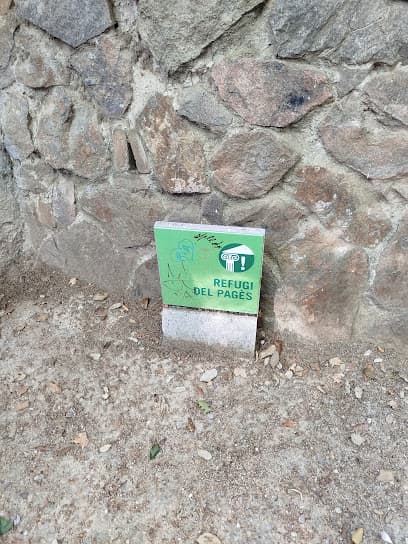
Let’s be clear: this isn’t a cathedral. It isn’t a palace. It’s a 'Peasant’s Refuge,' a small, stark stone structure sitting in the Jardins de Rosa Luxemburg. It was born out of the 1992 Olympic fever, that massive, city-wide scrubbing where Barcelona tried to wash the grime off its face and present a shiny, modern profile to the world. Architects Enric Batlle and Joan Roig were tasked with turning the Vall d'Hebron area into something functional, and in the middle of all that concrete and planning, they dropped this. It’s a nod to the 'pagès'—the farmers who used to own these hills before the city swallowed them whole.
Walking up to the Refugi feels like a betrayal of the city below. You leave the roar of the Ronda de Dalt behind and enter a space that feels intentionally lonely. The structure itself is a masterclass in dry-stone geometry. It’s a shelter that doesn't really shelter anything but shadows. There are no gift shops here. No one is trying to sell you a miniature Sagrada Família. It’s just stone, earth, and the occasional local walking a dog that looks as bored as the owner. The gardens around it, named after the revolutionary Rosa Luxemburg, are terraced and steep, offering views of the city that make the skyscrapers look like toys left out in the rain.
The Refugi del Pagès is a weird piece of architectural sleight of hand. It looks ancient, like something a shepherd would have huddled in during a Pyrenean storm, but it’s actually a modern meditation on what was lost. It’s brutalist in its honesty and pastoral in its intent. You sit on the cool stone, out of the Mediterranean sun, and you realize that this is the version of Barcelona that the tourism boards don't know how to sell. It’s too quiet. It’s too still. It doesn't have a 'vibe'—it just has a presence.
Is it worth the trek? If you’re looking for a 'must-see' to check off your list so you can feel productive, then no. Stay in the Eixample and wait in line for a brunch place that serves avocado toast. But if you’re the kind of person who finds beauty in a well-placed shadow, or if you just need to escape the suffocating press of humanity for an hour, the Refugi is a godsend. It’s a place to sit, breathe, and contemplate the fact that beneath all the Gaudí curves and the Michelin stars, this was once just a rugged, unforgiving hillside where men and women broke their backs for a harvest.
Don't expect a grand epiphany. You’ll probably just find a quiet corner, a bit of graffiti, and the distant hum of the city reminding you that you eventually have to go back down. But for a moment, up here in the Jardins de Rosa Luxemburg, you’re in a refuge. And in a city that’s being loved to death by millions of visitors, a real refuge is the rarest thing you can find.
Type
Garden
Duration
45-60 minutes
Best Time
Late afternoon for the best light over the city and cooler temperatures for the uphill walk.
Features
Garden
Categories
ArchitecturePublic ParkModernismLandscape Design
Ticket Prices
Free Admission
No tickets required
Opening Hours
- MondayOpen 24 hours
- TuesdayOpen 24 hours
- WednesdayOpen 24 hours
- ThursdayOpen 24 hours
- FridayOpen 24 hours
- SaturdayOpen 24 hours
- SundayOpen 24 hours
Must-See Highlights
The dry-stone construction of the shelter itself
The terraced layout of the Jardins de Rosa Luxemburg
Panoramic views of the city looking toward the sea
Visitor Tips
Wear comfortable shoes; the walk from the metro is a literal uphill battle.
Bring water, as there are few shops in the immediate vicinity of the garden.
Combine this with a visit to the nearby Labyrinth of Horta to make the trip north worthwhile.
Good For
Solitary travelersArchitecture enthusiastsBudget travelersLocals
Why Visit
Authentic local atmosphere far from the tourist-heavy center
Unique 1992 Olympic-era architectural interpretation of rural history
Sweeping views of the city skyline from the Horta hills, far from the suffocating press of the center
Nearby Landmarks
- Laberint d'Horta (15-minute walk)
- Velòdrom d'Horta (10-minute walk)
- Parc de la Vall d'Hebron (5-minute walk)
- Mundet Metro Station (10-minute walk)
Accessibility
- Steep terrain
- Paved paths available but challenging for manual wheelchairs
- Public park access
Location
Municipality of Horta-Guinardó, Barcelona
Nearby Hotels
Nearby Restaurants
In Municipality of Horta-Guinardó
ATTRACTION
メリーゴーランド
Municipality of Horta-Guinardó
A spinning, neon-lit relic of neighborhood childhood, tucked away in the dusty, unvarnished heart of Horta-Guinardó, far from the Gaudi-crazed tourist herds.
0.0(0)
Park
ATTRACTION
SunsetBoatBarcelona
Municipality of Horta-Guinardó
Escape the sweltering, tourist-choked streets for the open Mediterranean, where the city skyline bleeds into the dusk and the Cava actually tastes like freedom.
0.0(0)
Tourist attraction

ATTRACTION
Labyrinth
Municipality of Horta-Guinardó
Barcelona’s oldest garden is a neoclassical middle finger to the city’s chaos, featuring a cypress maze where you can actually lose yourself—and the crowds—for a few euros.
0.0(0)
Tourist attraction
Frequently Asked Questions
Is Refugi del Pagès worth visiting?
Only if you value peace and architectural minimalism over traditional tourist sights. It’s a quiet, contemplative spot in a local neighborhood, perfect for escaping the city crowds.
How do I get to Refugi del Pagès?
Take the L3 Metro (Green Line) to Mundet station. From there, it’s a steep 10-minute walk up toward the Jardins de Rosa Luxemburg.
What is the Refugi del Pagès?
It is a modern stone shelter built during the 1992 Olympic urban renewal, designed to honor the traditional rural architecture of the Catalan peasantry.
Is there an entrance fee for Refugi del Pagès?
No, it is located within a public park (Jardins de Rosa Luxemburg) and is completely free to visit at any time the park is open.
Reviews
0 reviews for Refugi del Pagès
No reviews yet. Be the first to share your experience!