4.0
358 verified reviews
About
Most people come to Barcelona looking for a fairy tale. They want the undulating stone of Gaudí, the manicured greenery of Ciutadella, or the Gothic Quarter’s stage-managed mystery. But if you want the unvarnished truth of this city—the sweat-equity, the steep climbs, and the stubborn pride of the working class—you take the Metro Line 5 to El Carmel and you start walking up. You keep walking until your calves scream and the air gets a little thinner, and eventually, you hit Plaça de Salvador Allende.
This isn't a 'park' in the way an airline magazine defines it. There are no gift shops here. No one is selling overpriced mojitos in plastic cups. It’s a series of concrete terraces carved into the side of a mountain, a brutalist lung for a neighborhood that was built by hand by immigrants who didn't have time for aesthetics. It’s raw, it’s functional, and it’s beautiful in a way that hurts.
The square is dominated by a bronze bust of Salvador Allende, the Chilean president who died in a coup that still echoes through the Spanish left. It was inaugurated in 1985, a gift from the Chilean people to a city that, at the time, was still shaking off the dust of its own dictatorship. There’s a weight to this place. You feel it in the silence between the shouts of children playing football against the concrete walls. It’s a monument to solidarity, tucked away in a barrio that knows exactly what that word means.
Architecturally, it’s a tiered beast. Designed by Jordi Henrich and Olga Tarrasó, it uses the steep topography of the Carmel hill to create different levels of life. On one level, you’ve got the elders sitting on benches, eyes narrowed against the sun, watching the world go by with the practiced indifference of people who have seen everything. On another, a playground where kids burn off energy with a ferocity that suggests they’re training for something. And then there’s the bar—Bar Allende. It’s the heart of the square. It’s where the clink of glass and the hiss of the espresso machine provide the soundtrack to the afternoon. Order a cold Mahou and a plate of whatever they’ve got on the counter. It won't be 'fusion,' and it won't be 'deconstructed.' It’ll be honest.
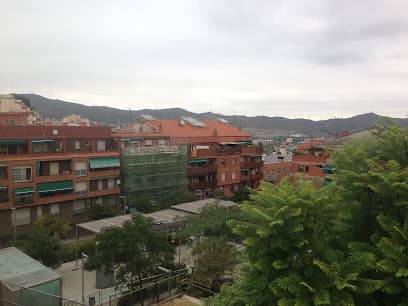
From the upper tiers, the view hits you like a physical blow. You aren't looking at the city from the curated distance of Tibidabo. You’re looking over the rooftops of El Carmel, across the dense grid of the Eixample, all the way to the Mediterranean. You can see the Sagrada Família poking up like a stone forest, but from here, it looks small. From here, the city looks like what it actually is: a massive, breathing, struggling organism.
Is it 'worth it'? If you need a bathroom with a marble floor and a waiter who speaks four languages, probably not. If you’re afraid of a little grit or a steep incline, stay in the Born. But if you want to see where the people who actually run this city live, drink, and remember their heroes, this is the spot. It’s a place for reflection, for a cheap beer in the sun, and for realizing that the best parts of Barcelona aren't for sale. It’s a neighborhood square that doesn't give a damn if you like it or not, and that’s exactly why it’s essential.
Type
Park
What People Say
square(28)children(17)dogs(6)bar(6)games(4)clean(2)meeting(2)swings(2)
Features
Park
Categories
HistoryViewpointUrban SpacePolitical Landmark
Opening Hours
- MondayOpen 24 hours
- TuesdayOpen 24 hours
- WednesdayOpen 24 hours
- ThursdayOpen 24 hours
- FridayOpen 24 hours
- SaturdayOpen 24 hours
- SundayOpen 24 hours
Accessibility
- The square has multiple levels connected by ramps, but the surrounding neighborhood is extremely steep and may be challenging for those with limited mobility.
Location
Carrer de Batet, 11
Municipality of Horta-Guinardó, Barcelona
Nearby
ATTRACTION
View
150 m · Gràcia
Forget the elbow-to-elbow chaos of Park Güell. This is the raw, vertical soul of Gràcia, where the city unfolds in a silent, sun-drenched sprawl at your feet.
0.0(0)
Garden
ATTRACTION
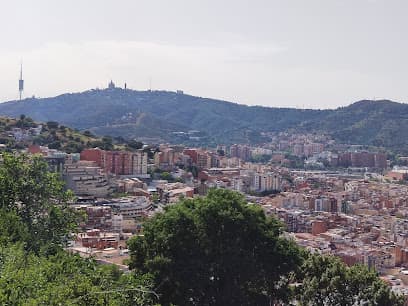
Parc dels Tres Turons
250 m · Municipality of Horta-Guinardó
Forget the manicured Gaudí gardens; this is Barcelona’s raw, vertical escape where the city’s history is etched into dusty trails and the views of the Mediterranean actually feel earned.
4.5(74)
ParkTourist attraction
RESTAURANT
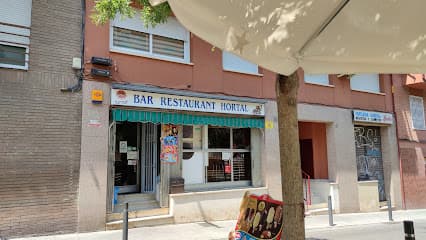
Bar Restaurant Hortal
€50 m · Municipality of Horta-Guinardó
A no-nonsense neighborhood bunker in Horta-Guinardó where the beer is cold, the bravas are fierce, and the tourists are blissfully non-existent. Real food for real people.
4.4(256)
Tapas barBar
RESTAURANT
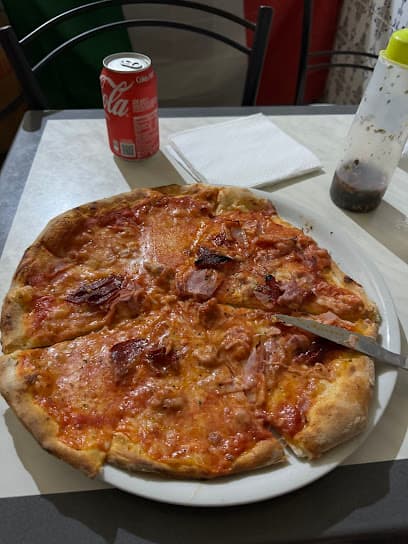
Antica Osteria
€150 m · Municipality of Horta-Guinardó
A no-bullshit Neapolitan outpost tucked away in Horta-Guinardó, where the crust is charred to perfection and the vibe is pure, unadulterated Italian soul. No frills, just fire.
4.8(126)
Pizza restaurant

HOTEL
Hotel Catalonia Park Güell
€900 m · Gràcia
Perched on the steep hills above the tourist fray, this is where you trade the chaos of the Ramblas for a rooftop pool and a view of Tibidabo’s neon glow.
3.9(2K)
HotelRestaurant
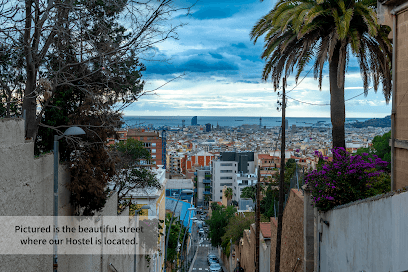
HOTEL
Factory Hostels Barcelona
€1.0 km · Gràcia
A gritty, industrial-chic refuge in the hills of Gràcia where privacy curtains and rooftop beers offer a sanctuary from the swarming tourist crowds of Park Güell.
4.1(588)
Youth hostel
Frequently Asked Questions
Is Plaça de Salvador Allende worth visiting?
Yes, if you want to escape the tourist crowds and see an authentic, working-class neighborhood with incredible views. It is not a traditional 'pretty' park, but it offers a raw and honest look at Barcelona life.
How do I get to Plaça de Salvador Allende?
Take the Metro Line 5 (Blue Line) to the El Carmel station. From there, it is a steep 10-minute walk uphill. Alternatively, several local buses like the 22 or V19 stop nearby.
What is the significance of the Salvador Allende monument?
The bust and the square's name honor the former Chilean president. It was inaugurated in 1985 as a symbol of international solidarity and democratic struggle, reflecting the political history of the El Carmel neighborhood.
Are there places to eat at the square?
Yes, Bar Allende is located directly on the square. It is a classic local spot serving coffee, cold beer, and simple tapas in a no-frills environment with outdoor seating.
Reviews
0 reviews for Plaça de Salvador Allende
No reviews yet. Be the first to share your experience!