4.2
32 verified reviews
About
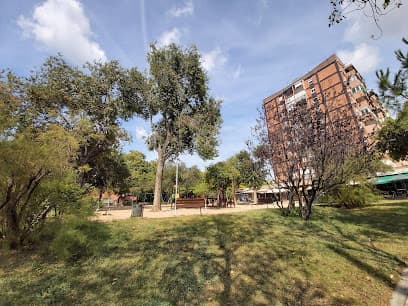
If you are looking for the whimsical curves of Gaudí or the polished, sun-drenched stone of the Gothic Quarter, you have taken the wrong metro line. Plaça de les Sibil·les isn’t a 'must-see' in any traditional sense. It is a 'must-live.' It is a slab of unvarnished reality tucked into the steep, lung-busting folds of the Horta-Guinardó district, specifically in the neighborhood of Sant Genís dels Agudells. This is the Barcelona that doesn't care if you like it. It doesn't have a gift shop, and the only thing being sold nearby is probably a decent cortado or a lottery ticket.
To get here, you have to commit. You ride the L3 green line toward the mountains until the tourists start thinning out, replaced by people carrying groceries and looking tired from a long shift. When you emerge at Vall d'Hebron, the city feels different. The air is thinner, cooler, and the shadows of the Collserola range loom large. Plaça de les Sibil·les is a classic example of the 'plaça dura' or hard square—an urban design choice common in the late 20th century when the city was trying to carve out public spaces from the chaotic, unplanned growth of the periphery. It’s concrete, it’s functional, and it’s stubbornly local.
The name itself is a strange, poetic touch for such a utilitarian space. The Sibyls were the prophetesses of the ancient world, and in Catalonia, the 'Song of the Sibyl' is a haunting medieval chant performed on Christmas Eve. There is a certain dark irony in naming a neighborhood playground after women who predicted the end of the world, but that’s Barcelona for you—even the concrete has a layer of ancient mystery if you dig deep enough. You won't find any ancient oracles here today, though. Instead, you’ll find the modern-day prophets: old men sitting on benches, leaning on canes, debating the merits of the local football club with a fervor that borders on the religious.
The square serves as the communal living room for the surrounding apartment blocks. These are the high-rises built during the massive migration waves of the mid-20th century, stacked like dominoes against the hillside. From the square, you get a visceral sense of the city’s scale. To one side, the Ronda de Dalt—the great ring road—hisses with the constant flow of traffic, a reminder of the city’s relentless pulse. To the other, the green wall of the mountains offers a silent, stoic escape. It’s a place of transition, caught between the urban grind and the wild forest.
Don't come here expecting a 'gastronomic adventure.' The bars on the surrounding streets serve honest, no-frills food for people who work for a living. You might get a plate of patatas bravas that actually taste like potatoes rather than a frozen afterthought, and the beer will be cold and cheap. There is a playground where local kids burn off energy under the watchful eyes of grandmothers who have seen this neighborhood transform from a rural outpost into a dense urban sprawl.
Is Plaça de les Sibil·les worth visiting? If you are a fan of urban planning, a seeker of the 'real' Barcelona, or someone who just needs to escape the suffocating crowds of La Rambla, then yes. It is a reminder that a city is more than its monuments; it is the spaces in between, the places where people raise their kids, argue with their neighbors, and watch the sun set over the Mediterranean from a concrete bench. It’s not pretty, it’s not polished, but it is entirely, unapologetically true. It’s the kind of place that reminds you that Barcelona belongs to its people, not just its visitors.
Type
Park
Duration
30-45 minutes
Best Time
Late afternoon when the neighborhood comes alive with families and locals.
Features
Park
Categories
Urban SpacePlaygroundLocal Culture
Ticket Prices
Free Admission
No tickets required
Opening Hours
- MondayOpen 24 hours
- TuesdayOpen 24 hours
- WednesdayOpen 24 hours
- ThursdayOpen 24 hours
- FridayOpen 24 hours
- SaturdayOpen 24 hours
- SundayOpen 24 hours
Must-See Highlights
The local playground scene
Views of the surrounding Horta-Guinardó hills
The contrast between the residential blocks and the nearby Collserola forest
Visitor Tips
Wear comfortable shoes as the walk from the metro is quite steep.
Don't expect English menus in the nearby bars; bring a translation app or your best Spanish/Catalan.
Combine this with a hike into the nearby Collserola park for a full day of exploration.
Good For
Urban explorersFamilies with childrenBudget travelersPeople seeking local authenticity
Why Visit
Unfiltered local atmosphere far from the tourist center
Striking views of the Collserola mountain range and the city's northern periphery
A genuine 'plaça dura' urban space reflecting 20th-century neighborhood life
Nearby Landmarks
- 10-minute walk from Hospital de la Vall d'Hebron
- 12-minute walk from Parc de la Vall d'Hebron
- 15-minute walk from Metro Mundet (L3)
Accessibility
- Paved surfaces
- Accessible by public transport (with some uphill walking)
- Open public space
Location
Carrer de Rubió i Balaguer, 83B
Municipality of Horta-Guinardó, Barcelona
Nearby Hotels
Nearby Restaurants
In Municipality of Horta-Guinardó
ATTRACTION
メリーゴーランド
Municipality of Horta-Guinardó
A spinning, neon-lit relic of neighborhood childhood, tucked away in the dusty, unvarnished heart of Horta-Guinardó, far from the Gaudi-crazed tourist herds.
0.0(0)
Park
ATTRACTION
SunsetBoatBarcelona
Municipality of Horta-Guinardó
Escape the sweltering, tourist-choked streets for the open Mediterranean, where the city skyline bleeds into the dusk and the Cava actually tastes like freedom.
0.0(0)
Tourist attraction

ATTRACTION
Labyrinth
Municipality of Horta-Guinardó
Barcelona’s oldest garden is a neoclassical middle finger to the city’s chaos, featuring a cypress maze where you can actually lose yourself—and the crowds—for a few euros.
0.0(0)
Tourist attraction
Frequently Asked Questions
Is Plaça de les Sibil·les worth visiting?
Only if you are interested in seeing the authentic, non-touristy side of Barcelona's residential periphery. It is a simple neighborhood square with a playground and local vibes, not a major landmark.
How do I get to Plaça de les Sibil·les?
Take the L3 (Green Line) or L5 (Blue Line) metro to Vall d'Hebron. From there, it is about a 10-15 minute walk uphill through the Sant Genís dels Agudells neighborhood.
What is near Plaça de les Sibil·les?
It is located near the Hospital de la Vall d'Hebron and the foothills of the Collserola Natural Park. The Laberint d'Horta is also a short bus or metro ride away.
Is there anything to eat near the square?
There are several small, local 'cafeterias' and bars in the surrounding streets of Sant Genís that serve traditional tapas and coffee at neighborhood prices.
Reviews
0 reviews for Plaça de les Sibil·les
No reviews yet. Be the first to share your experience!