4.6
28 verified reviews
About
Most people come to Barcelona for the curves. They want the melting stone of the Sagrada Família, the psychedelic mosaics of Park Güell, and the whimsical, bone-shaped balconies of the Eixample. They want the fairy tale. But if you want to see the city’s unvarnished reality—the honest, mid-century bones of a place built for living, not for postcards—you get on the L3 Metro and ride it north until the air cools and the tourists vanish. You get off at Montbau.
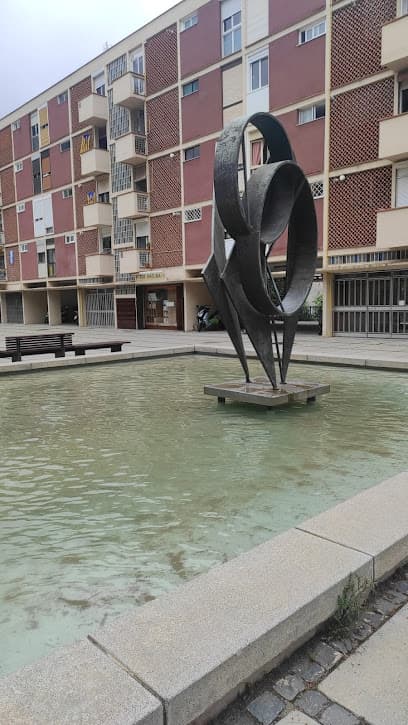
Pla de Montbau isn't a park in the way the tourism board defines it. There are no manicured rose gardens or wrought-iron gates. It is a wide, open square, a central nervous system for a neighborhood born in the late 1950s. This is the 'Polígon de Montbau,' a masterclass in rationalist architecture designed by Giráldez, López-Iñigo, and Subías. It was an experiment in social housing that actually worked, influenced by Le Corbusier’s ideas of light, space, and functionality. The square is the heart of that experiment. It’s a vast expanse of stone and concrete that feels like a stage for the mundane, and in its mundanity, it is beautiful.
When you walk into the Pla, the first thing you notice is the silence. It’s a heavy, peaceful silence that you won’t find anywhere near La Rambla. Then you notice the lines. The buildings surrounding the square are geometric, repetitive, and unapologetic. They don't beg for your affection. They stand there with a quiet dignity, providing shade and structure. On a Tuesday afternoon, the square belongs to the locals. You’ll see elderly men in flat caps sitting on benches, their canes leaning against the stone, watching the world go by with the practiced patience of people who have seen empires rise and fall. You’ll hear the rhythmic bounce of a football against a wall and the distant clatter of a ceramic cup hitting a saucer at one of the small, unpretentious bars bordering the space.
This is one of the best things to do in Horta-Guinardó if you’re an architecture nerd or just someone who needs a break from the theme-park energy of the city center. The Pla de Montbau represents a moment in time when Barcelona was looking toward the future, trying to solve the problem of how to house a growing population with grace and efficiency. It’s a reminder that a city is more than its monuments; it’s the spaces in between where people raise their kids, argue over football, and grow old.
Don't expect a gift shop. Don't expect a multilingual tour guide. Expect a stiff drink at a local bar where the prices haven't been inflated for foreigners. Expect the smell of pine drifting down from the nearby Collserola hills. Expect to feel, for a moment, like you’ve actually found the real Barcelona—the one that doesn't care if you like it or not. It’s a place of hard angles and soft shadows, a concrete sanctuary for the soul. If you’re looking for the 'authentic' experience everyone keeps lying about, this is it. It’s not pretty in the conventional sense, but it’s honest. And in this town, honesty is the rarest commodity of all.
Type
Park
Duration
30-45 minutes
Best Time
Late afternoon when the locals gather and the light hits the geometric buildings.
What People Say
square(2)
Features
Park
Categories
ArchitectureUrban DesignPublic Square
Ticket Prices
Free Admission
No tickets required
Opening Hours
- MondayOpen 24 hours
- TuesdayOpen 24 hours
- WednesdayOpen 24 hours
- ThursdayOpen 24 hours
- FridayOpen 24 hours
- SaturdayOpen 24 hours
- SundayOpen 24 hours
Must-See Highlights
The geometric residential blocks surrounding the square
The central open space used for community gatherings
Views of the Collserola mountains in the background
Visitor Tips
Grab a coffee at one of the local bars on the perimeter to soak in the neighborhood vibe.
Combine this with a visit to the nearby Labyrinth Park of Horta.
Wear comfortable shoes as the neighborhood is located on a slope.
Good For
Architecture enthusiastsSolo travelersBudget travelersPhotography
Why Visit
Masterclass in 1950s Rationalist Architecture
Zero tourist crowds and authentic local atmosphere
Proximity to the Collserola hills and fresher air
Nearby Landmarks
- Laberint d'Horta (12-minute walk)
- Hospital Vall d'Hebron (10-minute walk)
- Parc de Collserola (15-minute walk uphill)
Accessibility
- Outdoor public space
- Mostly flat paved surfaces
- Accessible via Metro L3 with elevators
Location
Pla de Montbau, 3
Municipality of Horta-Guinardó, Barcelona
Nearby Hotels
Nearby Restaurants
In Municipality of Horta-Guinardó
ATTRACTION
メリーゴーランド
Municipality of Horta-Guinardó
A spinning, neon-lit relic of neighborhood childhood, tucked away in the dusty, unvarnished heart of Horta-Guinardó, far from the Gaudi-crazed tourist herds.
0.0(0)
Park
ATTRACTION
SunsetBoatBarcelona
Municipality of Horta-Guinardó
Escape the sweltering, tourist-choked streets for the open Mediterranean, where the city skyline bleeds into the dusk and the Cava actually tastes like freedom.
0.0(0)
Tourist attraction

ATTRACTION
Labyrinth
Municipality of Horta-Guinardó
Barcelona’s oldest garden is a neoclassical middle finger to the city’s chaos, featuring a cypress maze where you can actually lose yourself—and the crowds—for a few euros.
0.0(0)
Tourist attraction
Frequently Asked Questions
Is Pla de Montbau worth visiting?
Yes, if you appreciate rationalist architecture or want to see a quiet, authentic residential side of Barcelona far from the tourist crowds.
How do I get to Pla de Montbau?
Take the L3 (Green Line) Metro to the Montbau station. The square is a short 5-minute walk uphill from the station exit.
What is near Pla de Montbau?
It is within walking distance of the Laberint d'Horta (Labyrinth Park) and the Mundet campus of the University of Barcelona.
Is there an entrance fee for Pla de Montbau?
No, it is a public square and completely free to visit at any time of day.
Reviews
0 reviews for Pla de Montbau
No reviews yet. Be the first to share your experience!