4.6
506 verified reviews
About
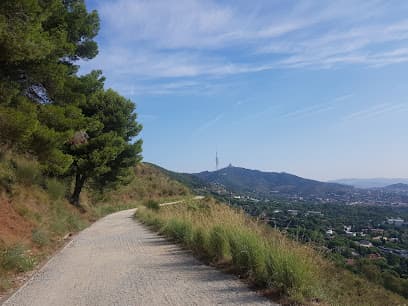
Barcelona is a city that tries to kill you with kindness—too much vermouth, too many late-night tapas, too much humidity trapped in the narrow stone veins of the Gothic Quarter. Eventually, you need to breathe. You need to get above the noise. That’s where the Passeig de les Aigües comes in. It’s not a park in the manicured, French-garden sense of the word. It’s a nine-kilometer scar of gravel and dirt etched into the side of the Collserola ridge, and it is, without question, the best place to see the city for what it actually is: a dense, chaotic, beautiful grid pinned between the mountains and the sea.
Originally built for the water pipes that fed the city—hence the name—this trail is remarkably, almost suspiciously flat. In a city built on hills, a flat path at this altitude feels like a cheat code. You aren't climbing; you’re hovering. To get here, you take the Funicular de Vallvidrera, a rattling metal box that hauls you up the incline until your ears pop and the air loses that heavy, salty weight of the lower city. You step out, walk a few paces, and suddenly the world opens up.
The experience of the Passeig is a weird, high-altitude paradox. On one side, you have the scrubby, sun-baked Mediterranean forest—pine needles, dry earth, and the occasional wild boar snuffling in the underbrush. On the other, you have the entire history of Barcelona laid out like a blueprint. From here, Gaudí’s Sagrada Família looks like a strange, melting sandcastle, and the Agbar Tower pokes up like a neon thumb. You can see the massive cruise ships docked at the port, looking like bathtub toys, and the Mediterranean stretching out until it turns into a hazy blue nothingness.
This is where the real Barcelona comes to play. It’s not for the tourists in flip-flops. It’s for the Lycra-clad warriors on five-thousand-euro mountain bikes, the serious runners pounding out kilometers before the sun gets too high, and the families pushing strollers with a grim determination. There is a specific kind of camaraderie here—a shared recognition that we’ve all escaped the hive for an hour or two. You’ll see old men in tracksuits walking at a brisk clip, arguing about Xavi’s tactics or the price of fish, their voices carrying in the thin, clear air.
Don't expect white-tablecloth service or even a decent place to buy a bottle of water once you’re on the path. This is raw territory. The wind can be biting in the winter, and the sun is an absolute hammer in July. There are no 'attractions' here other than the view itself, and that’s the point. It’s one of the few places left where you aren't being sold a version of Barcelona; you’re just witnessing it.
Is it worth the effort? If you want to understand the scale of this place, if you want to see how the Eixample’s rigid geometry fights against the chaotic coastline, then yes. It’s the ultimate palate cleanser. Come at sunset when the sky turns the color of a bruised plum and the city lights start to flicker on like a billion grounded stars. It’s the only time the city actually looks quiet. Just bring your own water, wear shoes you don't mind getting dusty, and leave the 'hidden gem' clichés at the bottom of the hill.
Type
Park
Duration
2-3 hours
Best Time
Sunrise or sunset for the most dramatic lighting and cooler temperatures.
What People Say
running(39)walking(27)sports(19)ideal(12)disfrutar(9)weekend(8)morning(6)plane(5)
Features
Park
Categories
HikingRunningNatureViewpoint
Ticket Prices
Free Admission
No tickets required
Opening Hours
- MondayOpen 24 hours
- TuesdayOpen 24 hours
- WednesdayOpen 24 hours
- ThursdayOpen 24 hours
- FridayOpen 24 hours
- SaturdayOpen 24 hours
- SundayOpen 24 hours
Must-See Highlights
The view of the Eixample grid from above
The Sagrada Família silhouette against the sea
The mid-point near the Funicular station for the best photo ops
Wild boar sightings (usually at dusk)
Visitor Tips
Bring more water than you think you need; there are very few fountains.
The Funicular stop 'Carretera de les Aigües' is a request stop—you must press the button to get off.
Avoid Sunday mornings if you hate crowds; it's the peak time for local cyclists.
Good For
RunnersCyclistsFamiliesPhotographersBudget travelers
Why Visit
The Balcony of Barcelona: Uninterrupted 180-degree views of the entire metropolitan area and the sea.
The Flat Ridge: A rare 9km stretch of level ground at high altitude, perfect for easy walking or serious running.
Escape the Urban Heat: Significantly cooler air and a natural pine-scented breeze just 20 minutes from the city center.
Nearby Landmarks
- Tibidabo Amusement Park (20-minute hike uphill)
- Torre de Collserola (15-minute hike)
- Temple Expiatori del Sagrat Cor (25-minute hike)
- Funicular de Vallvidrera (5-minute walk from the mid-station)
Accessibility
- The main path is flat and wide, making it accessible for wheelchairs and strollers, though the gravel can be loose in sections.
Location
Ctra. de les Aigües
Municipality of Horta-Guinardó, Barcelona
Nearby Hotels
Nearby Restaurants
In Municipality of Horta-Guinardó
ATTRACTION
メリーゴーランド
Municipality of Horta-Guinardó
A spinning, neon-lit relic of neighborhood childhood, tucked away in the dusty, unvarnished heart of Horta-Guinardó, far from the Gaudi-crazed tourist herds.
0.0(0)
Park
ATTRACTION
SunsetBoatBarcelona
Municipality of Horta-Guinardó
Escape the sweltering, tourist-choked streets for the open Mediterranean, where the city skyline bleeds into the dusk and the Cava actually tastes like freedom.
0.0(0)
Tourist attraction

ATTRACTION
Labyrinth
Municipality of Horta-Guinardó
Barcelona’s oldest garden is a neoclassical middle finger to the city’s chaos, featuring a cypress maze where you can actually lose yourself—and the crowds—for a few euros.
0.0(0)
Tourist attraction
Frequently Asked Questions
Is Passeig de les Aigües worth visiting?
Absolutely, if you want the best free view of Barcelona. It's a flat, easy trail that offers a perspective of the city you can't get from the crowded streets below.
How do I get to Passeig de les Aigües?
The easiest way is taking the FGC train (S1 or S2) to Peu del Funicular, then transferring to the Funicular de Vallvidrera. Get off at the 'Carretera de les Aigües' stop, which is halfway up.
What should I wear to Passeig de les Aigües?
Wear comfortable sneakers or hiking shoes. The path is unpaved gravel and can be dusty. Even though it's flat, you'll want decent grip and clothes suitable for the weather as there is little shade.
Are there places to eat on the trail?
No. There are almost no facilities on the path itself. Bring your own water and snacks. There are a few cafes near the Vallvidrera Superior funicular station if you need a meal before or after your walk.
Reviews
0 reviews for Passeig de les Aigües
No reviews yet. Be the first to share your experience!