4.5
74 verified reviews
About
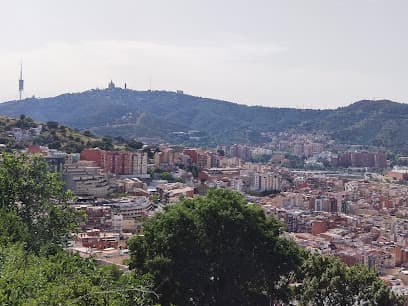
Barcelona is a city that likes to pretend it’s all flat grids and orderly modernism, but the Parc dels Tres Turons is the moment the mask slips. This is the city’s jagged spine, a massive, 122-hectare sprawl of limestone and scrub brush that connects the three hills of the Horta-Guinardó district: Turó de la Rovira, Turó del Carmel, and Turó de la Creu d’en Coll. It is not a park for the faint of heart or the weak of knee. It is a vertical, unvarnished landscape that demands sweat in exchange for the most honest perspective of the Catalan capital you’ll ever find.
Most tourists stumble into the edges of this place because they’re looking for the Bunkers del Carmel on the Turó de la Rovira. They want the Instagram shot, the sunset beer, the feeling of being 'above it all.' And sure, the anti-aircraft fortifications from the Civil War are there, haunting the ridge like concrete ghosts. But the Bunkers are just the gateway drug. If you actually walk the trails that snake between the three peaks, you leave the influencers behind and enter a Barcelona that feels remarkably distant from the sangria-soaked chaos of La Rambla. Here, the air smells of dry rosemary, wild pine, and the faint, metallic tang of the city breathing below.
There is a profound sense of history baked into the dirt here. After the war, these hills were the site of the 'barraquismo'—shantytowns built by migrants who arrived with nothing but hope and a few bricks. You can still see the remnants of tiled floors and staircases leading to nowhere, carved directly into the rock. It’s a reminder that Barcelona wasn't built by architects alone; it was clawed out of the hillside by people who had nowhere else to go. Today, the park is a battleground of a different sort, as the city tries to balance its role as an essential breathing space with the crushing weight of over-tourism at the viewpoints.
Walking here is a sensory experience that shifts with the elevation. At the lower levels, you have the barking of dogs and the rhythmic 'thwack' of tennis balls from local clubs. As you climb toward the Turó del Carmel—the highest of the three—the city noise begins to muffle, replaced by the whistle of the wind coming off the Mediterranean. From the summit, the Sagrada Família looks like a sandcastle some kid left on the beach, and the Agbar Tower is a glowing thumb sticking out of the Eixample grid. It’s vertigo-inducing and magnificent, a reminder of how small we are and how much concrete we’ve managed to pour over this ancient landscape.
Don’t come here looking for a manicured lawn or a kiosk selling overpriced gelato. This is a place of gravel paths, steep inclines, and the occasional surly local wondering why you’re in their backyard. It’s gritty, it’s dusty, and in the height of summer, it’s a goddamn furnace. But if you want to see the skeleton of Barcelona—the geological and social bones that hold the whole thing up—you put on your boots, you pack a liter of water, and you start climbing. It’s the only way to see the city for what it really is: a beautiful, crowded, chaotic mess, clinging to the edge of the sea.
Type
Park, Tourist attraction
Duration
2-3 hours
Best Time
Late afternoon for the golden hour, but arrive at least two hours before sunset to hike the full ridge before the Bunkers area closes.
What People Say
strolling(2)dog(2)
Features
Park
Tourist attraction
Categories
NatureHikingHistoryViewpoint
Ticket Prices
Free Admission
No tickets required
Opening Hours
- MondayOpen 24 hours
- TuesdayOpen 24 hours
- WednesdayOpen 24 hours
- ThursdayOpen 24 hours
- FridayOpen 24 hours
- SaturdayOpen 24 hours
- SundayOpen 24 hours
Must-See Highlights
The summit of Turó del Carmel for the highest point in the park.
The Civil War anti-aircraft battery ruins at Turó de la Rovira.
The 'Path of the Three Hills' (Camí dels Tres Turons) which connects the peaks.
The remnants of the 20th-century shantytown dwellings near the Can Baró entrance.
Visitor Tips
Avoid the Bunkers del Carmel at sunset if you hate crowds; head to the Turó del Carmel instead for a quieter, higher view.
The wind can be surprisingly cold on the ridges even in summer, so bring a light layer.
There are almost no public toilets or water fountains once you start the ascent, so plan accordingly before you leave the residential streets.
Good For
HikersPhotographersBudget travelersDog ownersHistory buffs
Why Visit
360-degree unobstructed views of the entire Barcelona coastline and the Collserola mountain range.
A raw look at Barcelona's social history, including Civil War ruins and remnants of mid-century shantytowns.
The most significant expanse of wild forest and scrubland near the city center, offering a rugged alternative to urban parks.
Nearby Landmarks
- Bunkers del Carmel (5-minute walk)
- Park Güell (15-minute walk to the northern entrance)
- Hospital de Sant Pau (20-minute walk downhill)
- Turó de la Rovira (Integrated into the park)
Accessibility
- Limited accessibility due to very steep, unpaved gravel paths. Not recommended for wheelchairs or those with significant mobility issues.
Location
Municipality of Horta-Guinardó, Barcelona
Nearby Hotels
Nearby Restaurants
In Municipality of Horta-Guinardó
ATTRACTION
メリーゴーランド
Municipality of Horta-Guinardó
A spinning, neon-lit relic of neighborhood childhood, tucked away in the dusty, unvarnished heart of Horta-Guinardó, far from the Gaudi-crazed tourist herds.
0.0(0)
Park
ATTRACTION
SunsetBoatBarcelona
Municipality of Horta-Guinardó
Escape the sweltering, tourist-choked streets for the open Mediterranean, where the city skyline bleeds into the dusk and the Cava actually tastes like freedom.
0.0(0)
Tourist attraction

ATTRACTION
Labyrinth
Municipality of Horta-Guinardó
Barcelona’s oldest garden is a neoclassical middle finger to the city’s chaos, featuring a cypress maze where you can actually lose yourself—and the crowds—for a few euros.
0.0(0)
Tourist attraction
Frequently Asked Questions
Is Parc dels Tres Turons worth visiting?
Absolutely, if you want the best 360-degree views of Barcelona without the ticket price of Park Güell. It’s a rugged, authentic escape for hikers and those looking to see the city's wild side away from the main tourist hubs.
How do I get to Parc dels Tres Turons?
Take the Metro L4 to Alfons X or L5 to El Carmel. Alternatively, buses V17, V19, and 24 will drop you near the park entrances, but be prepared for a steep uphill walk regardless of your route.
Is there an entrance fee for the park?
No, the park is entirely free to enter. However, access to the Bunkers del Carmel area is now restricted at night (usually closing at 7:30 PM or 8:30 PM depending on the season) to prevent late-night parties.
What should I bring to the park?
Sturdy walking shoes are mandatory as the paths are gravel and very steep. Bring plenty of water and sun protection, as there is very little shade at the summits and no shops inside the park.
Reviews
0 reviews for Parc dels Tres Turons
No reviews yet. Be the first to share your experience!