4.3
97 verified reviews
About
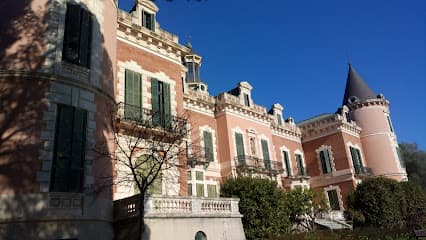
You’re hiking up the northern edge of the city, lungs working against the incline of the Collserola foothills, and suddenly the Mediterranean grit of Barcelona vanishes. In its place stands a French-style chateau that looks like it was air-lifted straight out of the Loire Valley and dropped onto a hillside in Horta. This is the Palau de les Heures, also known as Casa Gallart, and it is a monument to late 19th-century ambition, colonial wealth, and the heavy, lingering ghosts of the Spanish Civil War.
Built between 1894 and 1898 by architect Augusto Font i Carreras, the palace was the dream of Josep Gallart Forgas, a man who made his fortune in Puerto Rico and wanted the world to know it. He didn’t want a traditional Catalan farmhouse; he wanted four cylindrical towers, high-pitched roofs, and the kind of aristocratic pretension that only a massive pile of money can buy. The name 'Heures' comes from the ivy that clings to the stone, a relentless green tide that tries to reclaim the building for the mountain every year.
But don't let the fairytale silhouette fool you. This place has seen some dark days. During the Spanish Civil War, the palace became the secret residence of Manuel Azaña, the last President of the Second Spanish Republic. While the city below was being pummeled by Italian bombers, Azaña was tucked away here. If you look closely at the grounds, you’ll find the entrance to an air raid shelter built specifically to protect him—a concrete reminder that even in a palace, you’re never truly safe from history. It’s a jarring contrast: the delicate, French-inspired aesthetics of the upper floors versus the cold, subterranean reality of a bunker.
Today, the palace has been swallowed by the University of Barcelona’s Mundet Campus. It’s a strange, beautiful marriage of high-society history and the mundane reality of academic life. You’ll see students hunched over laptops on the stone terraces and professors rushing through the ornate doorways of the Bosch i Gimpera Foundation. The gardens, the Jardins de les Heures, are the real draw for those who manage to find their way up here. They are laid out in three terraced levels, blending the formal geometry of Italian Renaissance gardens with the wilder, more romantic greenery of the Mediterranean. It’s a place of orange trees, magnolias, and the constant, rhythmic sound of water from the fountains.
Is it perfect? No. The proximity to the Ronda de Dalt means you’ll never have total silence; the low hum of the highway is a constant reminder that the modern city is clawing at the gates. The building itself is mostly used for university administration, so don't expect to go wandering through the private ballrooms. But that’s part of the charm. It’s not a polished museum where you’re ushered through a gift shop. It’s a living, breathing part of the city that most tourists completely ignore in favor of the nearby Labyrinth of Horta. If you want to see where Barcelona’s elite once hid from the world—and where the Republic made its final stand—this is the place. It’s honest, it’s slightly frayed at the edges, and it’s one of the few places left in the city where you can actually hear yourself think, provided the wind is blowing the highway noise the other way.
Type
Park
Duration
1-2 hours
Best Time
Weekday mornings are best to avoid the few local families that visit on weekends and to see the university campus in action.
What People Say
chateau(4)building(3)flat roof(3)noise(2)air raid shelter(2)balustrade(2)renaissance(2)magnolia(2)
Features
Park
Categories
ArchitectureHistoryParkCivil War Site
Ticket Prices
Free Admission
No tickets required
Opening Hours
- Monday10 AM to 6 PM
- Tuesday10 AM to 6 PM
- Wednesday10 AM to 6 PM
- Thursday10 AM to 6 PM
- Friday10 AM to 6 PM
- SaturdayClosed
- SundayClosed
Must-See Highlights
The four cylindrical towers of the main facade
The entrance to the Civil War air raid shelter in the gardens
The view of the palace from the lower garden terrace
The intricate ivy (heures) covering the stone walls
Visitor Tips
Combine this with a visit to the Labyrinth of Horta nearby, but come here first for the peace and quiet.
Wear comfortable shoes as the walk from the metro is entirely uphill.
Don't expect a museum experience; this is a working university campus, so be respectful of students and staff.
Good For
History buffsArchitecture loversBudget travelersPhotography enthusiasts
Why Visit
French Chateau Architecture: A rare example of Loire Valley-style design in the middle of a Mediterranean city.
Civil War Air Raid Shelter: A preserved bunker built for the President of the Republic, Manuel Azaña.
Terraced Italianate Gardens: Three levels of meticulously landscaped gardens that offer a peaceful retreat from the city center.
Nearby Landmarks
- 7-minute walk from Parc del Laberint d'Horta
- 10-minute walk from Velòdrom d'Horta
- 15-minute walk from Mundet Metro Station
Accessibility
- Partial accessibility
- Steep inclines
- Terraced gardens with stairs
Location
Municipality of Horta-Guinardó, Barcelona
Nearby Hotels
Nearby Restaurants
In Municipality of Horta-Guinardó
ATTRACTION
メリーゴーランド
Municipality of Horta-Guinardó
A spinning, neon-lit relic of neighborhood childhood, tucked away in the dusty, unvarnished heart of Horta-Guinardó, far from the Gaudi-crazed tourist herds.
0.0(0)
Park
ATTRACTION
SunsetBoatBarcelona
Municipality of Horta-Guinardó
Escape the sweltering, tourist-choked streets for the open Mediterranean, where the city skyline bleeds into the dusk and the Cava actually tastes like freedom.
0.0(0)
Tourist attraction

ATTRACTION
Labyrinth
Municipality of Horta-Guinardó
Barcelona’s oldest garden is a neoclassical middle finger to the city’s chaos, featuring a cypress maze where you can actually lose yourself—and the crowds—for a few euros.
0.0(0)
Tourist attraction
Frequently Asked Questions
Is Palau de les Heures worth visiting?
Yes, especially if you want to escape the crowds of central Barcelona. The combination of French chateau architecture and the secret Civil War air raid shelter makes it a unique, quiet alternative to more famous landmarks.
Can you go inside Palau de les Heures?
The interior is primarily used for University of Barcelona offices and the Bosch i Gimpera Foundation, so public access to the rooms is limited. However, the terraced gardens are open to the public and are the main attraction.
How do I get to Palau de les Heures?
Take the Metro Line 3 (Green) to the Mundet station. From there, it is about a 10-minute walk uphill through the University of Barcelona campus.
Is there an entrance fee for the gardens?
No, entrance to the Jardins de les Heures is free for the public, making it one of the best value historical sites in the Horta-Guinardó district.
Reviews
0 reviews for Palau de les Heures
No reviews yet. Be the first to share your experience!