4.3
3 verified reviews
About
Most people come to Barcelona for the stone. They want the gravity-defying curves of Gaudí, the soot-stained grit of the Gothic Quarter, or the polished marble of the luxury boutiques on Passeig de Gràcia. But if you want to see something that actually remembers what this land was before the tourists, the planners, and the internal combustion engine took over, you have to head uphill. You have to go to Horta-Guinardó, specifically to Carrer del Mas Casanovas, to stand in front of the Olivos centenarios del Guinardó.
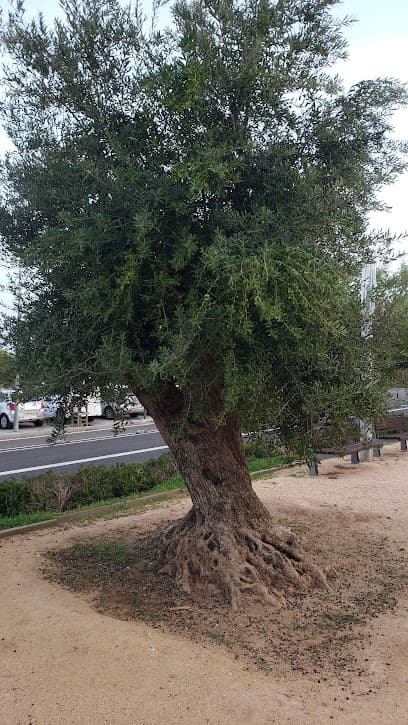
These aren't just trees; they are stubborn survivors. They are the gnarled, silver-leafed remnants of an era when this entire district was a patchwork of vineyards, wheat fields, and olive groves. Long before the Eixample grid pushed its way north, this was the countryside. These trees have seen the city swell like a rising tide, surrounding them with asphalt and apartment blocks, yet they remain, rooted in the same soil they’ve occupied for centuries.
When you arrive at Mas Casanovas, 71, don't expect a grand entrance or a gift shop. This isn't that kind of 'attraction.' It’s a quiet, unassuming green space where the trunks of the olive trees look like petrified muscles, twisted and scarred by time. The bark is a map of centuries of survival—thick, corky, and indifferent to the noise of the city. There is something deeply humbling about standing next to a living thing that was already old when the first stones of the Sagrada Família were being laid.
While the nearby Hospital de Sant Pau—a Modernista masterpiece of color and light—draws the crowds, these trees offer a different kind of sanctuary. It’s a place where the air feels slightly cooler, and the light filters through the narrow, dusty leaves in a way that makes the surrounding high-rises feel temporary. It’s one of the best gardens in Barcelona precisely because it doesn't try to be a garden. It’s just a piece of the past that refused to die.
For anyone looking for things to do in Horta-Guinardó that don't involve a queue or a selfie-stick-wielding mob, this is it. You come here to sit on a bench, maybe with a cheap coffee from a nearby bodega, and watch the neighborhood life go by. You’ll see old men arguing about football, mothers pushing strollers, and the occasional stray cat claiming a sunny patch of dirt beneath the silver canopy. It’s raw, it’s honest, and it’s entirely free of the artifice that plagues so much of modern Barcelona.
The Olivos centenarios are a reminder that the city is a living organism, and sometimes, the most important parts of it aren't the ones we built, but the ones we managed not to destroy. If you’re doing a tour of Gaudí buildings in Barcelona, take a detour here. It’s a palate cleanser for the soul—a dose of ancient, unadorned reality in a city that often feels like a stage set. It’s not a 'must-see' for the bucket-list crowd, but for those who want to feel the pulse of the old land beneath the pavement, it’s essential. It’s a quiet, silver-green pocket of resistance in a world made of concrete.
Type
Garden
Duration
30-45 minutes
Best Time
Late afternoon for the best light on the silver leaves.
Features
Garden
Categories
NatureHistoryBotany
Ticket Prices
Free Admission
No tickets required
Opening Hours
- MondayOpen 24 hours
- TuesdayOpen 24 hours
- WednesdayOpen 24 hours
- ThursdayOpen 24 hours
- FridayOpen 24 hours
- SaturdayOpen 24 hours
- SundayOpen 24 hours
Must-See Highlights
The gnarled, ancient trunks of the centenary trees
The contrast between the ancient nature and modern apartment blocks
The view down the street toward the towers of Hospital de Sant Pau
Visitor Tips
Combine this with a visit to Hospital de Sant Pau to see two very different sides of Barcelona's history.
Bring a book or a snack; it's one of the few places in the area where you can sit in relative silence.
The walk from the metro is uphill, so wear comfortable shoes.
Good For
Nature loversHistory buffsBudget travelersSolitary thinkers
Why Visit
Centuries-old living history that predates the modern city
A peaceful, non-touristy alternative to the crowded parks of central Barcelona
Direct proximity to the UNESCO-listed Hospital de Sant Pau
Nearby Landmarks
- Hospital de Sant Pau (5-minute walk)
- Parc del Guinardó (10-minute walk)
- Bunkers del Carmel (20-minute walk uphill)
- Sagrada Família (15-minute walk downhill)
Accessibility
- Wheelchair accessible public square
- Paved surrounding sidewalks
Location
Carrer del Mas Casanovas, 71
Municipality of Horta-Guinardó, Barcelona
Nearby Hotels
Nearby Restaurants
In Municipality of Horta-Guinardó
ATTRACTION
メリーゴーランド
Municipality of Horta-Guinardó
A spinning, neon-lit relic of neighborhood childhood, tucked away in the dusty, unvarnished heart of Horta-Guinardó, far from the Gaudi-crazed tourist herds.
0.0(0)
Park
ATTRACTION
SunsetBoatBarcelona
Municipality of Horta-Guinardó
Escape the sweltering, tourist-choked streets for the open Mediterranean, where the city skyline bleeds into the dusk and the Cava actually tastes like freedom.
0.0(0)
Tourist attraction

ATTRACTION
Labyrinth
Municipality of Horta-Guinardó
Barcelona’s oldest garden is a neoclassical middle finger to the city’s chaos, featuring a cypress maze where you can actually lose yourself—and the crowds—for a few euros.
0.0(0)
Tourist attraction
Frequently Asked Questions
Is Olivos centenarios del Guinardó worth visiting?
Yes, if you appreciate quiet, historical nature away from the tourist crowds. It's a small but powerful site featuring trees that have survived for centuries amidst urban development.
How do I get to the ancient olive trees in Guinardó?
Take the Metro L4 (Yellow Line) to Alfons X or Guinardó | Hospital de Sant Pau. From there, it's a short, uphill walk to Carrer del Mas Casanovas, 71.
What is the best time to visit the olive trees?
Late afternoon during the 'golden hour' is best, as the low sun catches the silver undersides of the olive leaves, creating a beautiful contrast with the surrounding city.
Is there an entrance fee for the Guinardó olive trees?
No, it is a public space and completely free to visit at any time.
Reviews
0 reviews for Olivos centenarios del Guinardó
No reviews yet. Be the first to share your experience!