4.3
1,225 verified reviews
About
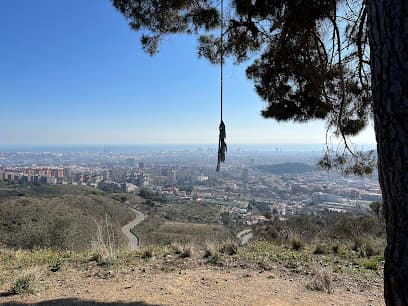
Forget the sanitized balconies of the city center. Forget the elbows-out jostling at the Bunkers del Carmel or the overpriced funicular ride to Tibidabo. If you want to see Barcelona for what it really is—a sprawling, breathing, chaotic organism pinned between the mountains and the Mediterranean—you get on a scooter, you head north, and you keep climbing until the air gets thin and smells of pine resin and burnt clutch plates. This is the Mirador d'Horta, a jagged little pull-off on the road to Cerdanyola that offers a view so honest it hurts.
There is no gift shop here. There is no guy in a vest selling lukewarm water for four euros. It’s just a curve in the BV-1415 road, a patch of gravel, and a drop-off that makes your stomach do a slow roll. The first thing you’ll notice isn’t the view, though. It’s the silence, occasionally punctured by the whine of a motorcycle leaning into the hairpin turns. Then, you see it: the city laid out like a glowing circuit board. From here, the Sagrada Família looks like a sandcastle some kid left behind, and the Agbar Tower is a lone, neon-lit thumb sticking up at the sky. It’s a perspective that strips away the pretension of the Gothic Quarter and the polished sheen of Passeig de Gràcia. Up here, it’s just geography and light.
Then there’s the swing. The 'Columpio de Horta.' It’s a simple wooden plank suspended by two long ropes from a sturdy pine tree, dangling over the abyss. It’s become a digital pilgrimage site, a place where people risk life and limb for a photo that says, 'Look at me, I’m flying over Barcelona.' The park rangers occasionally cut it down, citing safety or 'unauthorized structures,' but like a weed in the sidewalk, it always grows back. Locals come out under the cover of darkness to restring it, a small act of rebellion against the bureaucratic order of the city below. If it’s there when you arrive, take the risk. Swing out into the nothingness. It’s a visceral, heart-in-throat moment that no VR experience could ever replicate.
But the real locals aren't the ones on the swing. They’re the 'porcs senglars'—the wild boars. These opportunistic scavengers have realized that where there are tourists and teenagers in parked cars, there is food. They emerge from the shadows of the Collserola woods like hairy, tusked ghosts, sniffing around the trash cans and the gravel. They aren't pets, and they aren't particularly friendly, but they add a layer of raw, unpredictable energy to the place. They are a reminder that despite the millions of tons of concrete below, the mountain still belongs to the wild.
As the sun dips behind the Collserola ridge, the vibe shifts. The Instagrammers head back down to the tapas bars, and the 'mirador de los enamorados' (the lovers' viewpoint) takes over. Cars pull in, headlights flick off, and the city lights begin to twinkle with a seductive, indifferent beauty. It’s a place for secrets, for cheap beer shared on a stone wall, and for realizing that the best things in Barcelona don't require a ticket or a reservation. It’s just you, the wind, and the vast, glittering sprawl of a city that never really sleeps, even if it looks peaceful from ten kilometers away. Is it worth the drive? If you have a soul, yes. If you just want a postcard, stay on the bus.
Type
Observation deck, Tourist attraction
What People Say
swing(101)car(25)photography(20)wild boars(18)bank(15)picnic(11)disfrutar(10)kids(6)
Features
Observation deck
Tourist attraction
Categories
NaturePhotographyHikingViewpoints
Opening Hours
- Monday9:30 AM to 2:30 PM
- Tuesday9:30 AM to 2:30 PM
- Wednesday9:30 AM to 2:30 PM
- Thursday9:30 AM to 2:30 PM
- Friday9:30 AM to 2:30 PM
- Saturday9:30 AM to 2:30 PM
- Sunday9:30 AM to 2:30 PM
Accessibility
- Roadside access
- No paved sidewalks
- Uneven gravel terrain
Location
Ctra. Horta a Cerdanyola, pk 10, 5
Municipality of Horta-Guinardó, Barcelona
Nearby
ATTRACTION
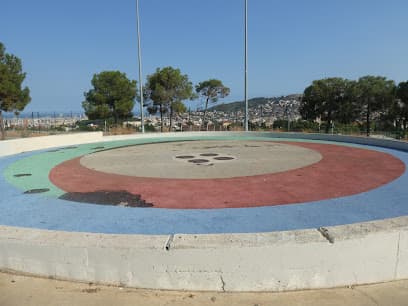
Parc de Xavier Montsalvatge
200 m · Municipality of Horta-Guinardó
A steep, unpretentious slice of Horta-Guinardó where the views are free, the dogs run wild, and the tourists are nowhere to be found. Real Barcelona, raw and uphill.
4.0(43)
ParkTourist attraction
ATTRACTION
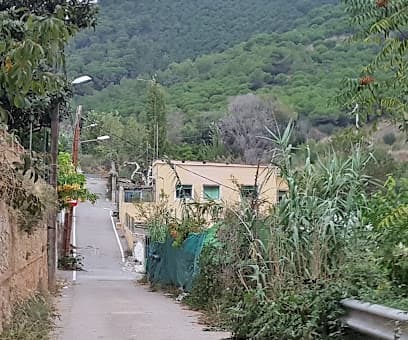
Barri de la Font del Gos
200 m · Municipality of Horta-Guinardó
A defiant, self-built neighborhood clinging to the edge of Collserola, where the city’s noise dies and the real, unpolished Barcelona begins its steep, vertical climb.
4.2(27)
Park
RESTAURANT
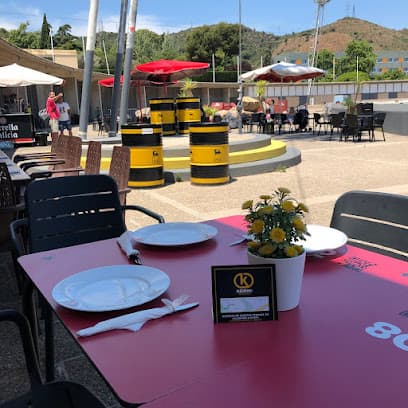
Keirin Bar
€€500 m · Municipality of Horta-Guinardó
A gritty, high-octane pit stop for cyclists and locals in Horta. No frills, just massive bocadillos, cold beer, and a terrace that overlooks the neighborhood's daily rhythm.
4.4(236)
Tapas barBar & grill

RESTAURANT
Can Cortada
€€€600 m · Municipality of Horta-Guinardó
An 11th-century fortress turned meat temple where the scent of oak charcoal and Catalan tradition hangs heavy in the ancient stone air of Horta.
4.3(5K)
Catalonian restaurantGrill
HOTEL
Hotel Colors
€750 m · Municipality of Horta-Guinardó
A no-frills outpost in Horta where the walls are bright, the Metro is your lifeline, and you’re far enough from the Rambla to actually hear yourself think and find a parking spot.
3.5(450)
Hotel

HOTEL
Hotel Alimara
€950 m · Municipality of Horta-Guinardó
Escape the tourist-choked center for a sleek, quiet refuge in Horta where the next generation of Catalan hospitality is born and the Labyrinth Park is your backyard.
4.2(3K)
Hotel
Frequently Asked Questions
Is Mirador d'Horta worth visiting?
Absolutely, if you want the most expansive, non-touristy view of the city. It's less crowded than the Bunkers del Carmel and offers a unique perspective from the northern mountains.
How do I get to the Mirador d'Horta swing?
The best way is by car or motorcycle via the BV-1415 road. You can also take the V21 bus to the end of the line and hike up, but it's a steep, 30-minute climb.
Are there wild boars at Mirador d'Horta?
Yes, wild boars are very common here, especially at sunset and night. They are generally used to humans but should not be fed or approached, as they can be unpredictable.
Is the swing always there?
Not always. Because it is an unofficial installation, park authorities sometimes remove it. However, locals usually replace it within a few weeks.
Reviews
0 reviews for Mirador d'Horta
No reviews yet. Be the first to share your experience!