4.2
210 verified reviews
About
Barcelona is a city that constantly tries to sell you a version of itself that involves polished stone, overpriced cava, and a guy dressed as a human statue. But if you have the lungs for it and a willingness to leave the Gothic Quarter behind, you head uphill. You head to Horta-Guinardó. This isn't the Barcelona of the postcards; it’s the Barcelona of steep inclines, laundry hanging over balconies, and the kind of quiet that feels like a luxury in a city of 1.6 million people. Tucked into the wilder, scruffier folds of the Parc del Guinardó lies La Font del Cuento—the Fountain of the Story.
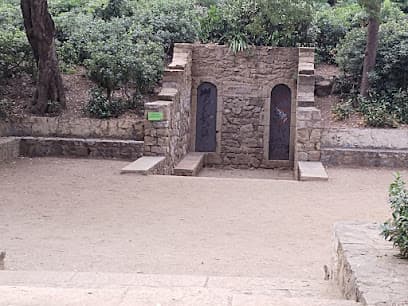
Don’t come here expecting the Trevi. This isn't a monument to some dead emperor or a display of hydraulic ego. It’s a stone niche, a humble spout, and a few benches that have seen better days. The name itself, 'Cuento,' comes from the tradition of locals gathering here to tell stories, or perhaps more accurately, to tell tall tales. In the late 19th and early 20th centuries, this was the site of 'aplecs'—social gatherings where the working class of Barcelona would escape the smog and the factory whistles to eat, drink, and lie to each other about how much money they were making or how many hearts they’d broken. It was the social media of its day, fueled by spring water and probably a fair amount of cheap wine brought up in leather skins.
The walk up Carrer de Garriga i Roca will make your calves scream, but that’s the price of admission. As you ascend, the city noise begins to peel away, replaced by the hiss of wind through Aleppo pines and the occasional bark of a local’s dog. The park around the fountain is a masterpiece of terraced landscaping by Jean-Claude Nicolas Forestier, the same guy who did Montjuïc, but here it feels more untamed, more honest. It’s a place where the roots of the trees are slowly reclaiming the stone stairs, and the air smells like damp earth and rosemary instead of diesel fumes.
Let’s be honest: the fountain itself is often dry these days. Catalonia is thirsty, and the spring that once fed these gatherings is more of a memory than a torrent. You might find a trickle, or you might find a dry stone mouth. There’s some graffiti, and the maintenance can be, shall we say, indifferent. But that’s part of the charm. It’s a place that doesn't care if you like it. It doesn't have a gift shop. It doesn't have a QR code for tickets. It just exists, a quiet witness to a century of gossip and Sunday afternoon naps.
If you’re the kind of traveler who needs a guided tour and a climate-controlled bus, stay on La Rambla. You’ll be happier there. But if you want to see where the city actually breathes, where the old men still sit on benches and argue about football while their grandkids run through the dirt, then make the climb. Bring a bottle of water—because you can’t rely on the fountain—and maybe a story of your own to tell. When you reach the top and look back down at the Sagrada Familia looking like a sandcastle in the distance, you’ll realize that the best parts of Barcelona are the ones that don't try so hard to be noticed. It’s a gritty, beautiful, vertical slice of reality in a city that’s increasingly becoming a theme park.
Type
Historical landmark, Tourist attraction
Duration
1-2 hours
Best Time
Late afternoon for the golden hour views over the city, or early morning to avoid the heat during the climb.
What People Say
park(12)water(10)dogs(4)maintenance(3)walking(3)art conservation(2)forest(2)2024(2)
Features
Historical landmark
Tourist attraction
Categories
HistoryNatureHikingLocal Culture
Ticket Prices
Free Admission
No tickets required
Opening Hours
- MondayOpen 24 hours
- TuesdayOpen 24 hours
- WednesdayOpen 24 hours
- ThursdayOpen 24 hours
- FridayOpen 24 hours
- SaturdayOpen 24 hours
- SundayOpen 24 hours
Must-See Highlights
The stone niche of the fountain
The terraced stone staircases
The panoramic view of the Sagrada Familia from the upper paths
Visitor Tips
The climb is steep; don't attempt it in flimsy sandals.
Combine this with a visit to the Bunkers del Carmel for a full afternoon of hiking.
Check the local weather; the park offers little shade on the main paths during midday.
Good For
HikersDog ownersBudget travelersHistory buffsPhotography enthusiasts
Why Visit
Authentic local gathering spot with 18th-century roots
Panoramic views of Barcelona without the Bunkers del Carmel crowds
Wild, terraced forest landscape designed by Forestier
Nearby Landmarks
- Bunkers del Carmel (15-minute walk)
- Hospital de Sant Pau (15-minute walk)
- Parc de les Aigües (10-minute walk)
Accessibility
- Steep inclines
- Unpaved paths
- Not recommended for wheelchairs or those with limited mobility
Location
Carrer de Garriga i Roca, 1
Municipality of Horta-Guinardó, Barcelona
Nearby Hotels
Nearby Restaurants
In Municipality of Horta-Guinardó
ATTRACTION
メリーゴーランド
Municipality of Horta-Guinardó
A spinning, neon-lit relic of neighborhood childhood, tucked away in the dusty, unvarnished heart of Horta-Guinardó, far from the Gaudi-crazed tourist herds.
0.0(0)
Park
ATTRACTION
SunsetBoatBarcelona
Municipality of Horta-Guinardó
Escape the sweltering, tourist-choked streets for the open Mediterranean, where the city skyline bleeds into the dusk and the Cava actually tastes like freedom.
0.0(0)
Tourist attraction

ATTRACTION
Labyrinth
Municipality of Horta-Guinardó
Barcelona’s oldest garden is a neoclassical middle finger to the city’s chaos, featuring a cypress maze where you can actually lose yourself—and the crowds—for a few euros.
0.0(0)
Tourist attraction
Frequently Asked Questions
Is La Font del Cuento worth visiting?
Yes, if you enjoy hiking, local history, and escaping the tourist crowds. It offers a raw, authentic look at Barcelona's park culture, though the fountain itself is often dry due to recent droughts.
How do I get to La Font del Cuento?
Take the L4 Metro to Alfons X or Guinardó | Hospital de Sant Pau. From there, it is a steep 15-20 minute walk uphill through the Parc del Guinardó.
Is there an entrance fee for the park?
No, access to La Font del Cuento and the surrounding Parc del Guinardó is completely free and open to the public 24/7.
What should I bring when visiting?
Wear sturdy walking shoes for the steep terrain and bring your own water, as the historic fountain is frequently dry and there are few kiosks nearby.
Reviews
0 reviews for La Font del Cuento
No reviews yet. Be the first to share your experience!