4.6
13 verified reviews
About
Barcelona is a city that loves to show off its scars and its trophies in equal measure. While the masses are choking on the fumes of La Rambla or elbowing each other for a glimpse of a Gaudí chimney, the real city—the one where people actually live, bleed, and walk their dogs—is waiting for you up the hill, largely ignored by the guidebooks. The Parc de la Vall d'Hebron is exactly that kind of place. It’s an Olympic ghost, a sprawling, tiered landscape of concrete, grass, and ambition that was carved out for the 1992 Games and then handed back to the neighborhood once the cameras stopped rolling.
Getting here requires a bit of a climb. Horta-Guinardó isn't interested in your comfort; it’s a district built on an incline that will make your calves scream for mercy. But that’s the price of admission. When you arrive, you aren't greeted by a velvet rope or a ticket booth. You’re greeted by the 'Mistos'—a massive, surrealist sculpture of a matchbook by Claes Oldenburg and Coosje van Bruggen. It’s fourteen meters of pop-art defiance, giant yellow-tipped matches scattered like a god dropped his smokes on the way to the hospital next door. It’s weird, it’s slightly aggressive, and it’s perfectly Barcelona.
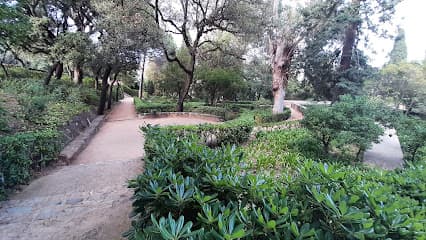
The park itself is a brutal lesson in urban planning that doesn't try too hard to be 'pretty.' It’s functional. It’s a series of terraces that follow the natural slope of the land, connected by stairs and ramps that feel like they were designed for a skateboarder’s fever dream. There are groves of pine trees that offer a sharp, resinous scent that cuts through the city’s humidity, and wide-open plazas where the sun hits the pavement with a brutal honesty. You won't find any manicured rose gardens or 'keep off the grass' signs here. This is a park for the people who live in the high-rise blocks nearby, the ones who remember when this whole area was a chaotic mess of ravines and slums before the Olympics cleaned it up.
Walk further up and the city finally opens up. Because this place is perched on the edge of the city’s northern bowl, the views are spectacular without being curated. You see the Sagrada Família poking its spires through the haze, the Mediterranean shimmering in the distance, and the dense grid of the Eixample laid out like a map. It’s a perspective that reminds you how small the 'tourist' part of the city actually is. Here, the soundtrack isn't a guided tour; it’s the rhythmic thud of a basketball on a nearby court, the chatter of grandmothers on benches, and the occasional siren from the Vall d’Hebron hospital.
Is it perfect? Hell no. The concrete is weathered, some of the walls are tagged with graffiti that lacks any artistic merit, and the wind can whip through the open spaces with a vengeance. But it’s honest. It’s a place to sit with a cheap beer from the corner shop, watch the sun dip behind Tibidabo, and realize that the best parts of travel aren't the ones you pay for. It’s the places that don't care if you’re there or not. If you want the polished, postcard version of Barcelona, stay in the Gothic Quarter. If you want to see how the city breathes when it thinks no one is looking, take the L3 metro to Vall d'Hebron and start walking up.
Type
Garden
Duration
1-2 hours
Best Time
Late afternoon for the low sun views and to see the neighborhood come alive with locals.
Features
Garden
Categories
Contemporary ArtSculptureOlympic HistoryViewpoint
Ticket Prices
Free Admission
No tickets required
Must-See Highlights
The 'Mistos' matchbook sculpture
The panoramic view of the city toward the sea
The Pavelló de la República (a replica of the 1937 Paris Exhibition pavilion)
Visitor Tips
Wear comfortable shoes; the park is built on a significant incline.
Bring your own water and snacks as there are few kiosks within the park itself.
Combine this with a visit to the nearby Laberint d'Horta for a full day in the district.
Good For
Art loversBudget travelersPhotography enthusiastsLocal culture seekers
Why Visit
Post-Olympic Urbanism: A masterclass in how 1992 reshaped the city’s former ravines into a usable civic landscape.
Olympic Legacy: One of the best examples of how the 1992 Games transformed the city's outskirts.
Unfiltered Local Vibe: A genuine neighborhood park far removed from the commercialized city center.
Nearby Landmarks
- Hospital de la Vall d'Hebron (5-minute walk)
- Metro Vall d'Hebron (3-minute walk)
- Laberint d'Horta (15-minute walk)
- Pavelló de la República (5-minute walk)
Accessibility
- Paved ramps available
- Elevators at nearby Metro station
- Tiered levels may be challenging for some
Location
Municipality of Horta-Guinardó, Barcelona
Nearby Hotels
Nearby Restaurants
In Municipality of Horta-Guinardó
ATTRACTION
メリーゴーランド
Municipality of Horta-Guinardó
A spinning, neon-lit relic of neighborhood childhood, tucked away in the dusty, unvarnished heart of Horta-Guinardó, far from the Gaudi-crazed tourist herds.
0.0(0)
Park
ATTRACTION
SunsetBoatBarcelona
Municipality of Horta-Guinardó
Escape the sweltering, tourist-choked streets for the open Mediterranean, where the city skyline bleeds into the dusk and the Cava actually tastes like freedom.
0.0(0)
Tourist attraction

ATTRACTION
Labyrinth
Municipality of Horta-Guinardó
Barcelona’s oldest garden is a neoclassical middle finger to the city’s chaos, featuring a cypress maze where you can actually lose yourself—and the crowds—for a few euros.
0.0(0)
Tourist attraction
Frequently Asked Questions
Is Parc de la Vall d'Hebron worth visiting?
Yes, if you appreciate modern urban design and avoiding tourist crowds. It offers a unique look at how the 1992 Games transformed the city's rugged northern periphery into a functional, tiered public space with incredible views.
What is the giant matchstick sculpture in Barcelona?
It is called 'Mistos' (Matches), created by artists Claes Oldenburg and Coosje van Bruggen for the 1992 Olympics. It is the centerpiece of the Vall d'Hebron park area.
How do I get to Parc de la Vall d'Hebron?
Take the L3 (Green Line) or L5 (Blue Line) Metro to the Vall d'Hebron station. The park is a short, uphill walk from the station exit.
Is there an entrance fee for the park?
No, the park is a public space and is completely free to enter 24 hours a day.
Reviews
0 reviews for Jardins del parc
No reviews yet. Be the first to share your experience!