ATTRACTION
Jardins de Marià Cañardo Lacasta
Municipality of Horta-Guinardó, Barcelona
4.3 · 414 reviews
4.3
414 verified reviews
About
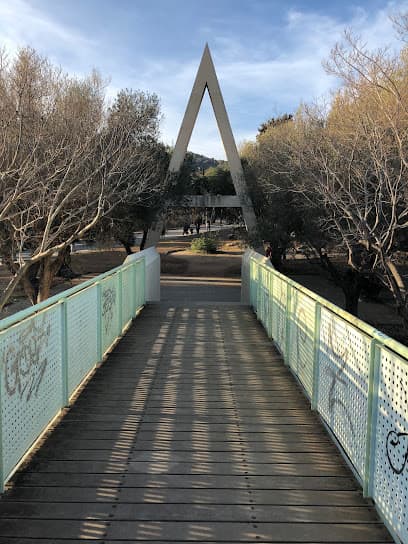
Horta-Guinardó is where Barcelona stops trying to impress you and starts being itself. It’s a neighborhood of steep inclines, laundry hanging over balconies, and a stubborn refusal to cater to the cruise ship crowds. If you’ve made it this far up the L3 metro line to Mundet, you aren't here for a selfie with a mosaic lizard. You’re here because you want to breathe. The Jardins de Marià Cañardo Lacasta aren't your typical manicured European gardens. There are no gravel paths lined with petunias or statues of forgotten dukes. Instead, you get the raw, honest edge of the city meeting the Collserola hills.
Named after Marià Cañardo, a man who won the Volta a Catalunya seven times back when bikes were made of heavy steel and roads were mostly prayer and dust, these gardens serve as the green lungs for the nearby Velòdrom d'Horta. It’s a place that smells of pine needles and hot asphalt—a visceral mix of scents that tells you you’ve left the humidity of the coast behind. The park wraps around the sleek, white curves of the velodrome, a relic of the 1992 Olympics that still feels like a spaceship that landed in the woods. While the tourists are suffocating in the Gothic Quarter, here you’ll find old men in tracksuits discussing the day’s stage of the Tour and kids learning that gravity is a cruel mistress on the paved slopes.
Walking through these gardens is a lesson in Barcelona’s verticality. The terrain doesn't ask for your permission; it demands effort. But the payoff is a quiet that feels almost illegal in a city this loud. You’re standing in the shadow of history—both the sporting kind and the architectural kind. The velodrome itself is a masterpiece of late-century design, but the gardens are what ground it. They provide a buffer of green that makes the transition from the urban grid to the wild mountain scrub feel earned. It’s a place for strolling, sure, but it’s also a place for contemplation. You look out over the city from here and realize just how small the 'must-see' attractions really are.
There’s a certain grit here that I respect. It’s not 'pretty' in the way a postcard is pretty. It’s functional. It’s a place where people actually live, sweat, and drink a cold beer after a long ride. If you’re looking for a café with oat milk lattes and English menus, keep walking. But if you want to sit on a bench, watch the light change over the Horta valley, and feel the pulse of a neighborhood that doesn't give a damn about your travel itinerary, this is it. It’s one of the best parks in Barcelona for anyone who values silence over spectacle.
Is it worth the trek? If you’re a cycling nerd, it’s a pilgrimage. If you’re a traveler who finds beauty in the peripheral, it’s the real deal. It’s the kind of place that reminds you that the best parts of a city are often the ones they don't bother to put on the cover of the brochure. Come here late in the afternoon when the sun starts to dip behind the Tibidabo mountain, grab a can of Estrella from a nearby bodega, and just exist for a while. No queues, no tickets, no bullshit. Just the wind in the pines and the distant hum of a city that feels a million miles away.
Type
Park, Tourist attraction
Duration
1 hour
Best Time
Late afternoon for cooler temperatures and local vibes.
What People Say
velodrome(4)disfrutar(3)strolling(2)beer(2)
Features
Park
Tourist attraction
Categories
CyclingOlympicsNatureLocal Culture
Ticket Prices
Free Admission
No tickets required
Opening Hours
- Monday10 AM to 8:30 PM
- Tuesday10 AM to 8:30 PM
- Wednesday10 AM to 8:30 PM
- Thursday10 AM to 8:30 PM
- Friday10 AM to 8:30 PM
- Saturday10 AM to 8:30 PM
- Sunday10 AM to 8:30 PM
Must-See Highlights
The view of the Velòdrom d'Horta's modern architecture
The memorial plaque dedicated to cyclist Marià Cañardo
The transition into the pine forests of Collserola
Visitor Tips
Combine this with a visit to the nearby Labyrinth Park (Laberint d'Horta).
Wear comfortable shoes as the area is quite hilly.
Bring your own water and snacks as there are limited facilities inside the park itself.
Good For
CyclistsBudget travelersNature loversLocal explorers
Why Visit
Located next to the iconic 1992 Olympic Velodrome
Named after the legendary 7-time Volta a Catalunya winner Marià Cañardo
Offers a genuine local atmosphere far from the typical tourist circuits
Nearby Landmarks
- Velòdrom d'Horta Miquel Poblet (1-minute walk)
- Parc del Laberint d'Horta (5-minute walk)
- Mundet Metro Station (5-minute walk)
- Campus Mundet - Universitat de Barcelona (3-minute walk)
Accessibility
- Paved pathways
- Accessible by public transport (Metro Mundet)
- Some steep inclines due to hilly terrain
Location
Passeig dels Castanyers, 14
Municipality of Horta-Guinardó, Barcelona
Nearby Hotels
Nearby Restaurants
In Municipality of Horta-Guinardó
ATTRACTION
メリーゴーランド
Municipality of Horta-Guinardó
A spinning, neon-lit relic of neighborhood childhood, tucked away in the dusty, unvarnished heart of Horta-Guinardó, far from the Gaudi-crazed tourist herds.
0.0(0)
Park
ATTRACTION
SunsetBoatBarcelona
Municipality of Horta-Guinardó
Escape the sweltering, tourist-choked streets for the open Mediterranean, where the city skyline bleeds into the dusk and the Cava actually tastes like freedom.
0.0(0)
Tourist attraction

ATTRACTION
Labyrinth
Municipality of Horta-Guinardó
Barcelona’s oldest garden is a neoclassical middle finger to the city’s chaos, featuring a cypress maze where you can actually lose yourself—and the crowds—for a few euros.
0.0(0)
Tourist attraction
Frequently Asked Questions
Is Jardins de Marià Cañardo Lacasta worth visiting?
Yes, if you want to escape the tourist center and enjoy a quiet, local atmosphere near the mountains. It's especially worth it for cycling fans and those visiting the nearby Horta Labyrinth.
How do I get to the gardens?
Take the Metro Line 3 (Green) to the Mundet station. From there, it's a short 5-minute walk uphill toward the Velòdrom d'Horta.
What is the best time to visit?
Late afternoon is ideal to avoid the midday heat and to catch the sunset views over the Horta-Guinardó district.
Are there any entrance fees?
No, the gardens are a public park and are completely free to enter 24/7.
Reviews
0 reviews for Jardins de Marià Cañardo Lacasta
No reviews yet. Be the first to share your experience!