ATTRACTION
Hospital de la Santa Creu i Sant Pau Church
Municipality of Horta-Guinardó, Barcelona
4.5 · 272 reviews
4.5
272 verified reviews
About
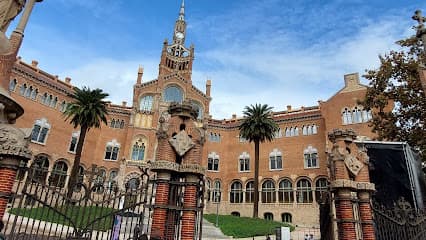
Most hospitals are designed to be forgotten—sterile, fluorescent-lit corridors of beige and bleach where you count the minutes until you can escape. But Lluís Domènech i Montaner, the man who gave Barcelona the Palau de la Música Catalana, had a different idea. He believed that beauty was a form of medicine, that a patient’s soul needed as much care as their broken bones. The Church of the Hospital de la Santa Creu i Sant Pau is the spiritual anchor of that radical, beautiful experiment.
Located at the northern end of the sprawling Recinte Modernista de Sant Pau, the church doesn't just sit there; it commands the space. While the rest of the world is busy elbowing each other for a glimpse of the Sagrada Família just a few blocks down the road, this place offers something rarer: quiet, unfiltered brilliance. It was one of the final pieces of the puzzle, completed by Domènech i Montaner’s son, Pere Domènech i Roura, after his father passed away. It’s a transition point where the elder’s floral, organic Modernisme meets the son’s slightly more restrained, rationalist touch.
Step inside and the first thing that hits you isn't the weight of religion, but the light. The stained glass here is a protein rush for the cortex. Designed by Francesc Labarta, these windows don’t just filter light; they manipulate it, casting deep blues and fiery reds across the stone pillars that look like they’re growing out of the floor. The nave is a Latin cross, but it feels more like a forest. You’ll find yourself staring at the pulpit, a heavy, intricate piece of work that looks like it was carved by someone who knew their time was short and their message was urgent.
This isn't a 'hidden gem'—I hate that phrase—it’s a masterpiece that’s been hiding in plain sight. For decades, this was a functioning hospital church. People came here in their darkest hours, praying for life while surrounded by some of the most expensive, elaborate architecture in Europe. There is a visceral weight to that history. You can feel it in the worn tiles and the way the sound of your footsteps echoes off the polygonal apse. It’s a reminder that in Barcelona, even the act of suffering was supposed to happen in a place of dignity and art.
The sculptures by Pau Gargallo add another layer of grit and grace. They aren't the soft, doughy saints you see in tourist traps. They have bone and sinew. They look like they’ve seen things. If you’re looking for the best Modernisme in Barcelona without the Disney-fied crowds, this is your spot. It’s a window into a time when the city’s elite decided that the poor and the sick deserved to look at something better than a white-washed wall.
Is it worth the trek up from the center? Absolutely. Walk up the Avinguda de Gaudí from the Sagrada Família. Watch the crowds thin out, the souvenir shops turn into actual bakeries, and the noise of the city drop an octave. By the time you reach the gates of Sant Pau, you’ve left the theme park behind. The church is the final reward at the end of that walk—a quiet, stone-and-glass middle finger to the idea that hospitals should be ugly and that faith should be boring.
Type
Catholic church, Tourist attraction
Duration
1-2 hours
Best Time
Weekday mornings right at opening (10:00 AM) to catch the morning light through the stained glass before the school groups arrive.
Guided Tours
Available
Audio Guide
Available
What People Say
glass staining(8)architecture(8)modernisme(7)pillars(5)pulpit(4)set(4)beauty(4)stairs(3)
Features
Catholic church
Tourist attraction
Categories
ArchitectureUNESCO World HeritageModernismeCatholic Church
Ticket Prices
adult€16
child€0
senior€11.20
Opening Hours
- Monday8 to 9 PM
- Tuesday8 to 9 PM
- Wednesday8 to 9 PM
- Thursday8 to 9 PM
- Friday8 to 9 PM
- Saturday8 to 9 PM
- Sunday8 to 9 PM
Must-See Highlights
The stained glass windows by Francesc Labarta
The ornate pulpit
Sculptures by Pau Gargallo
The view of the church from the central hospital gardens
Visitor Tips
Buy the Recinte Modernista ticket online to skip the queue.
Walk up from Sagrada Família via Avinguda de Gaudí for the best architectural approach.
Check the parish schedule if you wish to attend a service, but remember that photography is restricted during mass.
Good For
Architecture enthusiastsHistory buffsPhotographersQuiet seekers
Why Visit
Part of the world's largest Art Nouveau complex and a UNESCO World Heritage site.
A rare example of 'healing architecture' where beauty was integrated into a functional hospital.
Features a unique collaboration between Lluís Domènech i Montaner and his son, Pere Domènech i Roura.
Nearby Landmarks
- Recinte Modernista de Sant Pau (0-minute walk)
- Avinguda de Gaudí (1-minute walk)
- Sagrada Família (15-minute walk)
- Parc del Guinardó (12-minute walk)
Accessibility
- Wheelchair accessible
- Elevators available in the complex
- Accessible restrooms
Location
Carrer de Sant Antoni Maria Claret, 167
Municipality of Horta-Guinardó, Barcelona
Nearby Hotels
Nearby Restaurants
In Municipality of Horta-Guinardó
ATTRACTION
メリーゴーランド
Municipality of Horta-Guinardó
A spinning, neon-lit relic of neighborhood childhood, tucked away in the dusty, unvarnished heart of Horta-Guinardó, far from the Gaudi-crazed tourist herds.
0.0(0)
Park
ATTRACTION
SunsetBoatBarcelona
Municipality of Horta-Guinardó
Escape the sweltering, tourist-choked streets for the open Mediterranean, where the city skyline bleeds into the dusk and the Cava actually tastes like freedom.
0.0(0)
Tourist attraction

ATTRACTION
Labyrinth
Municipality of Horta-Guinardó
Barcelona’s oldest garden is a neoclassical middle finger to the city’s chaos, featuring a cypress maze where you can actually lose yourself—and the crowds—for a few euros.
0.0(0)
Tourist attraction
Frequently Asked Questions
Is the Hospital de la Santa Creu i Sant Pau Church worth visiting?
Yes, especially if you want to see world-class Modernista architecture without the crushing crowds of the Sagrada Família. The stained glass and the historical context of a 'healing city' make it a unique stop.
Do I need a separate ticket for the church?
The church is typically included as part of the Sant Pau Recinte Modernista tour. However, as it is a functioning parish (Mare de Déu de Montserrat), it may be accessible for free during mass times, though tourist wandering is discouraged then.
How do I get to the Sant Pau Church?
Take the Metro Line 4 (Yellow) to the 'Guinardó | Hospital de Sant Pau' station. It is also a pleasant 15-minute walk from the Sagrada Família along the pedestrianized Avinguda de Gaudí.
What are the highlights of the church interior?
Focus on the stunning stained glass windows by Francesc Labarta, the intricate pulpit, and the sculptures by Pau Gargallo. The way the light interacts with the stone pillars is the main draw.
Reviews
0 reviews for Hospital de la Santa Creu i Sant Pau Church
No reviews yet. Be the first to share your experience!