4.3
302 verified reviews
About
Most people coming to this corner of Horta-Guinardó are sheep-walking their way toward the Labyrinth of Horta, desperate to get lost in some hedges for an Instagram story. They’re missing the real story. Just a stone’s throw away, tucked into the skirt of the Collserola hills, sits the Jardins del Palau de les Heures. It’s a French château that looks like it was kidnapped from the Loire Valley and dropped into a Mediterranean pine forest. It’s weird, it’s quiet, and it’s exactly the kind of place you go when the chaos of La Rambla makes you want to scream into a pillow.
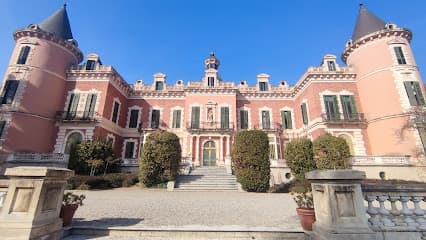
You enter through the Mundet Campus of the University of Barcelona. It’s a strange transition—one minute you’re surrounded by stressed-out students clutching overpriced lattes and textbooks, and the next, you’re walking onto the grounds of what was once the ego-trip of Josep Gallart Forgas. This guy made his fortune in Puerto Rico and came back to Barcelona in the late 19th century with a point to prove. He hired August Font i Carreras to build him a palace that screamed 'I have arrived.' The result is a neo-Renaissance beast with four cylindrical towers and a steep roof that looks like it belongs in a rainy French province, not under the scorching Catalan sun.
The gardens are laid out in three grand terraces, descending the hillside with a rigid, French-style symmetry that would make a drill sergeant weep with joy. This isn't the wild, overgrown greenery you find elsewhere in the city. This is nature forced into submission. You’ve got manicured hedges, rows of orange trees that scent the air with a bitter citrus tang, and towering palms that remind you exactly where you are. The middle terrace is the heart of the thing, featuring a pond where water lilies float with a sort of lazy indifference. It’s the kind of spot where you expect to see a 19th-century aristocrat brooding over a lost duel, but instead, you’ll likely find a lone student trying to memorize anatomy notes.
There’s a certain melancholy to the place. The statues are weathered, the stone balustrades show their age, and the palace itself—now used by the university—has that slightly sterile, institutional hum behind its grand windows. But that’s the charm. It’s not a museum piece polished to a high shine for the benefit of cruise ship passengers. It’s a living, breathing part of the city’s academic fabric that just happens to look like a movie set. The climb up the terraces is worth it for the perspective alone. From the upper levels, the city of Barcelona stretches out below you, a dense thicket of concrete and history, but from up here, the roar of the B-20 highway is just a distant, harmless hum.
Don't come here looking for a gift shop, a guided tour, or a cafeteria selling soggy sandwiches. There are no bells and whistles. It’s just stone, water, and a lot of trees—magnolias, cedars, and those iconic 'heures' (ivy) that give the palace its name. It’s a place for a quiet smoke, a long walk, or a moment of genuine reflection. If you’re the kind of traveler who needs to be entertained every five seconds, stay on the bus. But if you want to see a piece of Barcelona’s soul that hasn't been packaged and sold back to you, the Heures Palace Gardens are waiting. It’s honest, it’s slightly decaying, and it’s absolutely beautiful in its refusal to be a tourist trap.
Type
Garden, Tourist attraction
Duration
1-1.5 hours
Best Time
Late afternoon for the golden hour light on the palace facade and fewer students around.
What People Say
trees(5)mansion(3)water lilies(3)university(3)castle(3)peaceful(2)contemplation(2)meditation(2)
Features
Garden
Tourist attraction
Categories
ArchitectureParkUniversity Site
Ticket Prices
Free Admission
No tickets required
Opening Hours
- Monday10 AM to 6 PM
- Tuesday10 AM to 6 PM
- Wednesday10 AM to 6 PM
- Thursday10 AM to 6 PM
- Friday10 AM to 6 PM
- Saturday10 AM to 6 PM
- Sunday10 AM to 6 PM
Must-See Highlights
The water lily pond on the middle terrace
The four neo-Renaissance towers of the palace
The view of Barcelona from the top terrace
The ancient orange and magnolia trees
Visitor Tips
Combine this with a visit to the Labyrinth of Horta next door.
Bring water and snacks as there are no facilities inside the garden itself.
Respect the university environment; it's a place of study as much as a park.
Good For
Solitude seekersArchitecture buffsBudget travelersCouples
Why Visit
French Château Architecture in Catalonia
Terraced Gardens with City Views
Quiet Academic Atmosphere
Nearby Landmarks
- Laberint d'Horta (5-minute walk)
- Velòdrom d'Horta (8-minute walk)
- Parc de Collserola (10-minute walk)
Accessibility
- Partial accessibility; the lower terraces are reachable, but the upper levels involve stairs.
Location
Passeig de la Vall d'Hebron, 171
Municipality of Horta-Guinardó, Barcelona
Nearby Hotels
Nearby Restaurants
In Municipality of Horta-Guinardó
ATTRACTION
メリーゴーランド
Municipality of Horta-Guinardó
A spinning, neon-lit relic of neighborhood childhood, tucked away in the dusty, unvarnished heart of Horta-Guinardó, far from the Gaudi-crazed tourist herds.
0.0(0)
Park
ATTRACTION
SunsetBoatBarcelona
Municipality of Horta-Guinardó
Escape the sweltering, tourist-choked streets for the open Mediterranean, where the city skyline bleeds into the dusk and the Cava actually tastes like freedom.
0.0(0)
Tourist attraction

ATTRACTION
Labyrinth
Municipality of Horta-Guinardó
Barcelona’s oldest garden is a neoclassical middle finger to the city’s chaos, featuring a cypress maze where you can actually lose yourself—and the crowds—for a few euros.
0.0(0)
Tourist attraction
Frequently Asked Questions
Is Heures Palace Gardens worth visiting?
Yes, if you want to escape the crowds. It offers a unique French-style landscape and a quiet atmosphere that you won't find in the more famous city center parks.
How do I get to Heures Palace Gardens?
Take the L3 Metro (Green Line) to the Mundet station. From there, it's a 10-minute uphill walk through the University of Barcelona's Mundet Campus.
Is there an entrance fee for the gardens?
No, entrance to the Jardins del Palau de les Heures is free to the public, though access is limited to the garden's opening hours, usually from 10:00 AM until sunset.
Can you go inside the Palau de les Heures?
Generally, no. The palace building is used for university administration and classrooms, so while you can admire the architecture from the terraces, the interior is not open for tourist visits.
Reviews
0 reviews for Heures Palace Gardens
No reviews yet. Be the first to share your experience!