3.3
6 verified reviews
About
Barcelona is a city that usually refuses to shut up. From the rattle of the scooters in Gràcia to the relentless thrum of the Gothic Quarter, it’s a place of constant friction. But if you take the L3 metro to the end of the line and keep walking past the manicured hedges of the Laberint d'Horta, you hit a wall. Not a literal one, but a geographic one. This is Font del Gos, the point where the city’s ambition finally runs out of breath and the Collserola mountain range takes over.
Don’t come here looking for a gift shop or a place to buy a lukewarm espresso. Font del Gos isn’t a 'park' in the way most tourists understand the word. It’s a trailhead, a transition zone, and a small, somewhat isolated neighborhood that feels like it’s been forgotten by the 21st century. The current rating for this place is low, and honestly, that’s a good sign. It means the people looking for a 'gastronomic adventure' or a 'curated experience' got lost and went home disappointed. This is a place for people who like the smell of dry pine needles, the crunch of limestone under their boots, and the very real possibility of running into a wild boar looking for a snack.
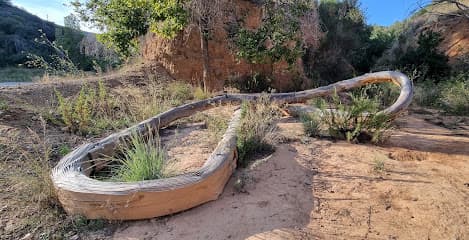
The arrival is a bit surreal. You pass the Velòdrom d'Horta—a relic of the '92 Olympics that looks like a concrete spaceship—and suddenly the pavement starts to crumble. The air changes. It gets thinner, cooler, and smells of rosemary and wild thyme. The 'fountain' itself, the Font del Gos, is more of a landmark for hikers than a majestic water feature. In a city obsessed with Gaudí’s curves, this is the antithesis: jagged, dusty, and entirely indifferent to your presence.
As you climb higher into the Horta-Guinardó hills, the reward isn't a plaque or a statue. It’s the view. You look back and see Barcelona laid out like a messy, beautiful blueprint. You can see the Sagrada Família poking up like a strange sandcastle, the Agbar Tower glowing in the distance, and the Mediterranean shimmering on the horizon. But from up here, the noise is gone. You’re standing in the lungs of the city, and for a moment, you can actually hear yourself think.
The people you’ll meet here aren't wearing designer sneakers. They are serious hikers with weathered faces, locals walking dogs that look like they’ve seen some things, and mountain bikers who treat these vertical trails with a mix of reverence and insanity. There is no pretension here. Nobody is trying to sell you a postcard. It’s just you, the dirt, and the ridge line.
Is it worth it? If you need a break from the 'must-see' lists and the crushing weight of the tourist trail, then yes. It’s a reminder that Barcelona is more than just a collection of monuments; it’s a city carved into a mountain. It’s raw, it’s steep, and it’s completely honest. Just bring your own water, wear shoes that can handle the grit, and don't expect the mountain to apologize for being difficult. That’s exactly why it’s worth the trip.
Type
Hiking area
Duration
2-4 hours
Best Time
Early morning or late afternoon to avoid the midday sun and catch the best light over the city.
Features
Hiking area
Categories
HikingNatureViewpointOutdoor Activity
Ticket Prices
Free Admission
No tickets required
Opening Hours
- MondayOpen 24 hours
- TuesdayOpen 24 hours
- WednesdayOpen 24 hours
- ThursdayOpen 24 hours
- FridayOpen 24 hours
- SaturdayOpen 24 hours
- SundayClosed
Must-See Highlights
The ridge line trails overlooking the Horta district
The transition from urban sprawl to Mediterranean forest
The view of the Sagrada Família from the upper trails
Visitor Tips
The fountain water is often non-potable; do not rely on it for hydration.
Download an offline map as some trails in Collserola are poorly marked.
Combine this with a visit to the nearby Laberint d'Horta for a full day in the district.
Good For
HikersDog ownersSolo travelersNature lovers
Why Visit
Authentic gateway to the Collserola Natural Park without the crowds of Tibidabo
Raw, panoramic views of the Barcelona skyline and the Mediterranean Sea
A genuine 'local' atmosphere where the city meets the Mediterranean wilderness
Nearby Landmarks
- 10-minute walk from Laberint d'Horta
- 5-minute walk from Velòdrom d'Horta
- 15-minute walk from Mundet Metro Station
Accessibility
- Not wheelchair accessible
- Steep and uneven terrain
- Limited paved areas
Location
Carrer Germans Desvalls
Municipality of Horta-Guinardó, Barcelona
Nearby Hotels
Nearby Restaurants
In Municipality of Horta-Guinardó
ATTRACTION
メリーゴーランド
Municipality of Horta-Guinardó
A spinning, neon-lit relic of neighborhood childhood, tucked away in the dusty, unvarnished heart of Horta-Guinardó, far from the Gaudi-crazed tourist herds.
0.0(0)
Park
ATTRACTION
SunsetBoatBarcelona
Municipality of Horta-Guinardó
Escape the sweltering, tourist-choked streets for the open Mediterranean, where the city skyline bleeds into the dusk and the Cava actually tastes like freedom.
0.0(0)
Tourist attraction

ATTRACTION
Labyrinth
Municipality of Horta-Guinardó
Barcelona’s oldest garden is a neoclassical middle finger to the city’s chaos, featuring a cypress maze where you can actually lose yourself—and the crowds—for a few euros.
0.0(0)
Tourist attraction
Frequently Asked Questions
Is Font del Gos worth visiting?
Only if you enjoy rugged, unpolished hiking and want to escape the city crowds. If you are looking for amenities, cafes, or paved paths, you will be disappointed.
How do I get to Font del Gos?
Take the Metro L3 (Green Line) to Mundet station. From there, it is about a 15-minute uphill walk past the Velòdrom d'Horta to reach the trailhead area.
What should I bring to Font del Gos?
Bring plenty of water, as the fountain is not always reliable for drinking, and wear sturdy hiking shoes. The trails are steep, rocky, and exposed to the sun.
Are there wild boars at Font del Gos?
Yes, wild boars (senglars) are very common in this part of Collserola, especially at dusk. They are generally used to humans but should be given a wide berth.
Reviews
0 reviews for Font del Gos
No reviews yet. Be the first to share your experience!