3.2
5 verified reviews
About
Most people think of the 1992 Olympics and their minds go straight to the grand stadiums of Montjuïc or the revamped beachfront of Barceloneta. But the Games stretched their tentacles deep into the hills of the city, leaving behind strange, bronze artifacts in neighborhoods that tourists usually only see from a bus window on their way to Tibidabo. The Font Cabriola, tucked away in the Vall d'Hebron area of Horta-Guinardó, is one of those artifacts. It’s a piece of urban furniture that feels less like a monument and more like a forgotten toy left behind by a giant.
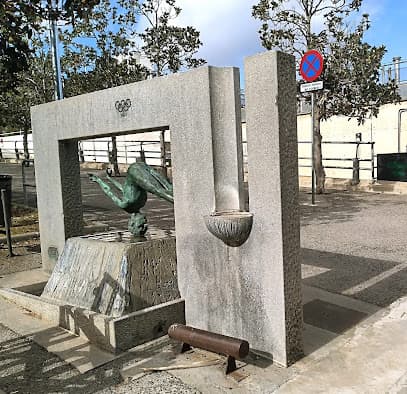
Located on the Pas d'Isadora Duncan—a walkway named after the tragic dancer whose life ended in a freak accident with a silk scarf—the fountain is the work of sculptor Juan Bordes. It’s part of a series of eight 'fountains of the Olympic Games' commissioned to spruce up the city for its big debut on the world stage. The sculpture itself is a bronze figure caught in a 'cabriola' or a somersault, perched precariously on a stone pedestal. It’s athletic, slightly grotesque in its muscularity, and entirely devoid of the saccharine charm you find in the city center’s more famous fountains. This is art for a neighborhood that works for a living.
Let’s be honest: if you’re looking for the Trevi Fountain, you’re in the wrong place. Half the time, the water isn't even running, a victim of Barcelona’s recurring droughts or the simple indifference of municipal maintenance. But there’s something strangely compelling about this bronze man doing a handstand in the middle of a quiet, residential stretch. It represents a moment in time when Barcelona was trying to figure out what it wanted to be—modern, daring, and perhaps a little bit weird. The surrounding area of Vall d'Hebron is a landscape of concrete, steep hills, and the massive Hospital de la Vall d'Hebron. It’s the real Barcelona, the one where people actually live, far removed from the sangria-soaked chaos of La Rambla.
Walking up here feels like a pilgrimage for the dedicated urban explorer. You aren't here for a 'must-see' attraction; you’re here to see how a city heals and grows around its scars. The Font Cabriola is a window into the 1992 Olympic legacy that isn't polished for a brochure. It’s weathered, it’s solitary, and it’s surrounded by the hum of the Ronda de Dalt highway. It’s the kind of place where you can sit on a nearby bench, crack a cold beer from a corner store, and watch the locals walk their dogs past a piece of world-class sculpture without giving it a second glance.
Is it worth the trek? If you’re an art nerd or an Olympic completist, absolutely. If you want to understand the architectural DNA of Horta-Guinardó, yes. But if you’re looking for a 'feast for the senses' or a 'gastronomic adventure,' keep moving. This is a quiet, slightly melancholic reminder that the party of '92 ended a long time ago, but the guests left some pretty interesting things behind. It’s a bit of grit in the oyster of Barcelona’s tourism machine, and for that reason alone, I kind of love it.
Type
Tourist attraction
Duration
15-30 minutes
Best Time
Late afternoon when the light hits the bronze, and the neighborhood locals are out for their evening stroll.
Features
Tourist attraction
Categories
SculptureOlympic HistoryPublic Art
Ticket Prices
Free Admission
No tickets required
Opening Hours
- MondayOpen 24 hours
- TuesdayOpen 24 hours
- WednesdayOpen 24 hours
- ThursdayOpen 24 hours
- FridayOpen 24 hours
- SaturdayOpen 24 hours
- SundayOpen 24 hours
Must-See Highlights
The intricate bronze detailing of the somersaulting figure
The surrounding views of the Horta hills
The nearby Olympic-era urban planning of Vall d'Hebron
Visitor Tips
Don't expect the fountain to be turned on; it's often dry due to water restrictions.
Combine this with a visit to the nearby Laberint d'Horta for a full afternoon in the district.
Wear comfortable shoes as the area is quite hilly.
Good For
Art enthusiastsHistory buffsSolo travelersBudget travelers
Why Visit
Authentic 1992 Olympic legacy artifact
Zero tourist crowds in a residential neighborhood
Unique bronze sculpture by renowned artist Juan Bordes
Nearby Landmarks
- Hospital de la Vall d'Hebron (5-minute walk)
- Velòdrom d'Horta (12-minute walk)
- Parc de la Vall d'Hebron (8-minute walk)
- Metro Mundet (10-minute walk)
Accessibility
- Outdoor public space
- Paved walkways
- Wheelchair accessible via public paths
Location
Pas d'Isadora Duncan, 89-73
Municipality of Horta-Guinardó, Barcelona
Nearby Hotels
Nearby Restaurants
In Municipality of Horta-Guinardó
ATTRACTION
メリーゴーランド
Municipality of Horta-Guinardó
A spinning, neon-lit relic of neighborhood childhood, tucked away in the dusty, unvarnished heart of Horta-Guinardó, far from the Gaudi-crazed tourist herds.
0.0(0)
Park
ATTRACTION
SunsetBoatBarcelona
Municipality of Horta-Guinardó
Escape the sweltering, tourist-choked streets for the open Mediterranean, where the city skyline bleeds into the dusk and the Cava actually tastes like freedom.
0.0(0)
Tourist attraction

ATTRACTION
Labyrinth
Municipality of Horta-Guinardó
Barcelona’s oldest garden is a neoclassical middle finger to the city’s chaos, featuring a cypress maze where you can actually lose yourself—and the crowds—for a few euros.
0.0(0)
Tourist attraction
Frequently Asked Questions
Is Font Cabriola worth visiting?
Only if you are interested in 1992 Olympic history or public sculpture. It is a quiet, local spot far from the main tourist trail and often lacks running water.
How do I get to Font Cabriola?
Take the Metro L3 (Green Line) to the Mundet or Vall d'Hebron stations. From there, it is a short walk through the residential area of Pas d'Isadora Duncan.
What is the significance of the sculpture?
Created by Juan Bordes for the 1992 Olympics, it represents the athletic spirit of the games through a bronze figure performing a somersault or 'cabriola'.
Reviews
0 reviews for Font Cabriola Jocs Olímpics
No reviews yet. Be the first to share your experience!