3.7
39 verified reviews
About
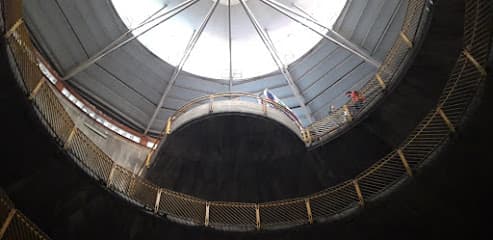
If you’re looking for the glittering mosaics of Gaudí or the polished marble of the Passeig de Gràcia, you’ve taken the wrong turn. You’ve gotten off the L5 metro at Horta, and frankly, the city doesn’t care if you’re here or not. This is Horta-Guinardó, a neighborhood that still feels like the independent village it once was, and the Cilindre d'Horta is its unvarnished, brick-and-mortar heart. It’s not a palace. It’s not a cathedral. It’s a water tank. A cylindrical brick tower that stands as a silent, slightly melancholy witness to a time when this part of Barcelona was the city’s washing machine.
Back in the 19th and early 20th centuries, if you were a wealthy family in the Eixample, your linens didn’t just magically become white. They were bundled up and sent here, to the 'bugaderes'—the laundresses of Horta. These women were the backbone of the local economy, spending their lives bent over stone basins, scrubbing the filth of the city out of heavy fabrics with lye and sheer physical force. The Cilindre was part of the infrastructure that made that toil possible, a reservoir that kept the water flowing to the laundry houses that lined these narrow, sloping streets.
When you stand in front of it today on Carrer Beatriu, you aren’t looking at 'art' in the traditional sense. You’re looking at industrial necessity. The brickwork is honest, functional, and weathered by decades of Mediterranean sun and city grime. It’s a 3.7-star experience on Google because, to the casual observer, it’s just a big brick tube in a quiet plaza. There are no gift shops, no audio guides narrated by celebrities, and no one is trying to sell you a overpriced mojito. And that is exactly why it matters. It’s a piece of the real Barcelona—the one that worked, sweated, and smelled of damp soap.
The surrounding area, the 'Illa de les Bugaderes,' still retains that low-slung, village-like atmosphere. You can almost hear the phantom slap of wet cloth against stone if you stand still long enough. The neighborhood hasn't been hollowed out by short-term rentals yet; people actually live here. They buy bread, they argue about football in the local bars, and they walk past this monument to their ancestors' labor without a second glance. It’s part of the furniture of their lives.
Is it worth the trek? If you want a 'best things to do in Barcelona' list that involves standing in line for three hours, then no. Stay in the Gothic Quarter. But if you want to understand the city’s scars, if you want to see the infrastructure of survival, then yes. Pair a visit here with a walk to the nearby Plaça de les Santes Creus. Grab a coffee at a place where the waiter doesn't speak English and doesn't feel particularly bad about it. Look at the Cilindre and think about the thousands of women whose hands were raw from the water this tower once held. It’s a quiet, heavy presence, far removed from the neon lights of La Rambla. It’s the kind of place that reminds you that every great city is built on the backs of people whose names we’ve mostly forgotten, but whose brickwork remains, stubborn and proud, in the middle of a quiet street.
Type
Heritage building, Tourist attraction
Duration
15-30 minutes
Best Time
Late afternoon when the sun hits the brickwork and the neighborhood plazas come alive with locals.
Features
Heritage building
Tourist attraction
Categories
Industrial HeritageHistoryArchitecture
Ticket Prices
Free Admission
No tickets required
Opening Hours
- Monday8 AM to 6 PM
- Tuesday8 AM to 6 PM
- Wednesday8 AM to 6 PM
- Thursday8 AM to 6 PM
- Friday8 AM to 6 PM
- Saturday8 AM to 6 PM
- Sunday8 AM to 6 PM
Must-See Highlights
The intricate 19th-century brickwork of the cylinder
The nearby Carrer d'Aiguafreda with its original stone laundry basins
The commemorative plaque explaining the role of the laundresses
Visitor Tips
Combine this with a visit to Quimet d'Horta for a classic 'chapa' sandwich in the village square.
Walk down Carrer d'Aiguafreda nearby to see where the actual washing took place.
Don't expect a museum; it's a monument in a public square.
Good For
History buffsArchitecture studentsOff-the-beaten-path explorersBudget travelers
Why Visit
Authentic industrial heritage of the 'Bugaderes d'Horta'
Zero tourist crowds in a genuine residential neighborhood
A rare surviving example of 19th-century water infrastructure
Nearby Landmarks
- Plaça de les Santes Creus (2-minute walk)
- Carrer d'Aiguafreda (5-minute walk - historic laundry street)
- Laberint d'Horta (20-minute walk or short bus ride)
Accessibility
- Outdoor public space
- Level ground access in the plaza
Location
Carrer Beatriu, 30
Municipality of Horta-Guinardó, Barcelona
Nearby Restaurants
In Municipality of Horta-Guinardó
ATTRACTION
メリーゴーランド
Municipality of Horta-Guinardó
A spinning, neon-lit relic of neighborhood childhood, tucked away in the dusty, unvarnished heart of Horta-Guinardó, far from the Gaudi-crazed tourist herds.
0.0(0)
Park
ATTRACTION
SunsetBoatBarcelona
Municipality of Horta-Guinardó
Escape the sweltering, tourist-choked streets for the open Mediterranean, where the city skyline bleeds into the dusk and the Cava actually tastes like freedom.
0.0(0)
Tourist attraction

ATTRACTION
Labyrinth
Municipality of Horta-Guinardó
Barcelona’s oldest garden is a neoclassical middle finger to the city’s chaos, featuring a cypress maze where you can actually lose yourself—and the crowds—for a few euros.
0.0(0)
Tourist attraction
Frequently Asked Questions
Is Cilindre d'Horta worth visiting?
Only if you have a genuine interest in industrial history or want to see a non-touristy side of Barcelona. It is a historical monument, not an interactive museum, so don't expect a long visit.
What exactly is the Cilindre d'Horta?
It is a 19th-century brick water tank that served the local laundry industry, specifically the famous laundresses (bugaderes) of the Horta neighborhood.
How do I get to Cilindre d'Horta?
Take the Metro Line 5 (Blue) to the Horta station. From there, it is a short 5-minute walk through the historic center of the neighborhood to Carrer Beatriu.
Is there an entrance fee for Cilindre d'Horta?
No, it is a public monument located in an open plaza. You can view it for free at any time of day.
Reviews
0 reviews for Cilindre d'Horta
No reviews yet. Be the first to share your experience!