4.2
308 verified reviews
About
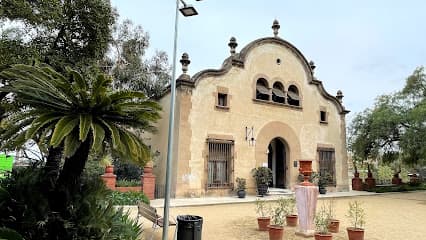
If you’re looking for the neon-lit, sangria-soaked version of Barcelona, stay on La Rambla with the rest of the sheep. But if you want to see the bones of the city—the weird, obsessive, aristocratic heart of it—you head north to Guinardó. You climb the hills until the air gets a little thinner and the sound of rolling suitcases fades into the distance. Here, behind a gate on Avinguda de la Mare de Déu de Montserrat, sits the Casa Museu Núria Pla, and it is a trip.
This isn't just some dusty house museum. This was the Mas Ravetllat-Pla, a fortress of science and high society. Back in the day, Ramon Pla Armengol and Joaquim Ravetllat Estech weren't just socialites; they were running a pharmaceutical empire, specifically the Instituto Ravetllat-Pla, where they spent decades trying to crack the code of tuberculosis. The ground floor still hums with that history—a clinical, rationalist space where medicine was brewed and fortunes were made. It’s a reminder that Barcelona’s wealth wasn't just built on textiles and trade, but on the desperate search for a cure.
Then there’s the furniture. God, the furniture. Núria Pla, Ramon’s daughter, was a woman of singular, perhaps even manic, focus. She spent her life amassing one of the most significant collections of Spanish furniture in the world. We’re talking over 800 pieces. Walking through these rooms is like a punch to the gut for anyone who appreciates craft. You’ve got 14th-century Gothic chests that look like they could hold the secrets of the Inquisition, 17th-century Baroque cabinets dripping with gold, and delicate marquetry that makes modern design look like IKEA scrap. It’s a timeline of Spanish power told through wood, leather, and iron. It’s heavy, it’s dark, and it’s magnificent.
The atmosphere here is thick. It’s the kind of place where you expect to see a ghost in a lab coat or a silk gown around every corner. The house itself is a hybrid—part traditional farmhouse, part rationalist laboratory, part neoclassical palace. It shouldn't work, but it does. And the gardens? They’re a sprawling, slightly wild buffer against the encroaching city, a place where the silence is only broken by the occasional bird or the distant hum of a Vespa.
What really sets this place apart, though, is how they use the space now. They haven't just mothballed it. On certain nights, the silence is shattered by jazz or opera. There is something profoundly visceral about hearing a saxophone wail or a soprano hit a high C in a room surrounded by five hundred years of Spanish history. It’s not a 'tourist experience'; it’s a cultural collision.
Is it for everyone? No. If you need interactive touchscreens and gift shops selling Gaudí-patterned magnets, you’ll be bored out of your mind. But if you want to see a side of Barcelona that hasn't been polished for the masses—a place of science, obsession, and staggering beauty—then this is your spot. It’s one of the best museums in Barcelona that nobody talks about, and frankly, that’s exactly why you should go. It’s honest, it’s strange, and it’s absolutely worth the trek up the hill.
Type
Heritage museum, Museum
Duration
1.5 - 2 hours
Best Time
Late afternoon for a guided tour followed by a sunset walk in the nearby Guinardó Park.
Guided Tours
Available
What People Say
furniture(17)opera(8)menu(8)jazz(6)muy interesante(6)stage production(6)occurrence(5)catering(5)
Features
Heritage museum
Museum
Tourist attraction
Categories
Decorative ArtsHistory of ScienceArchitectureLive Music
Ticket Prices
adult€12
child€10
senior€10
Opening Hours
- MondayClosed
- TuesdayClosed
- WednesdayClosed
- Thursday10:30 AM to 1:30 PM
- FridayClosed
- Saturday10:30 AM to 1:30 PM
- SundayClosed
Must-See Highlights
The 14th-century Gothic furniture collection
The original pharmaceutical laboratory equipment
The sprawling private gardens of the estate
The Baroque 'Bargueño' cabinets
Visitor Tips
Check their calendar for 'Nits de Jazz' or opera nights for a unique evening experience.
The museum is located uphill; wear comfortable shoes if you plan to walk from the metro.
Guided tours are mandatory for seeing the full collection, so book your slot early.
Good For
History buffsAntique loversMusic enthusiastsOff-the-beaten-path explorers
Why Visit
World-class collection of over 800 pieces of Spanish furniture from the 14th to 19th centuries.
Located in a former pharmaceutical laboratory specializing in tuberculosis research.
Regular host of intimate jazz and opera concerts within the historic museum rooms.
Nearby Landmarks
- Hospital de Sant Pau (12-minute walk)
- Parc del Guinardó (10-minute walk)
- Bunkers del Carmel (20-minute walk/uphill)
Accessibility
- Partial wheelchair access (ground floor)
- Guided tours available
Location
Av. de la Mare de Déu de Montserrat, 114
Municipality of Horta-Guinardó, Barcelona
Nearby Hotels
Nearby Restaurants
In Municipality of Horta-Guinardó
ATTRACTION
メリーゴーランド
Municipality of Horta-Guinardó
A spinning, neon-lit relic of neighborhood childhood, tucked away in the dusty, unvarnished heart of Horta-Guinardó, far from the Gaudi-crazed tourist herds.
0.0(0)
Park
ATTRACTION
SunsetBoatBarcelona
Municipality of Horta-Guinardó
Escape the sweltering, tourist-choked streets for the open Mediterranean, where the city skyline bleeds into the dusk and the Cava actually tastes like freedom.
0.0(0)
Tourist attraction

ATTRACTION
Labyrinth
Municipality of Horta-Guinardó
Barcelona’s oldest garden is a neoclassical middle finger to the city’s chaos, featuring a cypress maze where you can actually lose yourself—and the crowds—for a few euros.
0.0(0)
Tourist attraction
Frequently Asked Questions
Is Casa Museu Núria Pla worth visiting?
Absolutely, if you appreciate history and decorative arts without the crowds. It houses one of Europe's most important Spanish furniture collections in a unique former pharmaceutical laboratory.
Do I need to book tickets in advance?
Yes, visits are typically conducted via guided tours which must be booked in advance through their official website to ensure entry.
How do I get to Casa Museu Núria Pla?
The easiest way is taking the Metro L4 to Guinardó | Hospital de Sant Pau or various buses like the D40 or H6 that stop nearby on Avinguda de la Mare de Déu de Montserrat.
What can I see at the museum?
You can explore the historic Mas Ravetllat-Pla, the former pharmaceutical labs, and a staggering collection of over 800 pieces of Spanish furniture dating from the 14th to 19th centuries.
Reviews
0 reviews for Casa Museu NÚRIA PLA
No reviews yet. Be the first to share your experience!