4.2
57 verified reviews
About
You’re grinding up the Ronda del Guinardó, dodging scooters and breathing in the exhaust of a city that never stops moving, and then you see it. It looks like a hallucination. A piece of Granada or Marrakech that someone accidentally dropped into a working-class Barcelona neighborhood. This is the Casa de les Altures, and it is, quite frankly, one of the weirdest architectural pivots in a city already famous for its structural eccentricities.
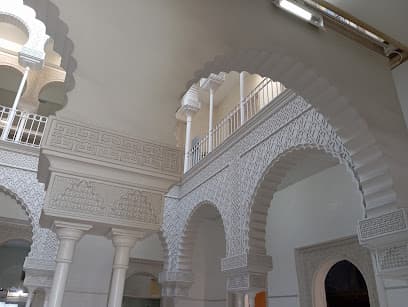
Built in 1890, this wasn’t the work of Gaudí or any of the Modernista heavyweights who were busy turning Eixample into a high-end theme park. This was the ego-trip of the general manager of the Barcelona Water Company. Back then, if you controlled the water, you were basically a god, and the architect Enric Figueras decided the boss needed a house that reflected that status. The result is a Neo-Mudéjar masterpiece—a style that looks back to Spain’s Islamic past with horseshoe arches, intricate brickwork, and the kind of decorative flourishes that make you wonder if the owner was trying to summon a genie.
But here’s the kicker, the part that makes it truly Barcelona: today, this former palace of a water sultan is a municipal administration office. You walk through these intricate, historically significant gates not to worship at the altar of architecture, but to file a noise complaint or renew a parking permit. There is something deeply satisfying about seeing a local resident in a tracksuit standing under a magnificent Moorish arch, waiting for a bureaucrat to stamp a form. It’s the ultimate democratization of beauty.
The building sits on the edge of the Parc de les Aigües, which used to be the site of massive water reservoirs. The park itself is a relief—a patch of green in a densely packed part of the city where the air feels a little thinner and the tourists are non-existent. You won’t find any gift shops here selling plastic Sagrada Familias. You’ll find old men playing petanca, kids kicking footballs against stone walls, and the occasional architecture nerd who wandered past the usual tourist borders to see what happens when 19th-century wealth meets 21st-century local government.
Is it worth the trek? If you’re tired of the polished, curated version of Barcelona that the tourism boards want you to see, then yes. It’s a reminder that this city has layers. It’s a place where a water company boss could build a palace that looked like the Alhambra just because he could, and where the city eventually took it back and filled it with desks and filing cabinets. It’s honest, it’s beautiful, and it’s slightly ridiculous.
Don’t expect a guided tour with headsets. Just walk around the exterior, admire the brickwork that looks like lace, and take a seat in the park. Watch the neighborhood go by. This is the real Horta-Guinardó—a place that doesn’t care if you’re there or not, which is exactly why you should go. It’s a protein hit of pure, unadulterated history served without the side of pretension that usually comes with Barcelona’s famous landmarks.
Type
Municipal administration office, Tourist attraction
Duration
30-45 minutes
Best Time
Weekday mornings to see the building in its dual role as a public office and architectural monument.
What People Say
park(2)building(2)
Features
Municipal administration office
Tourist attraction
Categories
ArchitectureHistoryPublic ParkNeo-Mudéjar
Ticket Prices
Free Admission
No tickets required
Must-See Highlights
The intricate horseshoe arches on the main facade
The detailed brickwork and ceramic ornamentation typical of Neo-Mudéjar style
The surrounding gardens of Parc de les Aigües
The contrast between the 19th-century palace and the modern administrative life inside
Visitor Tips
Combine this with a visit to the nearby Hospital de Sant Pau to see two very different sides of 19th-century Barcelona architecture.
Don't expect a museum; respect that this is a working government building.
The park is a great spot for a picnic away from the downtown chaos.
Good For
Architecture enthusiastsBudget travelersPhotographersHistory buffs
Why Visit
Intricate Neo-Mudéjar architecture that contrasts sharply with Barcelona's typical Modernisme
Located in the authentic, non-touristy neighborhood of Horta-Guinardó
Housed within the peaceful Parc de les Aigües, offering a quiet break from the city center
Nearby Landmarks
- Parc de les Aigües (1-minute walk)
- Hospital de Sant Pau (12-minute walk)
- Bunkers del Carmel (20-minute uphill walk)
- Biblioteca Guinardó-Mercè Rodoreda (5-minute walk)
Accessibility
- Wheelchair accessible park paths
- Accessible public entrance for administrative areas
Location
Ronda del Guinardó, 49
Municipality of Horta-Guinardó, Barcelona
Nearby Hotels
Nearby Restaurants
In Municipality of Horta-Guinardó
ATTRACTION
メリーゴーランド
Municipality of Horta-Guinardó
A spinning, neon-lit relic of neighborhood childhood, tucked away in the dusty, unvarnished heart of Horta-Guinardó, far from the Gaudi-crazed tourist herds.
0.0(0)
Park
ATTRACTION
SunsetBoatBarcelona
Municipality of Horta-Guinardó
Escape the sweltering, tourist-choked streets for the open Mediterranean, where the city skyline bleeds into the dusk and the Cava actually tastes like freedom.
0.0(0)
Tourist attraction

ATTRACTION
Labyrinth
Municipality of Horta-Guinardó
Barcelona’s oldest garden is a neoclassical middle finger to the city’s chaos, featuring a cypress maze where you can actually lose yourself—and the crowds—for a few euros.
0.0(0)
Tourist attraction
Frequently Asked Questions
Is Casa de les Altures worth visiting?
Yes, if you appreciate unique architecture without the crowds. It's a rare example of Neo-Mudéjar style in Barcelona and reveals the city's industrial history away from the main tourist hubs.
Can you go inside Casa de les Altures?
Since it serves as the District Council office for Horta-Guinardó, you can enter the public areas during administrative hours, but there are no formal tourist tours of the interior. The exterior and surrounding gardens are the main draw.
How do I get to Casa de les Altures?
The easiest way is via the L4 Metro (Yellow Line) to the Alfons X station. From there, it's a short 5-minute walk along Ronda del Guinardó.
Is there an entrance fee for Casa de les Altures?
No, visiting the exterior and the surrounding Parc de les Aigües is completely free, making it a great option for budget-conscious travelers.
Reviews
0 reviews for Casa de les Altures
No reviews yet. Be the first to share your experience!