4.2
27 verified reviews
About
Barcelona is a city that has been polished until it bleeds, scrubbed clean for the postcards and the cruise ship crowds. But if you possess the stamina to climb past the Velòdrom and the manicured hedges of the Labyrinth Park, you’ll find a place that refuses to be shiny. Barri de la Font del Gos isn't a park in the way the tourism board wants you to think of one. It’s a neighborhood, a scrappy, vertical outpost of humanity carved into the side of the Collserola massif. It’s a middle finger to the orderly grid of the Eixample, a place where the city finally gives up and the mountain takes over.
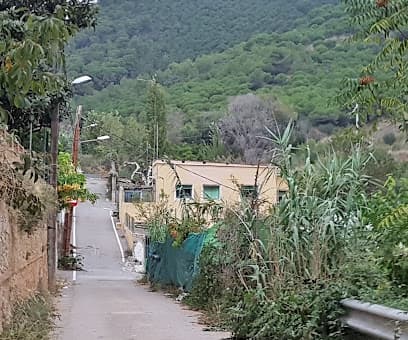
Walking up the Camí de Cal Notari, the air changes. The smell of exhaust and frying tapas is replaced by the scent of damp earth, rosemary, and the occasional whiff of woodsmoke. This is one of the last bastions of 'autoconstrucción'—houses built by the hands of the people who live in them. In the mid-20th century, immigrants from southern Spain arrived with nothing and built their lives here, brick by brick, often under the cover of night to avoid the Franco-era authorities. You can feel that history in the uneven pavement and the way the houses huddle together, defiant and proud. It’s not 'charming' in a Disney way; it’s honest in a way that most of the city has forgotten how to be.
As you ascend, the noise of the Ronda de Dalt fades into a low hum. You’re in the Horta-Guinardó district, but you might as well be in a remote village in the Pyrenees. The streets are narrow, winding, and punishingly steep. You’ll see old men tending to small vegetable patches and laundry flapping in the mountain breeze. There are no gift shops here. No overpriced cafes with 'authentic' paella. If you want a drink, you’d better have brought it with you, or be prepared to hike back down to the civilization of Mundet.
The real reason to come here, aside from the voyeuristic thrill of seeing a neighborhood that hasn't been turned into an Airbnb colony, is the transition. This is the gateway to the Serra de Collserola Natural Park. The paved roads eventually dissolve into dirt tracks that lead you deep into the green lungs of Barcelona. From these heights, the views are staggering. You see the Sagrada Família looking like a sandcastle in the distance, the Mediterranean a flat blue sheet beyond it, and the entire chaotic sprawl of the city laid out like a map. It’s one of the best views in Barcelona, and unlike the Bunkers del Carmel, you won't have to fight a thousand influencers for a square inch of concrete.
Is it worth visiting? That depends on what you’re looking for. If you want a 'must-see' attraction with a ticket booth and a guided tour, stay away. You’ll be bored, tired, and probably lost. But if you want to understand the grit that built this city, if you want to see where the urban fabric finally unravels into the wild, then Font del Gos is essential. It’s a reminder that despite the gentrification and the mass tourism, there are still corners of Barcelona that belong to the people who live there. It’s quiet, it’s rough around the edges, and it’s absolutely real. Just wear decent shoes and keep your voice down—people are living here, and they’ve worked too hard for their peace for you to ruin it.
Type
Park
Duration
1-2 hours
Best Time
Late afternoon for the sunset views over the city, or early morning for a hike into Collserola.
Features
Park
Categories
NeighborhoodHikingViewpointNature
Ticket Prices
Free Admission
No tickets required
Opening Hours
- MondayOpen 24 hours
- TuesdayOpen 24 hours
- WednesdayOpen 24 hours
- ThursdayOpen 24 hours
- FridayOpen 24 hours
- SaturdayOpen 24 hours
- SundayOpen 24 hours
Must-See Highlights
The panoramic view of Barcelona from the top of Camí de Cal Notari
The transition point where the residential street turns into a mountain trail
The humble, self-built houses that tell the story of the neighborhood's working-class roots
Visitor Tips
Wear sturdy walking shoes; the incline is no joke.
Respect the privacy of residents; this is a quiet community, not a photo set.
Bring a reusable water bottle as there are no shops once you start the climb.
Download an offline map as cell service can be spotty once you enter the forest trails.
Good For
HikersPhotography enthusiastsSolo travelersBudget travelers
Why Visit
Authentic 'autoconstrucción' architecture built by residents in the mid-20th century
Direct access to the wild hiking trails of the Serra de Collserola Natural Park
Panoramic city views without the crowds found at more famous viewpoints
Nearby Landmarks
- Laberint d'Horta (15-minute walk)
- Velòdrom d'Horta (12-minute walk)
- Parc de Collserola (Direct access from the neighborhood)
- Mundet Metro Station (15-minute walk downhill)
Accessibility
- Extremely steep terrain
- Limited paved sidewalks
- Not recommended for those with mobility issues
Location
17,, Camí de Cal Notari, 15
Municipality of Horta-Guinardó, Barcelona
Nearby Hotels
Nearby Restaurants
In Municipality of Horta-Guinardó
ATTRACTION
メリーゴーランド
Municipality of Horta-Guinardó
A spinning, neon-lit relic of neighborhood childhood, tucked away in the dusty, unvarnished heart of Horta-Guinardó, far from the Gaudi-crazed tourist herds.
0.0(0)
Park
ATTRACTION
SunsetBoatBarcelona
Municipality of Horta-Guinardó
Escape the sweltering, tourist-choked streets for the open Mediterranean, where the city skyline bleeds into the dusk and the Cava actually tastes like freedom.
0.0(0)
Tourist attraction

ATTRACTION
Labyrinth
Municipality of Horta-Guinardó
Barcelona’s oldest garden is a neoclassical middle finger to the city’s chaos, featuring a cypress maze where you can actually lose yourself—and the crowds—for a few euros.
0.0(0)
Tourist attraction
Frequently Asked Questions
Is Barri de la Font del Gos worth visiting?
Yes, if you enjoy hiking and want to see an unvarnished, residential side of Barcelona with incredible city views. It is not a traditional tourist attraction with amenities, so only visit if you appreciate quiet, rustic environments.
How do I get to Font del Gos?
Take the Metro L3 (Green Line) to Mundet. From there, it is a steep 15-20 minute walk uphill or you can take the 185 bus which gets you closer to the neighborhood entrance.
Are there restaurants or shops in Font del Gos?
No, this is a strictly residential neighborhood. You should bring your own water and snacks. For dining, you will need to head back down toward the Horta or Mundet metro areas.
Is it safe to hike in this area?
Yes, it is a safe residential area and the trails into Collserola are well-traveled by locals. However, the terrain is very steep and uneven, so proper footwear is essential.
Reviews
0 reviews for Barri de la Font del Gos
No reviews yet. Be the first to share your experience!