5.0
5 verified reviews
About
If these walls could talk, they wouldn’t just speak; they’d scream, sweat, and probably demand a stiff drink. We’re standing in front of what was once the beating, cocaine-dusted heart of Barcelona’s post-Franco awakening. Studio 54, located at Avinguda del Paral·lel, 62, wasn’t just a nightclub; it was a middle finger to forty years of repression. It was the moment a city decided to stop looking over its shoulder and start looking for the nearest strobe light.
In the early 80s, an American entrepreneur named Mike Oliver looked at an old theater called the Cine Nuevo and saw a temple of excess. He didn’t just want a disco; he wanted the New York City mythos transplanted into the Mediterranean grit of Poble-sec. And for a decade, he got it. This was the 'Broadway of Barcelona,' a stretch of road that had always been home to the city’s anarchists, sailors, and cabaret queens. Studio 54 fit right in, offering a cavernous space where 3,000 people could lose their minds simultaneously under one of the most sophisticated light shows in Europe.
But let’s be real: the Studio 54 you see today isn’t the one that made your parents’ pupils dilate. The disco lights are long gone, replaced by the more respectable glow of the Teatre Apolo. The transition from a den of iniquity to a venue for musical theater is the classic Barcelona story—the sanitization of the soul in the name of progress. Today, it’s a place where you go to see 'Chicago' or a magic show, not to watch the sun come up while vibrating from bass frequencies.
Is it worth visiting? That depends on what you’re looking for. If you’re a fan of architectural history and the cultural evolution of a city, then yes, standing on this corner is essential. You’re at the intersection of the Raval and Poble-sec, two neighborhoods that still refuse to be fully tamed. The building itself retains that imposing, slightly theatrical presence that hints at its past lives. You can still feel the scale of the place. It’s a massive volume of space that has seen everything from circus acts to drag shows to the kind of parties that would make a modern influencer faint.
When you walk this stretch of Paral·lel today, you’re walking through a graveyard of good times. The old theaters are mostly gone or converted, but the energy hasn't entirely evaporated. It’s just changed form. You come here now for the theater, for the nearby tapas crawl on Carrer de Blai, or for a show at the Apolo. But for those of us who appreciate the ghosts of a city, the ghost of Studio 54 is the most vivid one on the block. It represents that brief, wild window when Barcelona was the most dangerous and exciting place in the world.
Don't expect a museum. There’s no plaque detailing the amount of gin consumed in 1985. It’s just a theater now. But if you stand across the street at 2:00 AM and squint, you can almost see the line of people stretching down the block, waiting to get a taste of a freedom they’d only just learned how to use. It’s a reminder that cities, like people, have their wild years before they settle down and start charging for tickets to a matinee. It’s honest, it’s a little bit sad, and it’s pure Barcelona.
Type
Tourist attraction
Duration
2-3 hours (for a show)
Best Time
Evening, specifically when a show is scheduled to experience the building's interior.
Features
Tourist attraction
Categories
HistoryTheaterNightlife HeritageArchitecture
Ticket Prices
adult€20-€60
Must-See Highlights
The grand facade on Avinguda del Paral·lel
The interior auditorium of the Teatre Apolo
The surrounding Poble-sec neighborhood for post-show tapas
Visitor Tips
Check the Teatre Apolo schedule in advance as it is no longer a walk-in club.
Combine a visit with a walk down Carrer de Blai for the city's best pintxos.
Look for the historical photos of the area often displayed in nearby cafes.
Good For
History buffsTheater loversArchitecture enthusiastsNostalgia seekers
Why Visit
Historic site of Barcelona's most famous 1980s mega-club
Located on the legendary 'Broadway of Barcelona' (Paral·lel)
Now houses the Teatre Apolo, one of the city's premier musical theaters
Nearby Landmarks
- Teatre Victòria (3-minute walk)
- Carrer de Blai Tapas Street (5-minute walk)
- Refugi 307 Civil War Shelter (8-minute walk)
- Maritime Museum of Barcelona (10-minute walk)
Accessibility
- Wheelchair accessible entrance
- Accessible seating available
- Elevator access
Location
Av. del Paral·lel, 62
Ciutat Vella, Barcelona
Nearby Hotels
Nearby Restaurants
In Ciutat Vella
ATTRACTION
Park
Ciutat Vella
A thousand years of silence tucked behind a Romanesque monastery, where the grit of El Raval dissolves into ancient stone, cool shadows, and the heavy weight of history.
0.0(0)
Park
ATTRACTION
BARSHELONA
Ciutat Vella
Forget the plastic bulls and tacky magnets. This is where Barcelona’s soul is bottled into art, a small sanctuary of local design hidden in the shadows of the Gothic Quarter.
0.0(0)
Tourist attraction
ATTRACTION
Minajoe art
Ciutat Vella
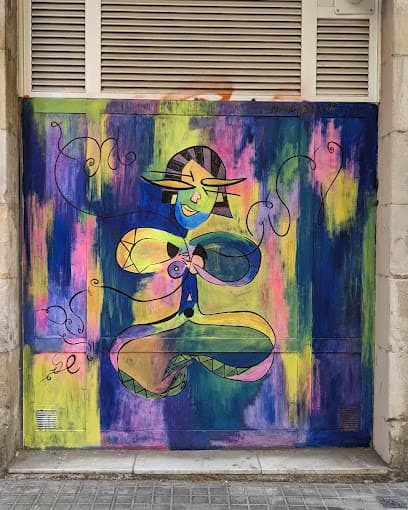
A raw, paint-splattered antidote to the sterile museum circuit. This is where pop-art meets the grit of the street, served straight from the artist’s hands in the heart of old Barcelona.
0.0(0)
Tourist attraction
Frequently Asked Questions
Is Studio 54 Barcelona still a nightclub?
No, the original Studio 54 closed in the 1990s. The building is now home to the Teatre Apolo, a popular venue for musical theater and live performances.
What is the best way to experience the history of the venue?
The best way is to book tickets for a show at the Teatre Apolo to see the interior scale, or explore the surrounding Paral·lel district, which is famous for its theatrical and cabaret history.
Where is the former Studio 54 located?
It is located at Avinguda del Paral·lel, 62, in the Ciutat Vella/Poble-sec area, easily accessible via the Paral·lel Metro station (L2 and L3).
Reviews
0 reviews for STUDIO 54
No reviews yet. Be the first to share your experience!