4.7
74 verified reviews
About
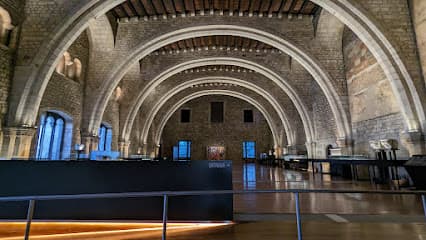
Walk into the Plaça del Rei and you’re stepping into a pocket of the Gothic Quarter that hasn’t completely sold its soul to the sangria-and-souvenir-magnet trade. This is the Saló del Tinell, a room that doesn’t just house history; it radiates it through the soles of your shoes. Built between 1359 and 1370 for King Peter IV of Aragon, it is the crown jewel of the Palau Reial Major. This isn't your typical European palace dripping in gold leaf and velvet curtains. This is Catalan Gothic—austere, muscular, and intimidatingly grand.
The first thing that hits you isn't the detail, but the scale. Six massive diaphragm arches span the width of the hall, supporting a timber roof that feels like the hull of an overturned ship. It’s a feat of 14th-century engineering by Guillem Carbonell that makes modern drywall look like a joke. There’s a specific kind of silence here, the kind you only find in places that have seen empires rise and fall while the stone barely breaks a sweat. The walls are thick, the air is perpetually cool, and the light filters through high, narrow windows like it’s being rationed.
If you’re looking for things to do in the Gothic Quarter that actually matter, this is the spot. This is the room where, according to legend, the Catholic Monarchs—Isabella and Ferdinand—received Christopher Columbus after his first voyage to the Americas in 1493. Whether he actually stood on these specific stones or a few feet over is a debate for the academics. What matters is the weight of the moment. You can almost smell the salt air and the desperation of a man trying to prove he hadn't just sailed off the edge of the world. It’s a room designed for receiving heroes and sentencing heretics, and it looks every bit the part.
Most people stumble into the Saló del Tinell as part of the MUHBA Plaça del Rei circuit. You spend an hour wandering through the subterranean Roman ruins of Barcino—a sprawling, dark labyrinth of laundries and fish-salting factories—and then you ascend into the light of the Saló. It’s a jarring, beautiful transition. You go from the cramped, functional reality of a Roman colony to the soaring, ego-driven heights of the Aragonese crown. It’s one of the best historical sites in Barcelona precisely because it doesn’t try to entertain you. There are no animatronic kings or interactive touchscreens telling you how to feel. It’s just you, the stone, and the ghosts of the Counts of Barcelona.
Is Saló del Tinell worth visiting? If you have a pulse and an interest in how power used to look before it was all hidden in offshore accounts and glass skyscrapers, then yes. It’s a brutal, beautiful reminder of what Barcelona was when it was the center of a Mediterranean empire. The light filters in through high windows, catching the dust motes in a way that feels cinematic without the effort. It’s a place that makes you feel small, which is exactly what a royal hall is supposed to do.
Don't expect a quick photo op and a gift shop exit. This place demands a bit of your time. You sit on the stone benches, look up at those arches, and realize that we don't build things to last seven centuries anymore. We build for the next fiscal quarter; they built for eternity. It’s a humbling experience, and in a city as vibrant and chaotic as Barcelona, a little humility goes a long way. It’s the perfect antidote to the neon-lit bullshit of the Rambla, a place where the air is cool, the history is heavy, and the silence is earned.
Type
Historical landmark, Tourist attraction
Duration
1-2 hours
Best Time
Weekday mornings right at opening (10:00 AM) to avoid school groups and experience the hall's natural silence.
Guided Tours
Available
Audio Guide
Available
What People Say
museum(5)christopher columbus(4)catholic monarchs of spain(3)trip(2)
Features
Historical landmark
Tourist attraction
Categories
ArchitectureMedieval HistoryMuseumGothic
Ticket Prices
adult€7.00
childFree (under 16)
senior€5.00
Opening Hours
- MondayClosed
- TuesdayClosed
- Wednesday10 AM to 7 PM
- Thursday9:29 PM to 12 AM
- Friday12 AM to 7 PM
- Saturday10 AM to 7 PM
- Sunday10 AM to 8 PM
Must-See Highlights
The six massive diaphragm arches spanning 17 meters
The adjacent Capella de Santa Àgata with its 15th-century altarpiece
The view of the hall from the elevated royal gallery
Visitor Tips
Your ticket is valid for several MUHBA sites, so don't throw it away after leaving the hall.
The hall is often used for temporary exhibitions; check the MUHBA schedule to see if a specific installation is present.
Combine this with a visit to the underground Roman ruins for the full historical context.
Good For
History buffsArchitecture studentsSolo travelersQuiet seekers
Why Visit
Site of the historic meeting between Christopher Columbus and the Catholic Monarchs
Masterpiece of Catalan Gothic architecture featuring six massive diaphragm arches
Integrated into the MUHBA museum, allowing a vertical journey from Roman ruins to medieval royalty
Nearby Landmarks
- 1-minute walk from Plaça del Rei
- 3-minute walk from Barcelona Cathedral
- 5-minute walk from Plaça de Sant Jaume
- 8-minute walk from Picasso Museum
Accessibility
- Wheelchair accessible via museum elevators
- Accessible restrooms available in the MUHBA complex
Location
Pl. del Rei, 10
Ciutat Vella, Barcelona
Nearby Hotels
Nearby Restaurants
In Ciutat Vella
ATTRACTION
Park
Ciutat Vella
A thousand years of silence tucked behind a Romanesque monastery, where the grit of El Raval dissolves into ancient stone, cool shadows, and the heavy weight of history.
0.0(0)
Park
ATTRACTION
BARSHELONA
Ciutat Vella
Forget the plastic bulls and tacky magnets. This is where Barcelona’s soul is bottled into art, a small sanctuary of local design hidden in the shadows of the Gothic Quarter.
0.0(0)
Tourist attraction
ATTRACTION
Minajoe art
Ciutat Vella
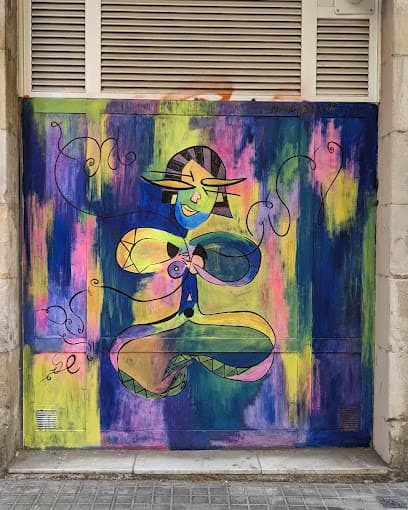
A raw, paint-splattered antidote to the sterile museum circuit. This is where pop-art meets the grit of the street, served straight from the artist’s hands in the heart of old Barcelona.
0.0(0)
Tourist attraction
Frequently Asked Questions
Is Saló del Tinell worth visiting?
Yes, especially for fans of Gothic architecture and medieval history. It is one of the most impressive secular Gothic halls in Europe and offers a rare, non-commercialized look at Barcelona's royal past.
What happened at Saló del Tinell?
It was the ceremonial hall of the Kings of Aragon. Most famously, it is the site where Christopher Columbus was reportedly received by King Ferdinand and Queen Isabella upon his return from the Americas in 1493.
How do I get tickets for Saló del Tinell?
Access is included with the general admission ticket for MUHBA Plaça del Rei (Barcelona History Museum). You can buy them at the entrance or online via the official MUHBA website.
How long do you need at Saló del Tinell?
The hall itself can be seen in 15-20 minutes, but since it is part of the larger MUHBA complex including Roman ruins and the Palatine Chapel, you should allocate at least 1.5 to 2 hours for the full visit.
Reviews
0 reviews for Saló del Tinell
No reviews yet. Be the first to share your experience!