4.6
191 verified reviews
About
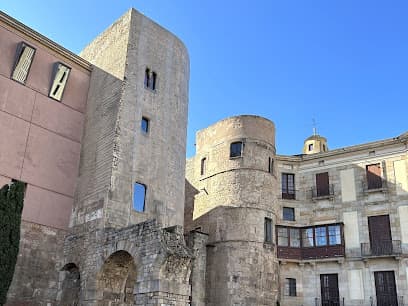
You’re standing at the intersection of Carrer del Bisbe and Plaça Nova, and if you aren’t looking up, you’re missing the entire point of this city. Most people are too busy dodging pickpockets or looking for the nearest overpriced gelato to notice they are standing in the shadow of the fourth century. These aren't just some decorative ruins; these are the Roman Towers, the original gatehouse to the colony of Barcino. They are the heavy, soot-stained bones of a city that was already old when your ancestors were still living in mud huts.
When you walk between these two massive semicircular towers, you’re passing through what was once the Porta Praetoria. This was the main drag. This was where the Roman elite marched in, probably complaining about the heat and the local wine. Today, the towers look like a frantic architectural collage. You’ve got the original Roman foundations at the bottom—solid, arrogant, built to last forever—and then layers of medieval masonry slapped on top like a desperate home renovation. It’s a mess, but it’s an honest mess. It shows you exactly how Barcelona survived: by building on top of its own ghosts.
Look to the left of the gate and you’ll see a reconstructed arch of the Roman aqueduct. It’s a reminder that while the rest of the world was struggling to find a clean puddle, the Romans were piping in fresh water from the Collserola hills. Right next to it, there’s a modern visual punch in the gut: the 'BARCINO' sculpture by Joan Brossa. Seven giant bronze letters that look like they fell off a celestial typewriter. It’s the kind of juxtaposition Barcelona does better than anywhere else—the ancient and the avant-garde staring each other down in a narrow alleyway.
The atmosphere here is thick. In the morning, before the cruise ship crowds descend like a locust plague, there’s a quiet dignity to the stone. You can smell the dampness of the old city, a mix of sea salt and ancient dust. By midday, the area is a cacophony of street performers playing Spanish guitar and tour guides waving neon umbrellas. The towers don't care. They’ve seen Visigoths, Moors, Crusaders, and Franco. They can handle a few thousand tourists in flip-flops.
Is it worth it? Of course it’s worth it. It’s free, for one thing, which is a rarity in a city that tries to monetize every square inch of Gaudí. But more importantly, it’s one of the few places where you can actually feel the weight of time. You don't need a ticket, and you don't need a gift shop. You just need to stand there, put your hand on the cold stone, and realize that you are a very small part of a very long story.
If you’re looking for things to do in the Gothic Quarter, this is your starting line. Don't just breeze through the gate on your way to the Cathedral. Stop. Look at the way the light hits the uneven masonry. Think about the soldiers who stood guard here while the Roman Empire was crumbling around their ears. Then, and only then, go get your tapas. You’ll have earned them. This is the real Barcelona—not the one in the brochures, but the one that’s been standing its ground for two millennia, indifferent to whether you like it or not.
Type
Historical landmark, Tourist attraction
Duration
15-30 minutes
Best Time
Early morning or late evening to avoid the peak tourist crowds in the Gothic Quarter.
Guided Tours
Available
What People Say
cathedral(5)city walls(5)area(5)architecture(4)exterior doors(2)4th century(2)12th century(2)ancient(2)
Features
Historical landmark
Tourist attraction
Categories
Roman HistoryArchitectureArchaeologyFree Attractions
Ticket Prices
Free Admission
No tickets required
Opening Hours
- MondayOpen 24 hours
- TuesdayOpen 24 hours
- WednesdayOpen 24 hours
- ThursdayOpen 24 hours
- FridayOpen 24 hours
- SaturdayOpen 24 hours
- SundayOpen 24 hours
Must-See Highlights
The semicircular Roman defense towers
The reconstructed Roman aqueduct arch
Joan Brossa's 'BARCINO' bronze sculpture
The visible layers of medieval construction on top of Roman stone
Visitor Tips
Look for the small niche with a figure of Saint Roch on the wall nearby.
Combine this with a visit to the MUHBA (Museum of History) to see the ruins from the inside.
Keep a close eye on your belongings as this is a high-traffic area for pickpockets.
Good For
History buffsBudget travelersPhotographersArchitecture enthusiasts
Why Visit
Original 4th-century Roman masonry foundations
Gateway to the iconic Carrer del Bisbe
Juxtaposition of ancient walls with modern Brossa sculpture
Nearby Landmarks
- Barcelona Cathedral (1-minute walk)
- Plaça Nova (30-second walk)
- Casa de l'Ardiaca (1-minute walk)
- Plaça de Sant Jaume (5-minute walk)
Accessibility
- Outdoor public space
- Wheelchair accessible square
- Visible from street level
Location
Carrer del Bisbe, 12
Ciutat Vella, Barcelona
Nearby Hotels
Nearby Restaurants
In Ciutat Vella
ATTRACTION
Park
Ciutat Vella
A thousand years of silence tucked behind a Romanesque monastery, where the grit of El Raval dissolves into ancient stone, cool shadows, and the heavy weight of history.
0.0(0)
Park
ATTRACTION
BARSHELONA
Ciutat Vella
Forget the plastic bulls and tacky magnets. This is where Barcelona’s soul is bottled into art, a small sanctuary of local design hidden in the shadows of the Gothic Quarter.
0.0(0)
Tourist attraction
ATTRACTION
Minajoe art
Ciutat Vella
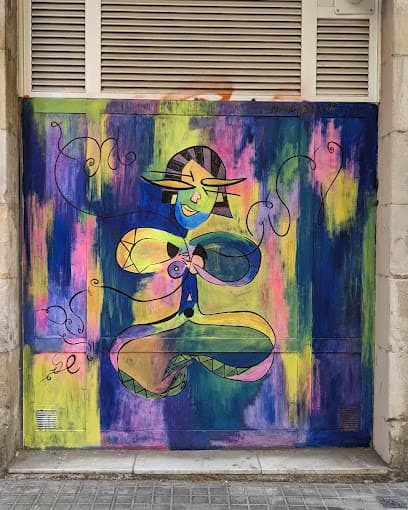
A raw, paint-splattered antidote to the sterile museum circuit. This is where pop-art meets the grit of the street, served straight from the artist’s hands in the heart of old Barcelona.
0.0(0)
Tourist attraction
Frequently Asked Questions
Is Roman Towers Barcelona worth visiting?
Absolutely. It is one of the best free historical sites in the city, offering a visceral look at the 4th-century Roman walls that formed the foundation of Barcelona.
Do I need tickets for the Roman Towers?
No, the towers are an outdoor monument located in a public square (Plaça Nova). You can view them 24/7 without any admission fee.
How do I get to the Roman Towers?
The towers are located at the entrance to Carrer del Bisbe in the Gothic Quarter. The nearest Metro station is Jaume I (L4), about a 5-minute walk away.
What is the best time to visit the Roman Towers?
Go early in the morning (before 9:00 AM) to avoid the heavy tour groups and experience the quiet, ancient atmosphere of the Gothic Quarter.
Reviews
0 reviews for Roman Towers
No reviews yet. Be the first to share your experience!