4.0
1 verified reviews
About
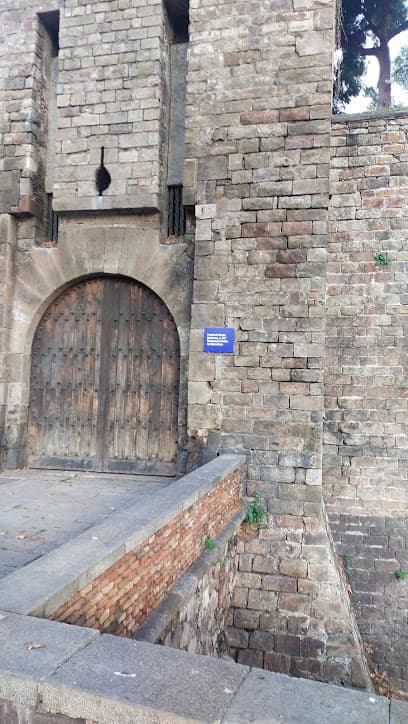
Barcelona used to be a cage. For centuries, the city was hemmed in by massive stone walls, a claustrophobic pressure cooker where the population density was high enough to make a modern subway car feel like a sprawling ranch. In 1854, the people finally had enough and tore the damn things down with their bare hands, desperate for air and the expansion that would become the Eixample. But they missed a spot. The Portal de Santa Madrona is that spot—the lone survivor of a defensive system that once kept the world at bay.
Standing at the edge of Av. del Paral·lel, this isn't some polished, Disneyfied version of history. It’s a heavy, uncompromising hunk of 14th-century military engineering. It’s tucked against the Reials Drassanes, the Royal Shipyards that now house the Maritime Museum, which is likely the only reason it wasn't pulverized along with the rest of the walls. When you look at it, you aren't looking at a 'tourist attraction' in the modern sense; you’re looking at the literal bones of old Barcelona. It’s a reminder that before the city became a playground for stag parties and cruise ship crowds, it was a fortress that knew how to bolt the door and wait out a siege.
The gate is named after Santa Madrona, the 'other' patron saint of Barcelona, the one people tend to forget in favor of La Mercè or Santa Eulàlia. Legend says her remains were brought here by French merchants who got stuck in a storm; every time they tried to leave, the winds kicked up, which was interpreted as the saint wanting to stay put and enjoy the local seafood. The gate itself is flanked by two solid towers, looking every bit the part of a medieval checkpoint. It’s a visceral connection to a time when 'international travel' usually involved an invading army.
Most people walk right past it on their way to the waterfront or the Rambla, oblivious to the fact that they’re passing through the only remaining portal of the third wall. The atmosphere here is a strange collision of eras. On one side, you have the heavy, silent stone of the Middle Ages; on the other, the exhaust fumes and neon of Paral·lel, a street that was once the city’s theater and cabaret district—Barcelona’s answer to Montmartre. It’s a gritty, honest corner of the city where the past doesn't just sit in a museum; it looms over the sidewalk.
Is it worth a detour? If you care about the soul of a place, yes. You can’t understand why Barcelona looks the way it does—the tight, winding alleys of the Raval versus the wide-open grid of the Eixample—without understanding the walls that held it back. You don't need a ticket to see it from the street, but if you time it right, you can actually step inside. The gate and its small, quiet garden are usually only open to the public on the first and third Sunday of each month. It’s a rare moment of stillness in a neighborhood that rarely shuts up.
Don't expect gift shops or costumed guides. This is just stone, iron, and history. It’s a place for the quiet realization that the city you see today is built on top of a much harder, more fortified reality. It’s a survivor, scarred and soot-stained, and in a city that’s constantly reinventing itself for the next wave of visitors, there’s something deeply respectable about that.
Type
Tourist attraction
Duration
15-30 minutes
Best Time
First or third Sunday of the month between 11:00 and 14:00 to access the gardens.
Features
Tourist attraction
Categories
HistoryArchitectureMedievalMilitary
Ticket Prices
Free Admission
No tickets required
Opening Hours
- MondayOpen 24 hours
- TuesdayOpen 24 hours
- WednesdayOpen 24 hours
- ThursdayOpen 24 hours
- FridayOpen 24 hours
- SaturdayOpen 24 hours
- SundayOpen 24 hours
Must-See Highlights
The two defensive towers flanking the gate
The coat of arms of Barcelona carved into the stone
The view of the gate from the interior garden (if open)
The connection point where the wall meets the Maritime Museum
Visitor Tips
Combine this with a visit to the Maritime Museum next door to see the full scale of the medieval shipyards.
Look for the small statue of Santa Madrona above the gate.
Visit on a Sunday morning to catch the limited opening hours of the interior garden.
Good For
History buffsArchitecture studentsSolo travelersBudget travelers
Why Visit
The only remaining gate of Barcelona's 14th-century medieval walls
Directly connected to the historic Royal Shipyards (Drassanes Reials)
A rare, non-commercialized historical site in the heart of the city
Nearby Landmarks
- Museu Marítim de Barcelona (1-minute walk)
- Monument a Colom (5-minute walk)
- La Rambla (5-minute walk)
- Rambla del Raval (8-minute walk)
Accessibility
- Visible from public sidewalk
- Flat terrain around the exterior
- Limited accessibility inside the historic gate structure
Location
Av. del Paral·lel, 12
Ciutat Vella, Barcelona
Nearby Hotels
Nearby Restaurants
In Ciutat Vella
ATTRACTION
Park
Ciutat Vella
A thousand years of silence tucked behind a Romanesque monastery, where the grit of El Raval dissolves into ancient stone, cool shadows, and the heavy weight of history.
0.0(0)
Park
ATTRACTION
BARSHELONA
Ciutat Vella
Forget the plastic bulls and tacky magnets. This is where Barcelona’s soul is bottled into art, a small sanctuary of local design hidden in the shadows of the Gothic Quarter.
0.0(0)
Tourist attraction
ATTRACTION
Minajoe art
Ciutat Vella
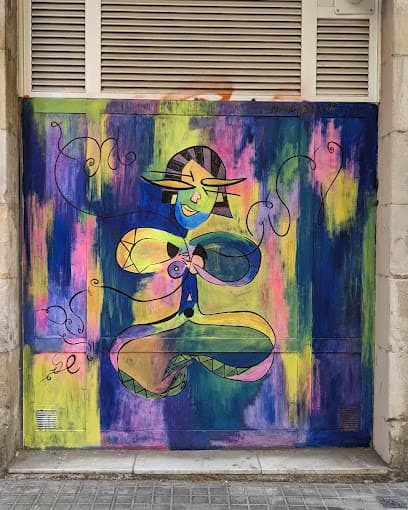
A raw, paint-splattered antidote to the sterile museum circuit. This is where pop-art meets the grit of the street, served straight from the artist’s hands in the heart of old Barcelona.
0.0(0)
Tourist attraction
Frequently Asked Questions
Is Portal de Santa Madrona worth visiting?
Yes, if you are a history enthusiast. It is the only surviving gate of the city's medieval walls and offers a raw, unpolished look at Barcelona's defensive past without the usual tourist crowds.
Can you go inside the Portal de Santa Madrona?
Public access to the interior and the adjacent gardens is generally limited to the first and third Sunday of every month, from 11:00 AM to 2:00 PM. However, the exterior is visible from the street 24/7.
How do I get to the Portal de Santa Madrona?
The gate is located right next to the Drassanes Metro station (L3). It is a 5-minute walk from the bottom of La Rambla and the Christopher Columbus Monument.
Is there an entrance fee for the Portal de Santa Madrona?
Viewing the gate from the street is free. During the limited hours when the gardens are open to the public, entry is typically free of charge as well.
Reviews
0 reviews for Puerta de Santa Madrona
No reviews yet. Be the first to share your experience!