4.6
167 verified reviews
About
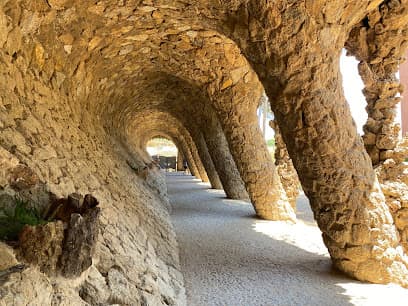
Antoni Gaudí was a man who famously declared that there are no straight lines or sharp corners in nature. Consequently, he spent his life making sure there were damn few of them in his buildings, either. The Pòrtic de la Bugadera—the Laundry Room Portico—is what happens when a genius architect decides that a common retaining wall shouldn't just hold back dirt, but should instead look like a giant, petrified wave of earth about to crash over your head. It is raw, it is jagged, and it is one of the most visceral examples of Gaudí’s obsession with organic form you’ll find in all of Barcelona.
Located within the Monumental Zone of Park Güell, this isn't the colorful, candy-coated Gaudí of the gingerbread houses or the mosaic lizard. This is the dark, earthy side of the man’s psyche. He used local stone, unrefined and rough, to create a double-level gallery that feels less like a man-made structure and more like a cave system carved out by centuries of wind and rain. The pillars lean at impossible angles, defying the visual logic of how a building is supposed to stand. Walking through it, you get a sense of the sheer physical labor involved—the sweat and grit of the workers who hauled these stones up the Carmel hill long before the tour buses arrived.
Keep your eyes peeled for the namesake of the place: the 'Bugadera' or washerwoman. Integrated into one of the outer pillars, she’s a stone ghost carrying a laundry basket on her head. It’s a rare moment of figurative sculpture in a park that usually leans toward the abstract or the religious. She’s a tribute to the everyday people who were supposed to live in this failed housing project, a reminder that even in Gaudí’s grandest visions, there was a place for the person doing the heavy lifting.
Is Park Güell worth it? In a word, yes. But the Pòrtic de la Bugadera is where you go to escape the crushing weight of the 'Gram-hungry crowds huddled around the dragon staircase. While everyone else is fighting for a selfie with a ceramic lizard, you can stand under these leaning columns and feel the cool, damp breath of the stone. It’s quiet here, or at least quieter. You can actually see the tool marks on the rock and appreciate the structural madness that allowed Gaudí to support a road above using nothing but gravity and a very sophisticated understanding of geometry.
Don't expect a polished experience. The ground is uneven, the stone is sharp, and the sun in Gràcia can be unforgiving. But that’s the point. This is architecture that hasn't been sanded down for your comfort. It’s one of the best things to do in Park Güell because it forces you to look at the relationship between the mountain and the city. It’s a bridge between the wild scrubland of the hills and the planned elegance of the Eixample below.
If you’re hunting for the best Gaudí architecture in Barcelona, you have to see the big hits, sure. But come here to see the bones of his work. This portico is the skeleton of his genius—unadorned, structural, and slightly terrifying. It’s a reminder that before the mosaics and the stained glass, there was just a man, some rocks, and a very strange idea about how the world should look. Wear decent shoes, bring water, and try not to think too hard about the tons of earth hanging over your head. Just feel the wave.
Type
Tourist attraction, Sculpture
Duration
15-20 minutes
Best Time
Early morning (9:30 AM) or late afternoon before sunset to avoid the heaviest tour group traffic and see the stone in warmer light.
Guided Tours
Available
Audio Guide
Available
What People Say
gaudi(9)structure(5)architecture(5)stone(4)pillars(3)shape(3)head(3)art(3)
Features
Tourist attraction
Sculpture
Categories
ArchitectureUNESCO World Heritage SiteGaudíModernismeSculpture
Ticket Prices
adult€10
child€0 (under 7)
senior€7
Opening Hours
- Monday9:30 AM to 5:30 PM
- Tuesday9:30 AM to 5:30 PM
- Wednesday9:30 AM to 5:30 PM
- Thursday9:30 AM to 5:30 PM
- Friday9:30 AM to 5:30 PM
- Saturday9:30 AM to 5:30 PM
- Sunday9:30 AM to 5:30 PM
Must-See Highlights
The leaning pillars of the lower gallery
The 'Bugadera' (Washerwoman) sculpture on the outer column
The spiral-shaped ramp leading to the upper level
The contrast between the rough stone and the manicured gardens nearby
Visitor Tips
Look up at the ceiling of the portico to see the intricate way the stones are fitted together without mortar.
This is one of the best spots in the park for photos that don't have a hundred other tourists in the background.
The stone can get very hot in the summer; try to visit when the sun is lower in the sky.
Good For
Architecture enthusiastsPhotography loversHistory buffsGaudí fans
Why Visit
The 'Wave' Effect: A structural masterpiece where the stone pillars lean at angles that seem to defy gravity.
The Washerwoman: A rare, integrated figurative sculpture representing the working class of early 20th-century Barcelona.
Organic Integration: Built using local stone excavated from the site itself, making the structure look like a natural extension of the mountain.
Nearby Landmarks
- 3-minute walk to Plaça de la Natura (The Greek Theatre)
- 5-minute walk to the Dragon Staircase and El Drac
- 6-minute walk to the Austria Gardens
- 8-minute walk to the Gaudí House Museum
Accessibility
- Partial wheelchair access (some paths are steep and gravelly)
- Accessible from the main Monumental Zone entrance
Location
Park Güell
Gràcia, Barcelona
Nearby Hotels
Nearby Restaurants
In Gràcia
ATTRACTION
Maison Sara
Gràcia
Forget the mass-produced kitsch on La Rambla. This is Gràcia at its best: a tactile, clay-smeared workshop where the art is as raw and honest as the neighborhood itself.
0.0(0)
Tourist attraction
ATTRACTION
Intercambiador de libros
Gràcia
A humble, weather-beaten box in the hills of Vallcarca where local history is traded one dog-eared paperback at a time. No tourists, no Wi-Fi, just paper and community.
0.0(0)
Park
ATTRACTION
View
Gràcia
Forget the elbow-to-elbow chaos of Park Güell. This is the raw, vertical soul of Gràcia, where the city unfolds in a silent, sun-drenched sprawl at your feet.
0.0(0)
Garden
Frequently Asked Questions
Is Pòrtic de la Bugadera worth visiting?
Absolutely. While most people crowd around the lizard, this portico offers a much more intimate and raw look at Gaudí's structural genius and his ability to blend architecture with the natural hillside.
Do I need a separate ticket for Pòrtic de la Bugadera?
No, it is included in the general admission ticket for the Park Güell Monumental Zone. You cannot access this specific area with a free park entry (which is restricted to local residents).
Where is the washerwoman sculpture located?
She is carved into one of the pillars of the portico's outer row. Look for the figure carrying a basket on her head—she blends in almost perfectly with the rough, unhewn stone of the column.
How long should I spend at the portico?
You only need about 15-20 minutes to walk through and appreciate the details, but it's a great spot to linger and escape the sun for a few minutes while exploring the rest of the park.
Reviews
0 reviews for Pòrtic de la Bugadera
No reviews yet. Be the first to share your experience!