4.7
1,034 verified reviews
About
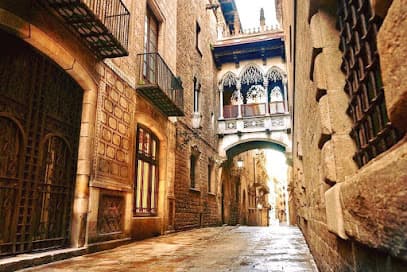
Walk down Carrer del Bisbe and you’ll see them: a sea of tourists with their necks craned at a 45-degree angle, blocking the path of frustrated locals just trying to get to work. They’re all staring at the Pont del Bisbe, the 'Bishop’s Bridge.' It looks ancient. It looks like it’s seen centuries of plague, prayer, and political backstabbing. It hasn’t. It’s a fake. A beautiful, meticulously crafted, 1928 forgery.
Built for the Barcelona International Exposition, this bridge is the work of Joan Rubió i Bellver. He was a disciple of Gaudí, which tells you everything you need to know about his flair for the dramatic. Rubió wanted to tear down the non-Gothic buildings in the neighborhood and replace them with a Neo-Gothic wonderland. The city council, showing a rare moment of restraint, told him no. The bridge was his consolation prize—or perhaps his middle finger to the bureaucrats. It connects the Palau de la Generalitat with the Casa dels Canonges, and while it looks like it belongs in the 1400s, it’s younger than your grandmother’s radio.
But the real draw isn't the architecture; it's the macabre little detail hidden on the underside of the arch. If you stand directly beneath the bridge and look up, you’ll see a marble skull pierced by a real metal dagger. Why is it there? Nobody knows for sure, and that’s exactly how the locals like it. The legends are a 'choose your own adventure' of superstition. Some say if you walk under it and look at the skull, you’ll be cursed with bad luck unless you walk backward. Others say if you make a wish while crossing under it, it’ll come true. My advice? Just don't trip over a selfie stick while you're contemplating your fate.
The atmosphere here is a strange tug-of-war between the sublime and the ridiculous. In the early morning, before the cruise ship crowds descend, the stone is cool and the light filters through the narrow alley in a way that makes you feel like you’ve stepped into a noir film. You can hear the echo of your own boots on the cobbles and the distant strumming of a Spanish guitar from a street performer who knows exactly how to play to the acoustics of the arch. It’s one of the most atmospheric things to do in the Gothic Quarter if you time it right.
By midday, however, the magic evaporates under the weight of a thousand iPhones. It becomes a bottleneck of humanity. If you’re looking for the 'best photo spots in Barcelona,' this is undeniably one of them, but you’ll have to fight for it. Is Pont del Bisbe worth it? Absolutely. It’s a testament to the fact that sometimes a lie is more compelling than the truth. It’s a piece of stagecraft that has become the heart of the city. Just remember: it’s a bridge, not a cathedral. Spend five minutes, find the skull, ignore the 'medieval' marketing, and then disappear into the backstreets of El Gòtic to find a glass of vermouth. That’s where the real history is anyway.
Type
Tourist attraction, Historical landmark
Duration
15-30 minutes
Best Time
Early morning (before 9 AM) to avoid the heavy tourist crowds and capture the best light.
Guided Tours
Available
What People Say
buildings(33)gothic(31)cathedral(25)1928(15)dagger(13)skull(11)alley(8)arch(8)
Features
Tourist attraction
Historical landmark
Categories
ArchitecturePhotographyLegendsGothic Quarter
Ticket Prices
Free Admission
No tickets required
Must-See Highlights
The marble skull and dagger on the underside of the bridge
The intricate stone carvings of the Neo-Gothic balconies
The view looking toward the Cathedral towers from under the arch
Visitor Tips
Look directly up while standing under the center of the arch to find the skull.
Watch your pockets; this narrow bottleneck is a prime spot for pickpockets.
Don't believe the tour guides who tell you it's 500 years old—it's a 20th-century addition.
Good For
PhotographersHistory buffsBudget travelersCouples
Why Visit
The mysterious skull and dagger hidden under the arch
Masterful Neo-Gothic 'forgery' that fools most tourists
The most iconic and photographed narrow alley in the Gothic Quarter
Nearby Landmarks
- Barcelona Cathedral (2-minute walk)
- Plaça de Sant Jaume (1-minute walk)
- Plaça de Sant Felip Neri (3-minute walk)
- Palau de la Generalitat (Adjacent)
Accessibility
- Street level access
- Pedestrianized zone
- Flat cobblestone surface (can be uneven)
Location
Carrer del Bisbe
Ciutat Vella, Barcelona
Nearby Hotels
Nearby Restaurants
In Ciutat Vella
ATTRACTION
Park
Ciutat Vella
A thousand years of silence tucked behind a Romanesque monastery, where the grit of El Raval dissolves into ancient stone, cool shadows, and the heavy weight of history.
0.0(0)
Park
ATTRACTION
BARSHELONA
Ciutat Vella
Forget the plastic bulls and tacky magnets. This is where Barcelona’s soul is bottled into art, a small sanctuary of local design hidden in the shadows of the Gothic Quarter.
0.0(0)
Tourist attraction
ATTRACTION
Minajoe art
Ciutat Vella
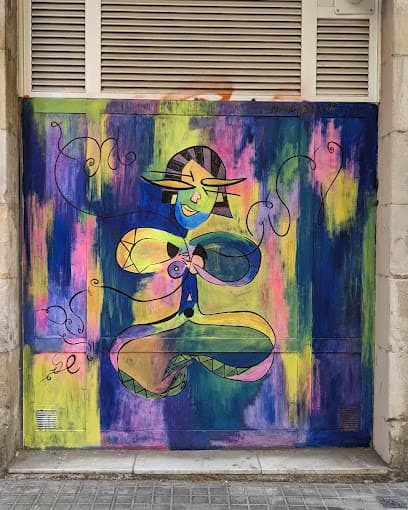
A raw, paint-splattered antidote to the sterile museum circuit. This is where pop-art meets the grit of the street, served straight from the artist’s hands in the heart of old Barcelona.
0.0(0)
Tourist attraction
Frequently Asked Questions
Is Pont del Bisbe actually medieval?
No, it was built in 1928 by architect Joan Rubió i Bellver for the International Exposition. It is designed in the Neo-Gothic style to blend in with the surrounding older buildings.
What is the legend of the skull and dagger?
Legend says that looking at the skull brings bad luck unless you walk backward afterward. Conversely, some believe making a wish while walking under the bridge will make it come true.
When is the best time to visit Pont del Bisbe?
To avoid the massive crowds and get a clear photo, visit before 9:00 AM or late at night when the street performers' music adds to the atmosphere.
Do I need tickets for Pont del Bisbe?
No, it is a public bridge located on a pedestrian street (Carrer del Bisbe) and is free to visit 24/7.
Reviews
0 reviews for Pont del Bisbe
No reviews yet. Be the first to share your experience!