4.4
26 verified reviews
About
The Gothic Quarter is a claustrophobic labyrinth of damp stone and narrow shadows, but then you stumble into Plaça Reial, and the city finally lets you breathe. It’s a grand, neoclassical rectangle of a square, bordered by uniform yellow buildings and tall, skinny palm trees that look like they were imported from a different, more tropical dream. This is Plaça Reial—the Royal Square—and for over a century, it’s been the stage for everything that makes Barcelona both beautiful and deeply frustrating.
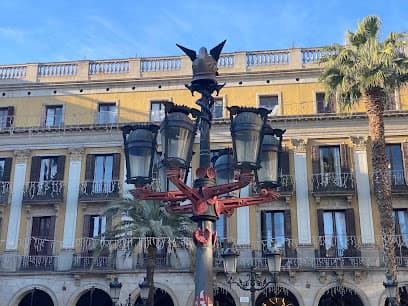
Look past the guys trying to sell you cheap toys or questionable substances and find the two lampposts near the central fountain. This is where the story of modern Barcelona actually starts. In 1878, a young, largely unknown architect named Antoni Gaudí was commissioned by the city to design street lights. He didn't just make lamps; he made a statement. Topped with winged helmets and coiled snakes—symbols of Mercury, the god of commerce—these six-armed bronze and stone structures were his first official mark on the city. They are weird, ornate, and slightly aggressive, a hint of the psychedelic genius that would later vomit the Sagrada Família into the skyline. Most people walk right past them to get a selfie with the fountain, but those lamps are the DNA of the city’s soul.
The square itself sits on the site of a former Capuchin convent, but there’s nothing holy about it now. By day, it’s a sun-drenched trap for tourists who haven't learned that the further you sit from a landmark, the better the food gets. The terraces under the vaulted arcades are prime real estate for people-watching, even if you’re paying a 'view tax' on every espresso. You’ll see the street performers—human statues, breakdancers, and the occasional opera singer—competing for the attention of cruise ship crowds. It’s a spectacle, a bit of a circus, and entirely necessary to the Barcelona experience.
But wait until the sun drops. That’s when the square sheds its postcard skin and shows its teeth. The arcades hide some of the city’s oldest basement dens. Jamboree has been pumping out jazz and blues since the 60s, and Sidecar is where you go to lose your hearing to local indie bands and sweat through your shirt. The air gets thicker, smelling of cheap tobacco, expensive perfume, and the salty breeze blowing in from the port just a few blocks away. It’s one of the few places in the Ciutat Vella where the high-society vibe of the surrounding hotels crashes head-on into the gritty, nocturnal energy of the Raval.
Is it a tourist trap? Absolutely. Is it essential? Without a doubt. You don't come here for a quiet meal or a bargain. You come here to stand in the center of the chaos, under Gaudí’s snakes, and feel the pulse of a city that refuses to be boring. It’s the ultimate crossroads. If you're meeting a date, looking for a tour guide, or just trying to find your own sense of direction after getting lost in the Barri Gòtic, this square is the anchor. Just keep your wallet in your front pocket, ignore the 'tourist menus' with photos of frozen paella, and watch the light change on the yellow stone. This is Barcelona at its most theatrical, its most crowded, and its most alive.
Type
Tourist attraction
Duration
30-60 minutes
Best Time
Late afternoon for photography or after 11 PM for nightlife.
Guided Tours
Available
What People Say
antoni gaudí(3)street lights(3)
Features
Tourist attraction
Categories
ArchitectureGaudíPublic SquareNightlife
Ticket Prices
Free Admission
No tickets required
Must-See Highlights
Gaudí's Lampposts with Mercury's helmet and snakes
The Fountain of the Three Graces (Font de les Tres Gràcies)
The vaulted arcades housing historic cafes and clubs
The tall Washingtonia palm trees
Visitor Tips
Avoid the restaurants directly on the square for full meals; they are overpriced and cater to tourists. Grab a drink instead.
Look closely at the top of the lampposts to see the intricate snake and helmet details often missed by crowds.
If you want to hear world-class jazz, head to Jamboree in the corner of the square.
Good For
Architecture loversPhotographersNight owlsHistory buffs
Why Visit
Gaudí's first official work for the city of Barcelona
19th-century neoclassical architecture and palm-lined perimeter
Home to long-standing nightlife institutions like Jamboree and Sidecar
Nearby Landmarks
- 1-minute walk from La Rambla
- 5-minute walk from Gran Teatre del Liceu
- 8-minute walk from Barcelona Cathedral
- 10-minute walk from Port Vell
Accessibility
- Flat, paved surface
- Wheelchair accessible square
- Accessible public transport nearby
Location
Pl. Reial
Ciutat Vella, Barcelona
Nearby Hotels
Nearby Restaurants
In Ciutat Vella
ATTRACTION
Park
Ciutat Vella
A thousand years of silence tucked behind a Romanesque monastery, where the grit of El Raval dissolves into ancient stone, cool shadows, and the heavy weight of history.
0.0(0)
Park
ATTRACTION
BARSHELONA
Ciutat Vella
Forget the plastic bulls and tacky magnets. This is where Barcelona’s soul is bottled into art, a small sanctuary of local design hidden in the shadows of the Gothic Quarter.
0.0(0)
Tourist attraction
ATTRACTION
Minajoe art
Ciutat Vella
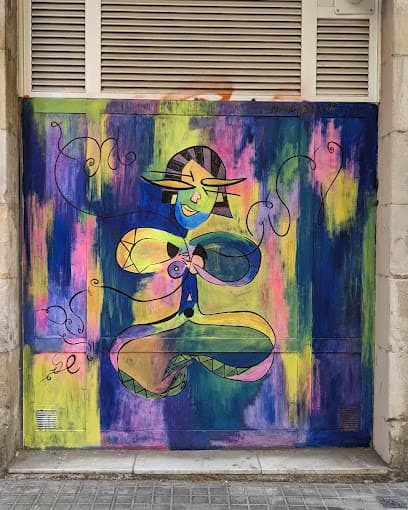
A raw, paint-splattered antidote to the sterile museum circuit. This is where pop-art meets the grit of the street, served straight from the artist’s hands in the heart of old Barcelona.
0.0(0)
Tourist attraction
Frequently Asked Questions
Is Plaça Reial worth visiting?
Yes, it is one of the most beautiful squares in Barcelona. Even if you don't eat there, seeing Gaudí's first commissioned lampposts and the neoclassical architecture is essential for any visitor.
Where are the Gaudí lamps located?
The two lampposts designed by Antoni Gaudí are located in the center of the square, flanking the Fountain of the Three Graces.
Is Plaça Reial safe at night?
It is generally safe due to the high volume of people and police presence, but it is a notorious hotspot for pickpockets. Keep a close eye on your belongings, especially near the entrances to the square.
What is the best time to visit Plaça Reial?
Visit in the late afternoon for the best light on the buildings, or late at night if you want to experience the city's famous jazz and club scene at venues like Jamboree.
Reviews
0 reviews for Platz wo ma uns treffen
No reviews yet. Be the first to share your experience!