About
If you’re looking for the Barcelona of the postcards—the sun-drenched Gaudí curves, the overpriced sangria, the polished stone of the Gothic Quarter—do yourself a favor and stay on the L3 metro until you hit the sea. Plaça Verda de la Prosperitat is not for you. This is Nou Barris. This is the 08016. This is the part of the city that the tourism board conveniently forgets to mention because it doesn’t fit the narrative of a Mediterranean theme park. It’s raw, it’s unvarnished, and it’s one of the most honest places you’ll find in this town.
Getting here requires a pilgrimage to the northern edge of the city, deep into a neighborhood that was built in a hurry during the 1950s and 60s to house the waves of migrants coming to work. There was no plan for parks back then, only for profit and density. The 'Plaça Verda'—the Green Square—wasn't a gift from a benevolent city council; it was a hard-won victory by residents who spent decades protesting, occupying, and demanding a place where their kids could play and their elders could sit in the shade. When you walk into this space, you aren't just entering a garden; you’re entering a site of successful urban warfare.
The square itself is a patchwork of community utility. You’ve got the Casal de Barri de la Prosperitat right there, a community center that serves as the neighborhood’s beating heart. This isn't some sterile government building; it’s a place where punk shows happen, where neighbors organize, and where the beer is cheap and the conversation is loud. Then there’s the 'Hort de la Prospe,' a community garden where locals grow tomatoes and herbs in the middle of a concrete jungle. It’s a defiant patch of soil that smells of wet earth and rosemary, a sensory slap in the face to the surrounding apartment blocks.
Sit on a bench for twenty minutes and you’ll see the real Barcelona. You’ll see the 'abuelos' arguing over football with a ferocity usually reserved for blood feuds. You’ll see teenagers on skateboards, young mothers sharing gossip, and the occasional stray dog who clearly owns the place. There is zero pretense here. Nobody is dressing up for an Instagram photo. Nobody is trying to sell you a plastic bull or a cheap sombrero. It’s just life, unfolding at its own pace, indifferent to the fact that you’re watching.
Is it beautiful? That depends on your definition. If beauty requires marble statues and manicured hedges, then no, it’s ugly as hell. But if beauty is the sight of a community reclaiming its own dignity, of green leaves punching through the grey, and of a neighborhood that refuses to be ignored, then this place is a masterpiece. It’s a reminder that a city belongs to the people who live in it, not the people who just pass through.
Come here if you’re tired of the curated 'authentic' experiences sold in El Born. Come here if you want to see what happens when people give a damn about their barrio. Grab a can of Estrella from a local 'paki,' find a spot in the sun, and just watch. You might find that the most interesting thing in Barcelona isn't a cathedral or a museum, but a simple square where the locals have finally found a bit of room to breathe. It’s the best things to do in Nou Barris if you actually want to understand the soul of this city.
Type
Garden
Duration
1 hour
Best Time
Late afternoon when the square fills with locals and the community garden is active.
Features
Garden
Categories
Community GardenUrban SpaceLocal Culture
Ticket Prices
Free Admission
No tickets required
Must-See Highlights
The Hort de la Prospe community garden
The murals and street art surrounding the square
The terrace of the Casal de Barri for a cheap local beer
Visitor Tips
Don't expect English menus in the nearby bars; brush up on basic Spanish or Catalan.
Check the Casal de Barri website for local festivals or concerts.
Be respectful with your camera; this is a living room for the neighborhood, not a photo op.
Good For
Solo travelersBudget travelersCulture seekersUrban explorers
Why Visit
Authentic working-class community atmosphere with zero tourist traps
The 'Hort de la Prospe' community garden, a symbol of local activism
Proximity to the Casal de Barri, the cultural and political heart of the neighborhood
Nearby Landmarks
- Via Júlia Metro Station: 7-minute walk
- Parc de la Guineueta: 12-minute walk
- Mercat de la Mercè: 10-minute walk
Accessibility
- Flat terrain
- Wheelchair accessible paths
- Accessible by public transport (Via Júlia)
Location
Nou Barris, Barcelona
Nearby Hotels
Nearby Restaurants
In Nou Barris
ATTRACTION
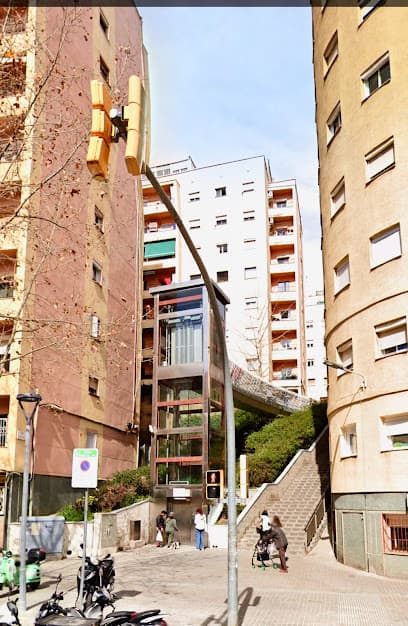
Ascensor Canfranc - Paseo de Fabra y Puig 08031 Nou Barris
Nou Barris
A glass-and-steel lifeline in Nou Barris that saves your knees and offers a gritty, honest view of the Barcelona tourists usually ignore. No gift shops, just gravity-defying utility.
0.0(0)
Hiking area
ATTRACTION
Carrer pimoli42
Nou Barris
The anti-tourist Barcelona. A gritty, honest stretch of Nou Barris where the Gaudí magnets disappear and the real city begins over cheap beer and the smell of rotisserie chicken.
0.0(0)
Tourist attraction
ATTRACTION
Cabaña e industria
Nou Barris
Forget the Gothic Quarter. This is the raw edge of Barcelona where industrial grit meets the pine-scented foothills of Collserola. Real, unpolished, and utterly devoid of tourists.
0.0(0)
Hiking area
Frequently Asked Questions
Is Plaça Verda de la Prosperitat worth visiting?
Only if you want to see the real, non-tourist side of Barcelona. It’s a community-driven space in a working-class neighborhood, far from the typical landmarks.
How do I get to Plaça Verda de la Prosperitat?
Take the L4 Metro (Yellow Line) to the Via Júlia station. From there, it’s a short 5-10 minute walk into the heart of the Prosperitat neighborhood.
What is there to do at the square?
You can visit the community garden (Hort de la Prospe), check out local events at the Casal de Barri, or simply enjoy a drink at a local bar while watching neighborhood life.
Is the area safe for tourists?
Yes, it is a safe, family-oriented residential neighborhood. However, because it is not a tourist area, you should be respectful of the locals' privacy and space.
Reviews
0 reviews for Plaça Verda de la Prosperitat
No reviews yet. Be the first to share your experience!