3.8
63 verified reviews
About
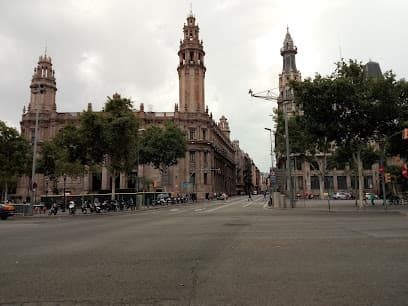
Plaça Pau Vila isn’t the kind of place you go to find peace and quiet. It’s a hinge. A gritty, salt-sprayed joint where the ancient, cramped alleys of the Gothic Quarter finally give up and spill out into the blinding light of the Port Vell. If you’re looking for a manicured lawn to sip a latte on, keep walking. This is an urban crossroads, a patch of pavement that serves as the front porch for the Palau de Mar and the gateway to the beach-bound chaos of Barceloneta. It’s named after Pau Vila i Dinarès, a Catalan geographer, which is fitting because this square is all about orientation—knowing exactly where the land ends and the Mediterranean begins.
The first thing you’ll notice is the Palau de Mar, a red-brick behemoth that looks like it was built to survive a naval bombardment. It was originally the General Stores of Commerce, a late 19th-century warehouse designed to hold the wealth of a colonial empire. Today, it houses the Museu d'Història de Catalunya, but the building still feels like it belongs to the dockworkers and the sea. Standing in the square, you can feel the transition from the medieval city to the modern port. To your back is the Pas de Sota Muralla—literally 'under the wall'—a reminder that for centuries, Barcelona was a city that turned its back on the sea, huddled behind stone fortifications. Now, the walls are gone, and Plaça Pau Vila is the breach where the city finally learned to breathe.
Don’t expect a 'park' in the traditional sense. There are trees, sure, but they’re mostly there to provide a bit of shade for the skaters who treat the smooth stone like a playground and the tourists who look lost while trying to find the beach. The air here is a thick cocktail of harbor salt, fried fish from the nearby restaurants, and the low-frequency hum of traffic from the Ronda Litoral. It’s a place of transit. You see the 'A Pau Vila' monument, a modest tribute to the man who mapped this land, standing amidst the flow of people dragging suitcases and locals walking dogs. It’s a sensory collision: the clatter of skateboards, the cry of seagulls, and the distant chime of the Santa Maria del Mar bells.
The honest truth? Most people treat Plaça Pau Vila as a shortcut. They’re rushing toward the overpriced paella joints of the harbor or the sand of Barceloneta. But if you stop for a second, you see the layers of the city. You see the old sea wall’s ghost, the industrial might of the 1880s, and the post-1992 Olympic polish that tried to make everything look like a postcard. It’s a bit exposed, it’s often windy, and in the height of summer, the sun will bake you like a sardine on a plancha. But it’s real. It’s a place where you can stand with one foot in the history of the 14th century and the other in the maritime commerce of the 21st.
Is it worth a visit? If you’re going to the Museum of Catalan History, you’re already there. If you’re walking from the Gothic Quarter to the sea, you’ll pass through it. Don’t just rush through. Look at the Palau de Mar, feel the wind coming off the water, and appreciate the fact that you’re standing at the exact point where Barcelona stopped being a fortress and started being a port. It’s not pretty in a conventional way, but it’s honest. And in a city that’s increasingly being turned into a theme park, a little bit of honest concrete and salt air goes a long way.
Type
Park
Duration
15-30 minutes
Best Time
Late afternoon when the sun hits the red bricks of the Palau de Mar and the harbor breeze picks up.
Features
Park
Categories
HistoryArchitecturePublic SquareMaritime
Ticket Prices
Free Admission
No tickets required
Opening Hours
- MondayOpen 24 hours
- TuesdayOpen 24 hours
- WednesdayOpen 24 hours
- ThursdayOpen 24 hours
- FridayOpen 24 hours
- SaturdayOpen 24 hours
- SundayOpen 24 hours
Must-See Highlights
The red-brick facade of the Palau de Mar
The 'A Pau Vila' monument dedicated to the Catalan geographer
The view looking down the Pas de Sota Muralla toward the old city
Visitor Tips
Don't expect a green park; it's an urban plaza.
Head to the rooftop of the Museum of Catalan History inside the Palau de Mar for a drink with one of the best harbor views in the city.
It can be very windy due to its location between the city streets and the open port.
Good For
History buffsSkatersPhotographersPeople-watching
Why Visit
The historic Palau de Mar, a stunning 19th-century brick warehouse
The symbolic 'hinge' point between the medieval Gothic Quarter and the Mediterranean Sea
Home to the Museum of Catalan History, offering the best rooftop views in the area
Nearby Landmarks
- Museu d'Història de Catalunya (1-minute walk)
- Port Vell (2-minute walk)
- Barceloneta Metro Station (3-minute walk)
- Basilica of Santa Maria del Mar (8-minute walk)
Accessibility
- Fully wheelchair accessible
- Flat paved surfaces
- Close to accessible metro stations
Location
Pas de Sota Muralla, 15
Ciutat Vella, Barcelona
Nearby Hotels
Nearby Restaurants
In Ciutat Vella
ATTRACTION
Park
Ciutat Vella
A thousand years of silence tucked behind a Romanesque monastery, where the grit of El Raval dissolves into ancient stone, cool shadows, and the heavy weight of history.
0.0(0)
Park
ATTRACTION
BARSHELONA
Ciutat Vella
Forget the plastic bulls and tacky magnets. This is where Barcelona’s soul is bottled into art, a small sanctuary of local design hidden in the shadows of the Gothic Quarter.
0.0(0)
Tourist attraction
ATTRACTION
Minajoe art
Ciutat Vella
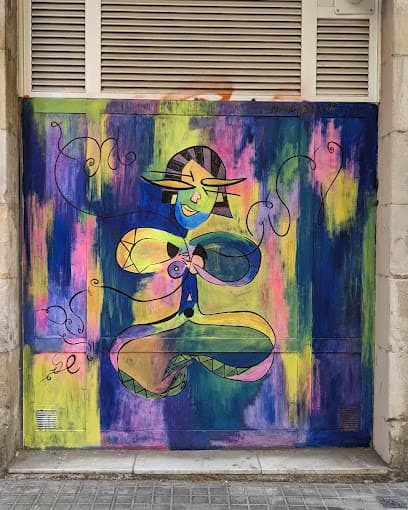
A raw, paint-splattered antidote to the sterile museum circuit. This is where pop-art meets the grit of the street, served straight from the artist’s hands in the heart of old Barcelona.
0.0(0)
Tourist attraction
Frequently Asked Questions
Is Plaça Pau Vila worth visiting?
It’s worth a stop if you’re interested in Barcelona’s maritime history or visiting the Museum of Catalan History. It’s more of a historic transit point than a relaxing park, offering great views of the Palau de Mar and the harbor.
What is there to see at Plaça Pau Vila?
The main highlights are the Palau de Mar (home to the Museum of Catalan History), the 'A Pau Vila' monument, and the proximity to Port Vell. It’s a great spot to observe the transition between the old city and the waterfront.
How do I get to Plaça Pau Vila?
The easiest way is via the L4 Metro (Yellow Line) to the Barceloneta station. From there, it’s a 3-minute walk toward the water. It’s also a short walk from the bottom of Via Laietana.
Reviews
0 reviews for Plaça Pau Vila
No reviews yet. Be the first to share your experience!