4.6
64 verified reviews
About
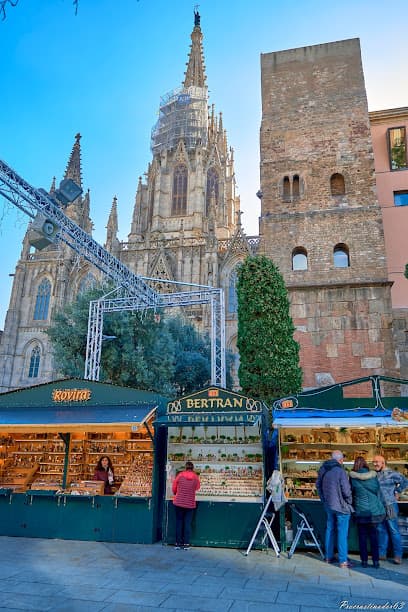
Step into Plaça Nova and you’re stepping onto a geological record of Barcelona’s survival. They call it the 'New Square,' which is a bit of a joke considering it was laid out in 1358. But in a city that’s been trading salt and secrets for two millennia, I suppose anything under seven hundred years old still has that new-car smell. This isn't just a place to check off your list of things to do in Barcelona; it’s the threshold where the Roman colony of Barcino finally gave way to the sprawling, chaotic Mediterranean capital we see today.
Look up first. You’re flanked by two massive, brooding Roman towers. These were part of the Porta Decumana, the main gate into the walled city. They’ve stood there since the 4th century, watching empires rise, fall, and eventually get replaced by souvenir shops selling plastic bulls. To the left of the towers, you’ll see a reconstructed arch of the Roman aqueduct. It’s a reminder that while we struggle to get a decent Wi-Fi signal, the Romans were piping in fresh water from the Collserola hills nearly two thousand years ago with nothing but gravity and sheer architectural arrogance.
Then, turn around and look at the Col·legi d'Arquitectes. It’s a mid-century modern slab that, by all rights, shouldn't work here. But across its facade are three sand-blasted friezes based on drawings by Pablo Picasso. They’re crude, childlike, and utterly brilliant—a deliberate architectural middle finger to the somber, soot-stained Gothic Cathedral looming across the way. It’s that classic Barcelona tension: the ancient weight of the Church versus the irreverent, sun-drenched spirit of the Catalan avant-garde.
If you’re here in December, the square transforms. This is the home of the Fira de Santa Llúcia, the oldest Christmas market in the city. Forget the sanitized, corporate holiday villages you see in other capitals. This is where you come to buy the Caganer—the 'Great Shitter'—a small ceramic figurine of a man with his trousers down, doing his business in the corner of the nativity scene. It’s a visceral, earthy Catalan tradition that reminds us that no matter how holy the season, we’re all still human. The air smells of roasting chestnuts and the damp stone of the Barri Gòtic, and the crowd is a thick, slow-moving river of locals hunting for the perfect moss for their mangers.
During the rest of the year, the square is a stage. You’ll hear the haunting, reverb-heavy notes of a Spanish guitar echoing off the stone walls, or see a circle of locals dancing the Sardana on a Sunday morning. It’s touristy, sure. You’ll be dodged by tour groups following umbrellas and overpriced gelato vendors. But if you sit on the steps of the 'Barcino' sculpture—the giant bronze letters by Joan Brossa—and just watch the light hit the cathedral’s spires, you’ll feel the weight of it all.
Is Plaça Nova worth visiting? Absolutely. Not because it’s a 'hidden gem'—it’s about as hidden as a punch to the jaw—but because it’s the heart of the Ciutat Vella. It’s where the Roman, the Medieval, and the Modern collide in a way that shouldn't make sense, but somehow, in this city, it’s the only thing that does. Don't just walk through it on your way to the Cathedral; stop, look at the scars on the stone, and realize you’re just the latest in a very long line of people wondering how a place this old can still feel so alive.
Type
Tourist attraction
Duration
30-45 minutes
Best Time
Early morning for photography or December for the Christmas market.
What People Say
cathedral(3)christmas(3)
Features
Tourist attraction
Categories
HistoryArchitectureRoman RuinsPublic Square
Ticket Prices
Free Admission
No tickets required
Must-See Highlights
The Roman Towers (Porta Decumana)
Picasso's Friezes on the Col·legi d'Arquitectes
The 'Barcino' bronze sculpture
The reconstructed Roman Aqueduct
Visitor Tips
Look for the small 'Barcino' sculpture near the towers; it's a great photo op.
Sunday mornings often feature traditional Sardana dancing in front of the Cathedral.
The square is a hub for free walking tours; if you want peace, arrive before 10 AM.
Good For
History buffsPhotographersFamiliesBudget travelers
Why Visit
Juxtaposition of 4th-century Roman towers and 20th-century Picasso artwork
The historic site of the Fira de Santa Llúcia, Barcelona's oldest Christmas market
The original gateway to the Roman city of Barcino
Nearby Landmarks
- Barcelona Cathedral (1-minute walk)
- Plaça de Sant Jaume (5-minute walk)
- MUHBA Temple d'August (4-minute walk)
- La Rambla (8-minute walk)
Accessibility
- Flat paved surface
- Wheelchair accessible
- Open public space
Location
Ciutat Vella, Barcelona
Nearby Hotels
Nearby Restaurants
In Ciutat Vella
ATTRACTION
Park
Ciutat Vella
A thousand years of silence tucked behind a Romanesque monastery, where the grit of El Raval dissolves into ancient stone, cool shadows, and the heavy weight of history.
0.0(0)
Park
ATTRACTION
BARSHELONA
Ciutat Vella
Forget the plastic bulls and tacky magnets. This is where Barcelona’s soul is bottled into art, a small sanctuary of local design hidden in the shadows of the Gothic Quarter.
0.0(0)
Tourist attraction
ATTRACTION
Minajoe art
Ciutat Vella
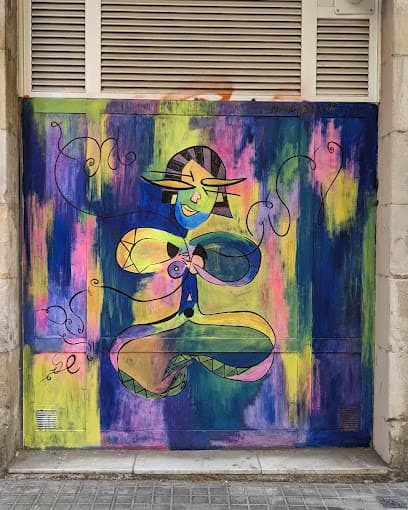
A raw, paint-splattered antidote to the sterile museum circuit. This is where pop-art meets the grit of the street, served straight from the artist’s hands in the heart of old Barcelona.
0.0(0)
Tourist attraction
Frequently Asked Questions
Is Plaça Nova worth visiting?
Yes, it is the historical gateway to the Gothic Quarter. It offers a unique visual contrast between ancient Roman towers, Picasso's modern friezes, and the Gothic Cathedral.
What is the best time to visit Plaça Nova?
Early morning (before 9:00 AM) is best to avoid the heavy tour groups. However, visiting in December for the Fira de Santa Llúcia Christmas market offers the most authentic cultural experience.
Do I need tickets for Plaça Nova?
No, it is a public square and completely free to enter. You only need tickets if you plan to enter the Cathedral or nearby museums like MUHBA.
What are the highlights of Plaça Nova?
Don't miss the 4th-century Roman towers, the reconstructed Roman aqueduct, the Picasso friezes on the Architects' Association building, and the 'Barcino' sculpture by Joan Brossa.
Reviews
0 reviews for Plaça Nova
No reviews yet. Be the first to share your experience!