4.0
2 verified reviews
About
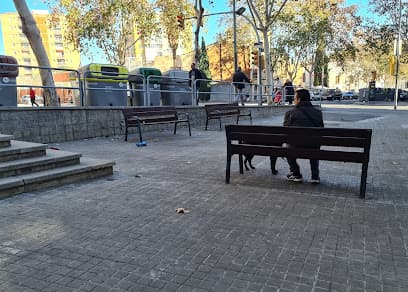
Most people who visit Barcelona never make it past the Sagrada Família or the manicured beaches of Barceloneta. They stay within the 'Gaudí Bubble,' a hermetically sealed world of souvenir shops and overpriced sangria. But if you have the stomach for a twenty-minute metro ride into the guts of the city, get off at Vilapicina. You aren’t in the postcard version of Spain anymore. You’re in Nou Barris, a sprawling, working-class district that grew too fast during the mid-century migration, a place of steep hills and high-rise apartment blocks. And right in the middle of this urban density sits Plaça de Vilapicina, a strange, beautiful anomaly that feels like a village square that refused to die.
When you walk into the square, the first thing that hits you is the silence—or rather, the lack of the specific roar that defines the city center. There are no tour buses here. No guys in neon vests trying to sell you bike tours. Instead, you get the clatter of a metal shutter opening at a local bakery, the rhythmic thud of a kid kicking a football against a stone wall, and the low murmur of old men who have occupied the same benches since the 1970s. The square is anchored by the Church of Santa Eulàlia de Vilapicina. It’s a Romanesque structure dating back to the 10th century, though it’s been nipped and tucked over the years. It looks like it belongs in a remote mountain pass in the Pyrenees, not tucked behind a wall of 1960s flats. It is small, stone-heavy, and utterly indifferent to your presence.
Next to the church is Ca n’Ensenya, an old farmhouse that reminds you that not so long ago, this entire area was farmland and vineyards on the road to Horta. This is the 'Cultural Excavation' of Barcelona. You are looking at the literal layers of the city’s soul. The farmhouse and the church are the survivors of a rural past, now surrounded by the desperate verticality of the Franco-era housing projects. It’s a jarring, fascinating contrast that tells the story of Barcelona better than any museum exhibit could. It’s the story of a city that exploded outward, swallowing villages whole, but couldn't quite digest the stubborn stone hearts of those original settlements.
Don't come here expecting a 'gastronomic adventure' in the modern sense. There are no Michelin stars in this zip code. But there are bars—honest, fluorescent-lit places where the vermut is cheap, the olives are salty, and the tapas are fried with zero pretension. This is where the people who actually run the city—the bus drivers, the cleaners, the construction workers—come to breathe. Sitting in this square at sunset, watching the light hit the ancient stone of Santa Eulàlia while the laundry of a hundred families flutters on the balconies above, is a visceral reminder of what travel is supposed to be. It’s not about checking a box; it’s about witnessing how a place survives its own history.
Is it 'pretty'? Not in the way the Gothic Quarter is pretty. It’s gritty, it’s lived-in, and it’s entirely authentic. If you want to see the real Barcelona, the one that doesn't care if you like it or not, take the L5 metro. Walk the square. Look at the stones. It’s a protein rush for the soul, a clean break from the tourist-trap madness, and a testament to the enduring power of a neighborhood that knows exactly who it is.
Type
Park
Duration
45-60 minutes
Best Time
Late afternoon during the 'vermut' hour when the square fills with locals and the light hits the church stone.
Features
Park
Categories
HistoryArchitectureLocal LifeReligious Site
Ticket Prices
Free Admission
No tickets required
Opening Hours
- MondayOpen 24 hours
- TuesdayOpen 24 hours
- WednesdayOpen 24 hours
- ThursdayOpen 24 hours
- FridayOpen 24 hours
- SaturdayOpen 24 hours
- SundayOpen 24 hours
Must-See Highlights
Santa Eulàlia de Vilapicina Church
Ca n’Ensenya farmhouse
The contrast between medieval stone and 1960s apartment blocks
Visitor Tips
Don't expect English menus in the nearby bars; bring a translation app or point at what looks good.
Combine this with a walk up to Turó de la Peira for incredible 360-degree views of the city.
Visit on a Sunday morning to see the neighborhood at its most relaxed.
Good For
History buffsSolo travelersBudget travelersPhotographers
Why Visit
10th-century Romanesque church in a modern urban setting
Zero tourist crowds for a truly local experience
Preserved medieval farmhouse (Ca n’Ensenya) in the heart of the city
Nearby Landmarks
- 5-minute walk from Vilapicina Metro Station
- 12-minute walk from Parc del Turó de la Peira
- 15-minute walk from Fabra i Puig
Accessibility
- Flat paved square
- Accessible by metro with elevator
- Outdoor public space
Location
Carrer de Vilapicina, 11
Nou Barris, Barcelona
Nearby Hotels
Nearby Restaurants
In Nou Barris
ATTRACTION
Plaça Verda de la Prosperitat
Nou Barris
A concrete-and-chlorophyll middle finger to urban neglect, where Nou Barris locals reclaim their right to breathe, drink, and exist far from the suffocating Sagrada Familia crowds.
0.0(0)
Garden
ATTRACTION
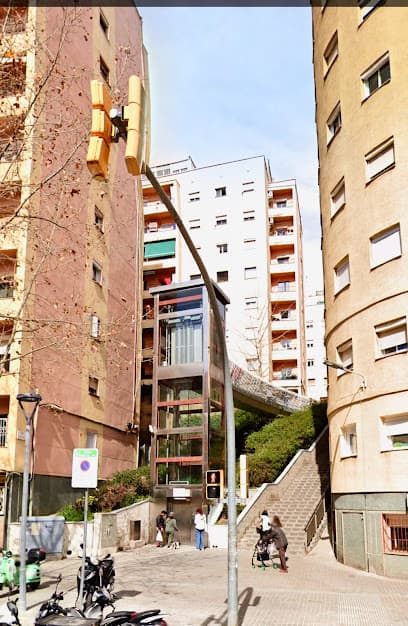
Ascensor Canfranc - Paseo de Fabra y Puig 08031 Nou Barris
Nou Barris
A glass-and-steel lifeline in Nou Barris that saves your knees and offers a gritty, honest view of the Barcelona tourists usually ignore. No gift shops, just gravity-defying utility.
0.0(0)
Hiking area
ATTRACTION
Carrer pimoli42
Nou Barris
The anti-tourist Barcelona. A gritty, honest stretch of Nou Barris where the Gaudí magnets disappear and the real city begins over cheap beer and the smell of rotisserie chicken.
0.0(0)
Tourist attraction
Frequently Asked Questions
Is Plaça de Vilapicina worth visiting?
Yes, if you want to see a side of Barcelona completely untouched by mass tourism. It offers a unique look at 10th-century Romanesque architecture set against a modern working-class neighborhood.
How do I get to Plaça de Vilapicina?
Take the L5 (Blue Line) metro to the Vilapicina station. The square is a short 5-minute walk from the exit.
What is the main attraction in the square?
The primary highlight is the Church of Santa Eulàlia de Vilapicina and the adjacent Ca n’Ensenya farmhouse, which represent the area's ancient rural roots.
Are there places to eat nearby?
Yes, the surrounding streets are filled with authentic, affordable local bars and bakeries that serve traditional tapas and coffee without tourist markups.
Reviews
0 reviews for Plaça de Vilapicina
No reviews yet. Be the first to share your experience!