4.2
26 verified reviews
About
Barcelona is a city of borders, some visible, some felt in the marrow of your bones. Plaça de Narcís Oller is one of those invisible seams. It sits at the top of the Eixample, where the grid-ironed logic of Ildefons Cerdà starts to fray and give way to the tangled, rebellious streets of Gràcia. It’s a triangular slip of land, a geographic afterthought that somehow became a sanctuary for anyone tired of dodging selfie sticks on Passeig de Gràcia.
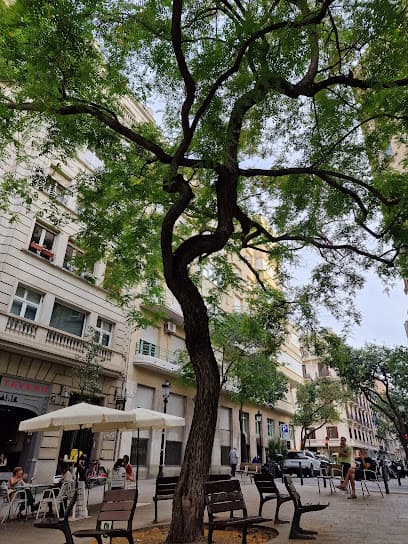
You don’t come here to see a monument that’s been photographed a billion times. You come here because you’ve been walking for three hours, your feet hurt, and the roar of Via Augusta is starting to sound like a personal insult. You step into this little pocket of shade, and suddenly, the volume drops. The air feels a few degrees cooler under the canopy of plane trees—those gnarled, peeling sentinels that have seen every riot and parade this city has thrown in the last century.
The square is named after Narcís Oller, the man who basically invented the modern Catalan novel. His bust sits there, looking out over the benches with a sort of weary, literary detachment. He wrote about the 'Gold Fever' of the 19th century, the greed and the transformation of Barcelona. It’s fitting that his square is now a place where you can escape the modern version of that fever. There are no souvenir shops here selling plastic bulls. There are no 'authentic' tapas bars with menus translated into six languages. There’s just a fountain, some benches, and the steady rhythm of a neighborhood that doesn't care if you're there or not.
Sit down for twenty minutes and watch the theater of the mundane. You’ll see the Eixample suits—lawyers and bankers from the nearby offices—loosening their ties and staring into the middle distance. You’ll see the Gràcia locals, the ones who remember when this was a separate village, carrying their groceries in string bags and stopping to argue about politics or the price of bread. It’s a transition zone. To the south, you have the luxury boutiques and the five-star hotels; to the north, you have the anarchist bookstores and the vermuteria joints where the floor is sticky with spilled booze and history.
Is it 'worth it' in the traditional sense? If you’re checking boxes on a 'Top 10 Things to Do in Barcelona' list, then no. Move along. Go wait in line for a house Gaudí built for a rich guy. But if you want to understand how this city actually breathes, if you want to feel the friction between the old money and the new spirit, this is where you sit. It’s a palate cleanser. It’s the silence between the notes. The fountain—the Font de l'Efeb—is just a short walk away, but the square itself is the real prize. It’s a reminder that the best parts of travel aren't the things you pay for, but the places where you’re allowed to simply exist without being a customer. Grab a coffee from a nearby corner cafe, find a spot on a weathered wooden bench, and let the city happen around you. It’s honest, it’s unpretentious, and in a city that’s increasingly being turned into a theme park, it’s a necessary piece of ground.
Type
Park
Duration
20-40 minutes
Best Time
Late afternoon when the sun filters through the trees and locals gather after work.
Features
Park
Categories
Urban SquareLocal LifeLiteratureArchitecture
Ticket Prices
Free Admission
No tickets required
Opening Hours
- MondayOpen 24 hours
- TuesdayOpen 24 hours
- WednesdayOpen 24 hours
- ThursdayOpen 24 hours
- FridayOpen 24 hours
- SaturdayOpen 24 hours
- SundayOpen 24 hours
Must-See Highlights
The bust of Narcís Oller
The surrounding 19th-century architecture
The transition point into the narrow streets of Gràcia
Visitor Tips
Pick up a coffee at one of the small cafes on Carrer de la Riera de Sant Miquel before sitting down.
Look up at the balconies surrounding the square to see classic Catalan modernista details.
It's a great spot to read a book away from the noise of the main avenues.
Good For
Solo travelersBudget travelersLocalsReadersPeople watching
Why Visit
The Borderland Vibe: Experience the unique transition between the upscale Eixample and bohemian Gràcia.
Literary History: A quiet tribute to Narcís Oller, the father of the modern Catalan novel.
Shaded Respite: Thick canopy of plane trees providing one of the best natural cooling spots in the area.
Nearby Landmarks
- 5-minute walk from Passeig de Gràcia
- 10-minute walk from Casa Vicens Gaudí
- 6-minute walk from Palau Robert
- 8-minute walk from Casa Milà (La Pedrera)
Accessibility
- Flat paved surface
- Accessible by wheelchair
- Public benches available
Location
Plaça de Narcís Oller
Gràcia, Barcelona
Nearby Hotels
Nearby Restaurants
In Gràcia
ATTRACTION
Maison Sara
Gràcia
Forget the mass-produced kitsch on La Rambla. This is Gràcia at its best: a tactile, clay-smeared workshop where the art is as raw and honest as the neighborhood itself.
0.0(0)
Tourist attraction
ATTRACTION
Intercambiador de libros
Gràcia
A humble, weather-beaten box in the hills of Vallcarca where local history is traded one dog-eared paperback at a time. No tourists, no Wi-Fi, just paper and community.
0.0(0)
Park
ATTRACTION
View
Gràcia
Forget the elbow-to-elbow chaos of Park Güell. This is the raw, vertical soul of Gràcia, where the city unfolds in a silent, sun-drenched sprawl at your feet.
0.0(0)
Garden
Frequently Asked Questions
Is Plaça de Narcís Oller worth visiting?
It is worth it if you need a quiet break from the tourist crowds. It's not a major landmark, but a peaceful local square that offers a glimpse into how the neighborhood actually breathes.
What is near Plaça de Narcís Oller?
It is located at the border of Eixample and Gràcia, just a 5-minute walk from the top of Passeig de Gràcia and about 10 minutes from Gaudí's Casa Vicens.
How do I get to Plaça de Narcís Oller?
The easiest way is via the Diagonal Metro station (L3 and L5) or the Gràcia FGC station. It's a short walk from either, located where Via Augusta meets Carrer de la Riera de Sant Miquel.
Reviews
0 reviews for Plaça de Narcís Oller
No reviews yet. Be the first to share your experience!