3.0
1 verified reviews
About
Forget the Gothic Quarter. Forget the salt-crusted air of Barceloneta and the manicured hedges of the upper city. If you want to see the Barcelona that actually works for a living, you get on the L1 or the L4 and you head north until the tourists start to disappear and the apartment blocks start to climb. You end up in Nou Barris, specifically in the neighborhood of Porta, at a place called Plaça de Lola Anglada. It isn’t a grand park. It isn’t a 'must-see' on any glossy brochure. It’s a square—a slab of urban reality that serves as a quiet tribute to one of the most important, and often overlooked, women in Catalan history.
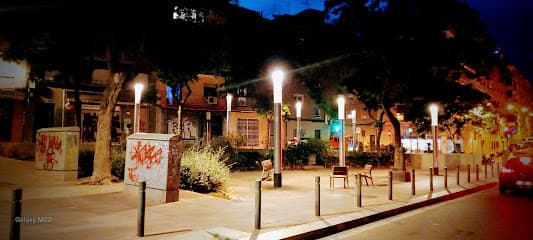
When you arrive, don’t expect a fountain that dances to Vivaldi. Expect concrete. Expect the rhythmic click of pigeons on the pavement and the low murmur of neighbors who have lived here since the days when this district was a battleground for basic dignity. Nou Barris has a history of resistance; it was built by migrants and workers who fought for every paved street and every streetlamp. This square is part of that hard-won urban fabric. It’s a place where kids kick a ball against a wall and old men sit on benches, watching the world go by with the kind of weary wisdom you only get from eighty years in the trenches of the periphery.
But why Lola Anglada? She was the soul of a different Barcelona. Born in 1892, she was a titan of illustration and writing, a woman who created the visual language of Catalan childhood in the early 20th century. She was the first woman to receive the Creu de Sant Jordi, but she was also a republican and a catalanist who found herself marginalized during the long, grey years of the Franco dictatorship. Naming this square after her in 2001 wasn't just a bureaucratic gesture; it was an act of reclamation. It’s a reminder that even in the toughest neighborhoods, there is a deep, abiding respect for the artists who kept the culture alive when it was dangerous to do so.
The square itself is modest. There are trees that offer a bit of shade during the brutal August heat, and the surrounding buildings are a patchwork of 20th-century functionalism. It’s a place for a cigarette and a moment of reflection, far from the 'vibrant energy' that PR firms love to talk about. Here, the energy is quiet. It’s the sound of a neighborhood breathing. You come here to see the un-Barcelona, the one that doesn't care if you take a photo or not. It’s a place that exists for the people who live here, and there is something deeply refreshing about that.
Is it worth the trek? If you’re on a three-day sprint to see the Sagrada Família and eat overpriced tapas, then no. Stay in the center. But if you’ve grown tired of the theme-park version of the city, if you want to sit in a place that feels honest and grounded, then yes. Grab a coffee from a nearby bar—the kind where the owner knows everyone’s name—and sit in the square. Think about Lola Anglada drawing her delicate characters while the world around her was changing, and think about the people of Nou Barris who built this city with their bare hands. This is the real deal. It’s not pretty, it’s not polished, but it’s real. And in a city that’s increasingly being sold off to the highest bidder, that’s worth more than a dozen Gaudí chimneys.
Type
Park
Duration
15-30 minutes
Best Time
Late afternoon when the neighborhood comes alive with locals and the sun isn't too harsh on the concrete.
Features
Park
Categories
Urban SpaceLocal HistoryNeighborhood Square
Ticket Prices
Free Admission
No tickets required
Opening Hours
- MondayOpen 24 hours
- TuesdayOpen 24 hours
- WednesdayOpen 24 hours
- ThursdayOpen 24 hours
- FridayOpen 24 hours
- SaturdayOpen 24 hours
- SundayOpen 24 hours
Must-See Highlights
The quiet residential vibe of the Porta neighborhood
The commemorative street signage for Lola Anglada
The nearby local bars where you can get a coffee for a fraction of center-city prices
Visitor Tips
Combine this with a visit to the nearby Parc de Can Dragó for a full afternoon in Nou Barris.
Don't expect tourist facilities; this is a residential square.
Visit the nearby Som Multiespai if you need modern amenities or a cinema.
Good For
Solo travelersHistory buffsLocal culture seekers
Why Visit
Zero tourist crowds for a truly local experience
Tribute to a legendary Catalan female artist and republican icon
Authentic working-class atmosphere of the Nou Barris district
Nearby Landmarks
- 10-minute walk from Som Multiespai (Heron City)
- 12-minute walk from Parc de Can Dragó
- 15-minute walk from Fabra i Puig Metro Station
Accessibility
- Flat paved surface
- Wheelchair accessible
- Public benches available
Location
Plaça de Lola Anglada
Nou Barris, Barcelona
Nearby Hotels
Nearby Restaurants
In Nou Barris
ATTRACTION
Plaça Verda de la Prosperitat
Nou Barris
A concrete-and-chlorophyll middle finger to urban neglect, where Nou Barris locals reclaim their right to breathe, drink, and exist far from the suffocating Sagrada Familia crowds.
0.0(0)
Garden
ATTRACTION
Ascensor Canfranc - Paseo de Fabra y Puig 08031 Nou Barris
Nou Barris
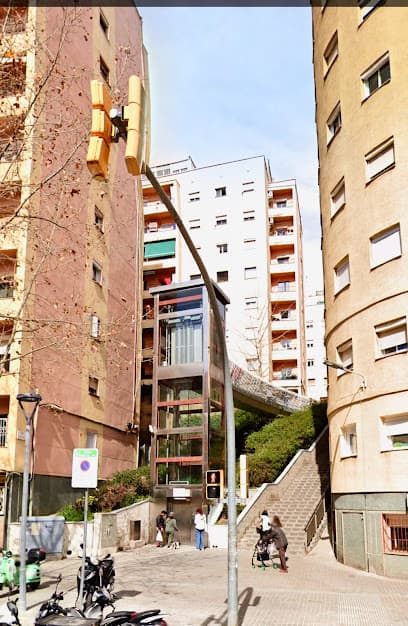
A glass-and-steel lifeline in Nou Barris that saves your knees and offers a gritty, honest view of the Barcelona tourists usually ignore. No gift shops, just gravity-defying utility.
0.0(0)
Hiking area
ATTRACTION
Carrer pimoli42
Nou Barris
The anti-tourist Barcelona. A gritty, honest stretch of Nou Barris where the Gaudí magnets disappear and the real city begins over cheap beer and the smell of rotisserie chicken.
0.0(0)
Tourist attraction
Frequently Asked Questions
Is Plaça de Lola Anglada worth visiting?
Only if you are looking for an authentic, non-touristy experience in a residential neighborhood. It is a simple urban square, not a major landmark, but it offers a glimpse into the real life of Nou Barris.
Who was Lola Anglada?
Lola Anglada was a famous Catalan illustrator, writer, and sculptor (1892–1984). She was a key cultural figure in the early 20th century and the first woman to receive the Creu de Sant Jordi.
How do I get to Plaça de Lola Anglada?
The easiest way is to take the Metro L1 to Fabra i Puig or L4 to Llucmajor. From there, it is a short walk into the Porta neighborhood of Nou Barris.
Reviews
0 reviews for Plaça de Lola Anglada
No reviews yet. Be the first to share your experience!