3.8
738 verified reviews
About
If you’re looking for the Barcelona of the postcards—the one with the soaring spires, the meticulously raked sand, and the overpriced sangria—keep walking. Plaça de l’Oca isn’t interested in your tourism dollars, and it certainly doesn’t care about your Instagram feed. Located in the heart of the El Camp de l'Arpa del Clot neighborhood, this is a place where the city’s pulse beats at a different, more domestic rhythm. It’s a concrete lung in a dense residential block, a place where the 'abuelos' sit on benches for hours, debating the merits of the local football club, while their grandchildren attempt to destroy their shoes on the playground.
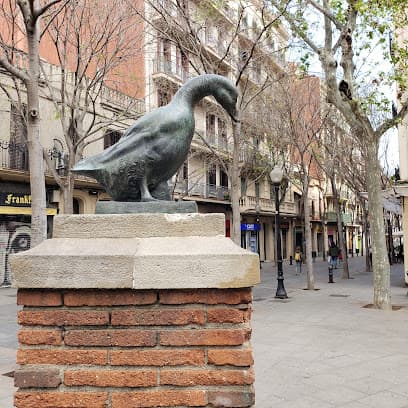
The square takes its name from the 'Oca'—a bronze goose statue by artist Marta Polo that stands as a silent witness to the daily chaos. It’s not a grand monument. It’s a neighborhood landmark, the kind of thing kids climb on until the metal is buffed shiny by a thousand sticky palms. The square itself is part of the Carrer dels Enamorats, a street name that suggests romance but, in reality, serves as a pedestrian artery for people carrying groceries and dragging tired toddlers home from school.
This is one of the best local squares in Barcelona if you want to understand how the city actually functions once the cruise ships leave. There is no pretension here. The air smells of frying oil from the nearby bars and the faint, metallic scent of the city. You’ll find Bar L'Oca anchoring one side of the plaza, its terrace filled with metal tables and chairs that have seen better decades. This is where you come for a 'caña' and a plate of olives that haven’t been 'deconstructed' or 'infused' with anything other than brine. The service is brisk, perhaps a little surly if you look like you’re lost, but it’s honest. It’s the kind of place where the waiter knows everyone’s name, and if they don’t know yours, they’ll treat you with a polite, distant indifference that is far more refreshing than the forced smiles of La Rambla.
To visit Plaça de l’Oca is to engage in the art of doing nothing. There are no museums here. No gift shops. No guided tours. You come here to sit. You watch the teenagers kick a ball against a wall, ignoring the 'no ball games' signs that are a universal suggestion in Mediterranean cities. You listen to the cacophony of Catalan and Spanish echoing off the apartment blocks that hem the square in, creating a natural amphitheater of domestic life. It’s a reminder that Barcelona is, at its core, a collection of villages that were swallowed by the city but never lost their soul.
Is it beautiful? Not in the traditional sense. The pavement is cracked in places, the playground equipment has seen better days, and the lighting at night is that harsh, orange glow that makes everyone look like they’re in a 1970s noir film. But it is real. It’s a sanctuary from the theme-park version of Barcelona that has colonised the center. If you’re staying in Sant Martí or near the Clot metro, it’s worth a detour just to sit for twenty minutes and realize that the city doesn't exist solely for your entertainment. It exists for the people who live here, who work here, and who, at the end of the day, just want a cold beer and a place for their kids to run around while the sun goes down.
Type
Park
Duration
30-60 minutes
Best Time
Late afternoon (17:00-19:00) when the square comes alive with local families and the 'terrazas' fill up.
What People Say
childrens(41)bar(20)games(12)square(9)pedestrian street(8)bank(7)shadow(7)trade(7)
Features
Park
Categories
Public SquarePlaygroundLocal Culture
Ticket Prices
Free Admission
No tickets required
Opening Hours
- MondayOpen 24 hours
- TuesdayOpen 24 hours
- WednesdayOpen 24 hours
- ThursdayOpen 24 hours
- FridayOpen 24 hours
- SaturdayOpen 24 hours
- SundayOpen 24 hours
Must-See Highlights
The bronze Goose statue
The terrace of Bar L'Oca for a local vermut
The surrounding Carrer dels Enamorats pedestrian walk
Visitor Tips
Don't expect English menus at the local bars; brush up on basic Spanish or Catalan.
Combine a visit here with a trip to the nearby Mercat del Clot for a full neighborhood experience.
It's a great spot to escape the crowds of the Sagrada Familia, which is only a 20-minute walk away.
Good For
Families with childrenBudget travelersPeople-watchingLocal culture seekers
Why Visit
Authentic neighborhood atmosphere untouched by mass tourism
The iconic bronze goose statue (La Oca) by Marta Polo
Pedestrian-only zone perfect for people-watching and local immersion
Nearby Landmarks
- 5-minute walk from Mercat del Clot
- 10-minute walk from Parc del Clot
- 15-minute walk from Torre Glòries
- 5-minute walk from Clot Metro Station
Accessibility
- Flat pedestrian surface
- Street-level access
- Accessible benches
Location
Carrer dels Enamorats, 149
Sant Martí, Barcelona
Nearby Hotels
Nearby Restaurants
In Sant Martí
ATTRACTION
LOS CERDINS HOUSE
Sant Martí
A raw, repurposed industrial relic in the heart of Sant Martí, Los Cerdins House is a testament to the neighborhood's manufacturing soul, where red-brick history meets the sharp, creative edge of modern Barcelona.
0.0(0)
Tourist attraction
ATTRACTION
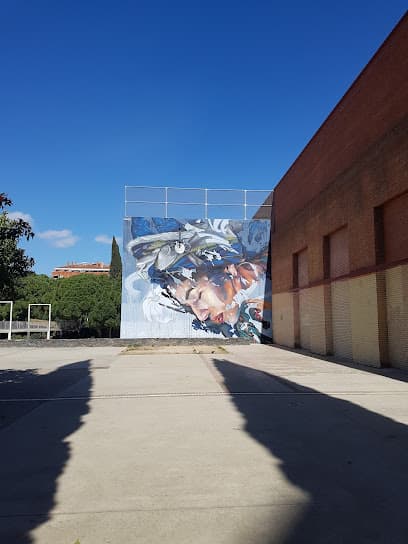
Pista de frontó
Sant Martí
A sun-baked slab of concrete where the rhythmic thwack of a ball against stone serves as the soundtrack to a neighborhood still clinging to its gritty, industrial Poblenou soul.
0.0(0)
Park
ATTRACTION
Saraya Express
Sant Martí
A specialized travel outpost tucked away in Sant Martí. Saraya Express is where the logistics of a trip to Cairo meet the grit of Barcelona’s daily grind, far from the tourist-trap fluff.
0.0(0)
Tourist attraction
Frequently Asked Questions
Is Plaça de l’Oca worth visiting?
Only if you want to see an authentic, non-touristy neighborhood square. It’s a local hangout with a playground and basic bars, far removed from the typical tourist trail.
What is the 'Oca' in the square?
It is a bronze statue of a goose created by artist Marta Polo, which has become the symbol of this specific neighborhood plaza.
How do I get to Plaça de l’Oca?
The easiest way is via the Metro. Take the L1 (Red Line) or L2 (Purple Line) to the Clot station; the square is a short 5-minute walk from there.
Is it good for families?
Yes, it’s a pedestrianized square with a dedicated children's playground, making it a very safe and popular spot for local families.
Reviews
0 reviews for Plaça de l’Oca
No reviews yet. Be the first to share your experience!