4.1
1,934 verified reviews
About
If you’re looking for the postcard-perfect Barcelona of sun-drenched plazas and quiet fountains, Plaça de Lesseps is going to punch you right in the mouth. This isn’t a place designed for tourists to linger over a four-euro espresso; it’s a massive, concrete-heavy transit lung where the city’s traffic-choked arteries—the Ronda del Mig and Gran de Gràcia—collide in a cacophony of scooters, buses, and commuters. It is unvarnished, loud, and utterly essential to understanding how this city actually functions when the cameras aren't rolling.
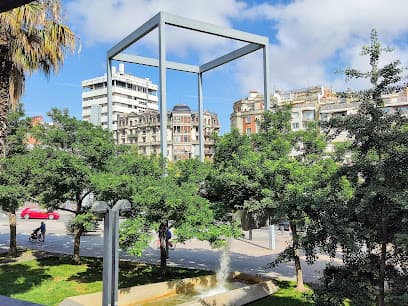
For decades, this place was a scar on the map, a sunken pit of exhaust fumes that effectively cut the neighborhood of Gràcia off from the hills of Vallcarca. A massive renovation in the early 2000s tried to heal that wound, burying the highway and creating a multi-level hardscape that feels more like a deck of a futuristic aircraft carrier than a traditional park. The architect, Albert Viaplana, didn’t go for 'charming.' He went for 'challenging.' You’ll see giant metal structures—pergolas and light towers—that look like rusted canal locks or skeletal cranes. It’s a nod to the square’s namesake, Ferdinand de Lesseps, the man who built the Suez Canal and once lived right here as the French consul. It’s weird, it’s polarizing, and it’s exactly the kind of architectural risk that makes Barcelona interesting.
The heavy hitter here is the Biblioteca Jaume Fuster. If you think libraries are just for dusty books and shushing librarians, walk inside. This is a masterpiece of modern glass and light, a sanctuary of silence that hovers over the chaos of the square. It’s where the neighborhood actually lives—students cramming for exams, old men reading the daily papers, and kids escaping the heat. It’s one of the best public spaces in the city, and it costs you absolutely nothing to sit there and watch the light move across the floor.
Standing in stark, defiant contrast to all this modernism is the Església dels Josepets de Gràcia. Built in 1626, this humble, sandy-colored church was here when this area was nothing but fields and convents. It has survived wars, revolutions, and the arrival of the metro, and it still stands there today, looking slightly bewildered by the metal beams and concrete ramps surrounding it. It’s a reminder that Barcelona is a city of layers, where the 17th century and the 21st century are forced to share the same sidewalk.
You’ll likely find yourself here because you’re heading to Park Güell. The Lesseps metro station is the traditional jumping-off point for the uphill slog to Gaudí’s gingerbread houses. Most tourists scurry through the square as fast as they can, eyes glued to Google Maps, missing the real theater of the city. Don’t be that person. Stop for a second. Watch the skateboarders treat the concrete ledges like a playground. Watch the commuters pouring out of the L3 line. This is the gateway to the Gràcia neighborhood, a place that still feels like a village despite the highway roaring beneath it. It’s not 'pretty' in the conventional sense, but it’s real. And in a city that’s increasingly being turned into a theme park for visitors, the raw, functional energy of Plaça de Lesseps is a breath of fresh—if slightly exhaust-tinged—air.
Type
Park
Duration
30-45 minutes
Best Time
Late afternoon when the library is active and the sun hits the metal sculptures.
What People Say
traffic(41)library(31)metro(19)sitting(16)bus(16)bank(15)artwork(12)cafes(9)
Features
Park
Categories
ArchitecturePublic SquareUrban DesignLibrary
Ticket Prices
Free Admission
No tickets required
Opening Hours
- MondayOpen 24 hours
- TuesdayOpen 24 hours
- WednesdayOpen 24 hours
- ThursdayOpen 24 hours
- FridayOpen 24 hours
- SaturdayOpen 24 hours
- SundayOpen 24 hours
Must-See Highlights
The interior of Biblioteca Jaume Fuster
The facade of the Església dels Josepets de Gràcia
The 'Suez Canal' inspired metal pergolas
The view of the Tibidabo mountain in the distance
Visitor Tips
Use the library's free Wi-Fi and clean restrooms if you're on your way to Park Güell.
Don't expect a quiet park; it's a major traffic junction, so embrace the urban energy.
The walk to Park Güell is steep; look for the streets with outdoor escalators.
Good For
Architecture buffsBudget travelersLocal life seekersStudents and readers
Why Visit
Biblioteca Jaume Fuster: A massive, light-filled library that acts as a quiet bunker against the roar of the surrounding traffic.
Architectural Collision: A 17th-century church trapped in a web of 21st-century concrete and rusted metal.
The Gràcia Gateway: A raw, functional transit hub where the neighborhood’s bohemian vibe meets the city’s asphalt reality.
Nearby Landmarks
- 15-minute walk to Park Güell
- 10-minute walk to Casa Vicens Gaudí
- 12-minute walk to Plaça de la Virreina
- 1-minute walk to Biblioteca Jaume Fuster
Accessibility
- Elevators for metro access
- Ramped walkways throughout the plaza
- Accessible library entrance
Location
Pl. de Lesseps
Gràcia, Barcelona
Nearby Hotels
Nearby Restaurants
In Gràcia
ATTRACTION
Maison Sara
Gràcia
Forget the mass-produced kitsch on La Rambla. This is Gràcia at its best: a tactile, clay-smeared workshop where the art is as raw and honest as the neighborhood itself.
0.0(0)
Tourist attraction
ATTRACTION
Intercambiador de libros
Gràcia
A humble, weather-beaten box in the hills of Vallcarca where local history is traded one dog-eared paperback at a time. No tourists, no Wi-Fi, just paper and community.
0.0(0)
Park
ATTRACTION
View
Gràcia
Forget the elbow-to-elbow chaos of Park Güell. This is the raw, vertical soul of Gràcia, where the city unfolds in a silent, sun-drenched sprawl at your feet.
0.0(0)
Garden
Frequently Asked Questions
Is Plaça de Lesseps worth visiting?
It’s worth a stop if you appreciate architecture that doesn't try to hold your hand. It’s not a postcard park; it’s a functional piece of the city's machinery where you can see how Barcelona actually breathes.
How do I get to Park Güell from Plaça de Lesseps?
From the Lesseps metro station (L3), it is a 15-20 minute uphill walk. Follow the signs for Park Güell along Avinguda de Vallcarca or Carrer de Larrard; there are escalators on some sections to help with the climb.
What is the best thing to see at Plaça de Lesseps?
The Biblioteca Jaume Fuster is the main draw—a sharp, glass-and-steel sanctuary. Pair that with the 17th-century Josepets church, and you’ve got a weird, jarring collision of eras that defines the neighborhood.
Reviews
0 reviews for Plaça de Lesseps
No reviews yet. Be the first to share your experience!