3.0
3 verified reviews
About
If you’ve spent your entire trip within three blocks of La Rambla, you haven’t seen Barcelona. You’ve seen a curated, sanitized, high-fructose version of it. To see the blood and bone of this city, you have to get on the L4 yellow line and take it almost to the end of the world. Get off at Via Júlia, walk past the discount shops and the laundry-draped balconies, and find your way to Plaça de la Prosperitat.
This isn't a 'park' in any sense that a travel brochure would recognize. There are no manicured rose bushes here. There are no whimsical lizard statues. It is a wide, stubborn expanse of urban space that serves as the communal living room for one of the most fiercely independent, working-class neighborhoods in the city. In 'La Prospe,' as the locals call it, the architecture is functional, the history is written in the sweat of migrants who built these blocks with their own hands in the 1960s, and the vibe is unapologetically raw.
You come here to see the Barcelona that doesn't give a damn about your Instagram feed. On any given afternoon, the square is a chaotic symphony of human existence. You’ve got the 'yayoflautas'—the activist grandparents who remember the struggle against Franco—sitting on benches discussing politics. You’ve got kids from three different continents playing a high-stakes game of football using a trash can as a goalpost. You’ve got the hiss of the espresso machine from the corner bar and the smell of fried tapas hitting the air as the sun begins to dip behind the Collserola hills.
The soul of the square is the Casal de Barri Prosperitat, a community center born out of neighborhood protest. This isn't just a building; it’s the nerve center for local resistance and culture. If you’re lucky, you’ll stumble upon a neighborhood 'botifarrada' (a massive sausage grill-out) or a punk rock concert that would make the city council break out in hives. This is a place where people look you in the eye. It’s a place where the 'best tapas in Barcelona' aren't the ones with the foam and the tweezers, but the ones served on a chipped plate by a guy who’s been behind the same bar for thirty years.
Is it pretty? Not by traditional standards. It’s gray, it’s loud, and the pigeons are more aggressive than the ones in Plaça de Catalunya. But it is honest. It represents the 'Nou Barris' spirit—a district that was once ignored by the city's elite and responded by building its own identity through solidarity and grit. Walking through Plaça de la Prosperitat is a reminder that a city belongs to the people who live in it, not the people who visit it.
If you’re looking for a romantic backdrop for a proposal, go somewhere else. But if you want to understand why Barcelona is a city that fights, a city that breathes, and a city that survives despite the crushing weight of tourism, sit down on a bench here. Buy a cold Estrella from the nearest bodega, watch the light fade over the concrete, and listen. This is the real thing. It’s not a hidden gem; it’s a diamond in the rough that doesn't want to be polished. It’s the best thing to do in Nou Barris if you actually want to feel the pulse of the streets.
Type
Park
Duration
1 hour
Best Time
Late afternoon or early evening when the square fills with locals after work and school.
Features
Park
Categories
Local CultureUrban SquareCommunity Hub
Ticket Prices
Free Admission
No tickets required
Opening Hours
- MondayOpen 24 hours
- TuesdayOpen 24 hours
- WednesdayOpen 24 hours
- ThursdayOpen 24 hours
- FridayOpen 24 hours
- SaturdayOpen 24 hours
- SundayOpen 24 hours
Must-See Highlights
The Casal de Barri Prosperitat community center
Local street art and protest murals
Traditional neighborhood bars bordering the square
Visitor Tips
Don't act like a tourist; just grab a seat and blend in.
Check the Casal de Barri website for local festivals or 'festes majors'.
Eat at the small bars nearby for some of the cheapest and most honest tapas in the city.
Good For
Solo travelersCulture seekersBudget travelersPeople watching
Why Visit
Authentic working-class atmosphere completely untouched by mass tourism
Center of neighborhood activism and the famous Casal de Barri Prosperitat
The true 'Real Barcelona' experience with local prices and genuine hospitality
Nearby Landmarks
- 5-minute walk from Via Júlia Metro Station
- 10-minute walk from Parc de la Guineueta
- 12-minute walk from Mercat de Montserrat
Accessibility
- Flat paved surface
- Wheelchair accessible
- Accessible by public transport
Location
Plaça de
Nou Barris, Barcelona
Nearby Hotels
Nearby Restaurants
In Nou Barris
ATTRACTION
Plaça Verda de la Prosperitat
Nou Barris
A concrete-and-chlorophyll middle finger to urban neglect, where Nou Barris locals reclaim their right to breathe, drink, and exist far from the suffocating Sagrada Familia crowds.
0.0(0)
Garden
ATTRACTION
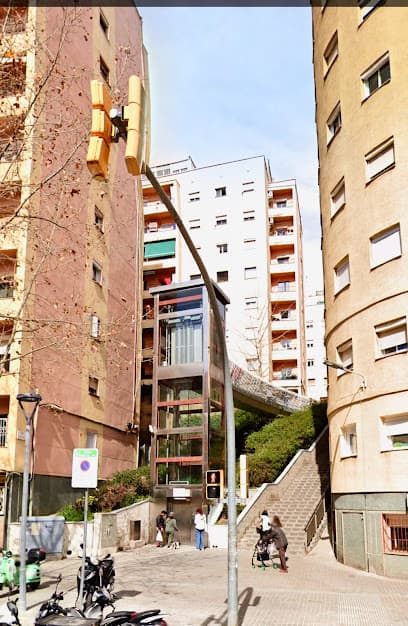
Ascensor Canfranc - Paseo de Fabra y Puig 08031 Nou Barris
Nou Barris
A glass-and-steel lifeline in Nou Barris that saves your knees and offers a gritty, honest view of the Barcelona tourists usually ignore. No gift shops, just gravity-defying utility.
0.0(0)
Hiking area
ATTRACTION
Carrer pimoli42
Nou Barris
The anti-tourist Barcelona. A gritty, honest stretch of Nou Barris where the Gaudí magnets disappear and the real city begins over cheap beer and the smell of rotisserie chicken.
0.0(0)
Tourist attraction
Frequently Asked Questions
Is Plaça de la Prosperitat worth visiting?
Only if you want to see the authentic, non-touristy side of Barcelona. It is a working-class community hub far from the main attractions, offering a raw look at local life and activism.
How do I get to Plaça de la Prosperitat?
Take the L4 (Yellow Line) metro to the Via Júlia station. From there, it is a short 5-minute walk into the heart of the Prosperitat neighborhood.
Is Nou Barris safe for tourists?
Yes, it is a safe residential area. However, because it is not a tourist zone, you should behave like a respectful neighbor rather than a sightseer. Standard urban awareness applies.
What is there to do near Plaça de la Prosperitat?
You can visit the nearby Parc de la Guineueta, explore the local markets on Via Júlia, or check the schedule at the Casal de Barri Prosperitat for community concerts and events.
Reviews
0 reviews for Plaça de la Prosperitat
No reviews yet. Be the first to share your experience!