3.9
864 verified reviews
About
If you’re looking for the Barcelona of postcards—the wrought-iron balconies, the smell of expensive sea bass, the polished marble of the Gothic Quarter—you’ve taken the wrong metro line. Get off at Via Júlia, walk into the heart of Nou Barris, and you’ll find Plaça de la Harry Walker. It isn’t 'pretty' in any conventional sense. It’s a 'plaça dura'—a hard square—a sprawling expanse of concrete and stone that serves as the lungs for a neighborhood that had to fight for every square inch of public space it owns.
This place has teeth. It’s named after the Harry Walker engine components factory that once stood here, the site of a legendary sixty-two-day strike in 1970 that became a flashpoint for the anti-Franco labor movement. When the factory finally came down, the people didn't want another block of cramped apartments; they wanted air. They wanted a place to breathe. What they got is a massive, tiered urban space that feels more like a civic statement than a park. It’s a reminder that Barcelona wasn't just built by architects with God complexes; it was built by workers who refused to be squeezed out.
The first thing that hits you isn't the greenery—there isn't much of it—but the sound of water. A massive, brutalist waterfall cascades down the concrete tiers, a heavy, rhythmic thrum that drowns out the city traffic. It’s a strange, beautiful juxtaposition: the harshness of the grey stone against the white noise of falling water. In the summer, the spray is a godsend. In the winter, it’s a cold, shimmering monument to the neighborhood’s resilience.
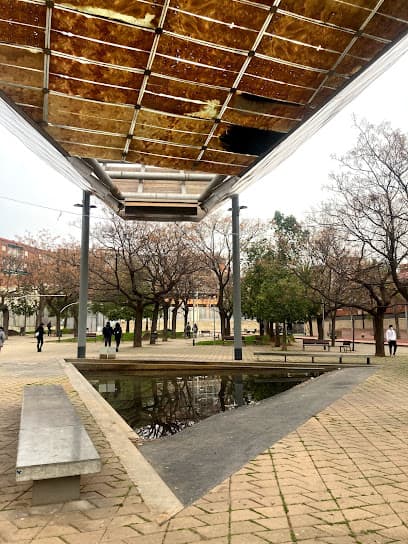
Walk through here at five in the evening and you’ll see the real Barcelona. No influencers posing for the 'gram, no tour groups following a plastic umbrella. Just life, raw and loud. You’ve got kids in Barça jerseys kicking footballs against the concrete walls, their shouts echoing off the surrounding apartment blocks. You’ve got grandfathers sitting on the benches, leaning on canes, probably remembering when this was all grease and gears. There’s a playground that stays packed until the sun goes down, and enough shadow under the pergolas for the locals to escape the brutal Catalan sun.
Is it worth the trek? If you want to understand how this city actually functions, yes. It’s one of the best things to do in Nou Barris if you’re tired of the tourist circus. It’s a place where the history of struggle is baked into the pavement. You come here to see the transition from industrial wasteland to community hub. It’s honest. It’s functional. It’s a bit rough around the edges, just like the people who live here.
Don't expect a gift shop. Don't expect a café with English menus. Expect to see a neighborhood being itself. Grab a cheap beer from a nearby 'paki' or a local bar, find a spot near the waterfall, and just watch. This is the Barcelona that doesn't care if you like it or not, and that’s exactly why it’s worth your time. It’s a testament to the fact that a city’s true value isn't found in its monuments, but in the spaces where its people finally found room to stand their ground.
Type
Park
Duration
1 hour
Best Time
Late afternoon (17:00-19:00) to see the neighborhood come alive with families and locals.
What People Say
kids(48)waterfall(13)shadow(13)space(11)fountain(9)bank(9)dog(8)ideal(8)
Features
Park
Categories
HistoryUrban SpaceLabor MovementPlayground
Ticket Prices
Free Admission
No tickets required
Opening Hours
- MondayOpen 24 hours
- TuesdayOpen 24 hours
- WednesdayOpen 24 hours
- ThursdayOpen 24 hours
- FridayOpen 24 hours
- SaturdayOpen 24 hours
- SundayOpen 24 hours
Must-See Highlights
The Great Waterfall (La Cascada)
The central playground area
The commemorative plaques regarding the Harry Walker factory strike
The views of the surrounding Nou Barris apartment blocks
Visitor Tips
Visit the nearby Mercat de Montserrat for a real local market experience.
Wear comfortable shoes as the square is large and entirely paved.
Don't expect many English speakers; brush up on basic Spanish or Catalan phrases.
Good For
Families with kidsHistory buffsBudget travelersUrban explorers
Why Visit
Historic labor movement site of the 1970-71 Harry Walker strike
Massive brutalist-style urban waterfall and tiered concrete architecture
Authentic working-class atmosphere completely free of tourist traps
Nearby Landmarks
- Parc de la Guineueta (8-minute walk)
- Mercat de Montserrat (10-minute walk)
- Via Júlia Metro Station (7-minute walk)
Accessibility
- Ramp access between tiers
- Flat paved surfaces
- Accessible by public transport
Location
Pg. de Valldaura, 261
Nou Barris, Barcelona
Nearby Hotels
Nearby Restaurants
In Nou Barris
ATTRACTION
Plaça Verda de la Prosperitat
Nou Barris
A concrete-and-chlorophyll middle finger to urban neglect, where Nou Barris locals reclaim their right to breathe, drink, and exist far from the suffocating Sagrada Familia crowds.
0.0(0)
Garden
ATTRACTION
Ascensor Canfranc - Paseo de Fabra y Puig 08031 Nou Barris
Nou Barris
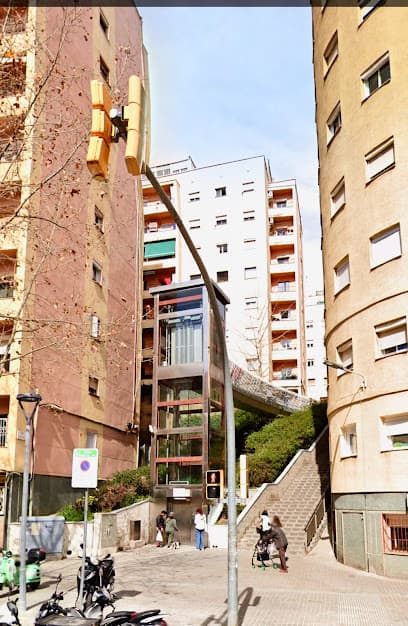
A glass-and-steel lifeline in Nou Barris that saves your knees and offers a gritty, honest view of the Barcelona tourists usually ignore. No gift shops, just gravity-defying utility.
0.0(0)
Hiking area
ATTRACTION
Carrer pimoli42
Nou Barris
The anti-tourist Barcelona. A gritty, honest stretch of Nou Barris where the Gaudí magnets disappear and the real city begins over cheap beer and the smell of rotisserie chicken.
0.0(0)
Tourist attraction
Frequently Asked Questions
Is Plaça de la Harry Walker worth visiting?
Yes, if you want to see the authentic, working-class side of Barcelona away from the tourist crowds. It’s a significant site for local labor history with a unique brutalist waterfall.
What is the history of Plaça de la Harry Walker?
The square is named after the Harry Walker factory that occupied the site until the late 20th century. It was the location of a famous 1970 workers' strike that became a symbol of resistance against the Franco regime.
How do I get to Plaça de la Harry Walker?
The easiest way is to take the L4 (Yellow Line) metro to Via Júlia or L3 (Green Line) to Canyelles. From there, it is a short walk to Passeig de Valldaura.
Is the park good for children?
Absolutely. It features a large playground, plenty of open space for running or playing football, and a large waterfall that is a hit with local kids.
Reviews
0 reviews for Plaça de la Harry Walker
No reviews yet. Be the first to share your experience!