4.3
35 verified reviews
About
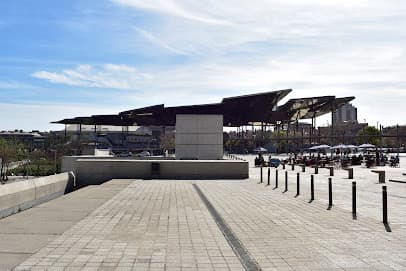
If you’re looking for the Barcelona of Woody Allen movies—the sun-drenched balconies, the crumbling Gothic stone, the accordion player in the square—you’ve come to the wrong place. Plaça de Josep Antoni Coderch is the Barcelona that wants to be Berlin. It’s the Barcelona that looked at its industrial past in Sant Martí and decided to pave over the grease with high-concept architecture and enough brushed aluminum to build a fleet of starships. This is the heart of the Glòries redevelopment, a place that feels less like a traditional plaza and more like a landing pad for the future.
Named after the legendary Catalan architect who preferred clean lines to Gaudí’s psychedelic curves, the plaza is dominated by the Disseny Hub Barcelona, or 'DHUB.' Locals call the building 'La Grapadora'—the Stapler. It’s a massive, cantilevered beast of a building that looks like it’s about to tip over and crush the skaters practicing their kickflips on the smooth granite below. This is the best park in Barcelona if your idea of a park involves more design theory than daisies. It’s a transition zone, a place where the old working-class neighborhood of Poblenou meets the high-tech ambitions of the 22@ district.
Standing in the center of the plaza, you’re caught in a crossfire of architectural egos. To one side, you have the Torre Glòries—formerly the Agbar Tower—Jean Nouvel’s multicolored, phallic tribute to the city’s water company. To the other, the shimmering, mirrored roof of the Mercat dels Encants, one of the oldest flea markets in Europe, which was moved here into a structure that looks like a gold-leafed origami project. It’s a jarring, fascinating collision of the hyper-modern and the ancient. You can buy a 19th-century rusted wrench at the market and then walk fifty yards to look at a 3D-printed chair in the museum. That’s the soul of this place.
The atmosphere is undeniably urban. There is no 'charming' here. There is scale. There is wind—the kind that whips off the Mediterranean and tunnels through the concrete corridors, making you feel very small and very exposed. But there’s a certain honesty to it. It’s a place where design students from the nearby schools sit on the grass with their laptops, where office workers from the tech towers eat their salads in the shadow of the Stapler, and where the city’s ambitious future is laid bare. It’s not trying to sell you a postcard; it’s trying to sell you a vision of what Barcelona thinks it should be in the 21st century.
Is it worth visiting? If you give a damn about architecture, absolutely. If you want to see how a city reinvented itself after the industrial age, yes. But don’t come here for a romantic picnic. Come here to feel the pulse of a city that is tired of being a museum and wants to be a laboratory. The museum itself is a deep dive into the objects that shape our lives, from fashion to furniture, and the plaza serves as its front porch. It’s a place of hard edges and big ideas. Just don't expect a warm hug from the architecture. It’s too busy looking at its own reflection in the glass of the Agbar Tower.
Type
Park
Duration
45-60 minutes
Best Time
Late afternoon for the best light hitting the Agbar Tower and the museum's metal exterior.
What People Say
museum(2)
Features
Park
Categories
ArchitectureModernismUrban DesignPhotography
Ticket Prices
Free Admission
No tickets required
Opening Hours
- MondayOpen 24 hours
- TuesdayOpen 24 hours
- WednesdayOpen 24 hours
- ThursdayOpen 24 hours
- FridayOpen 24 hours
- SaturdayOpen 24 hours
- SundayOpen 24 hours
Must-See Highlights
The cantilevered 'Stapler' architecture of the Disseny Hub
The reflection of the Agbar Tower in the surrounding glass buildings
The mirrored ceiling of the nearby Mercat dels Encants
The 'A' and 'B' sculptures by Joan Brossa nearby
Visitor Tips
It gets very windy here; bring a jacket even if it's sunny.
The plaza offers some of the best angles for photographing the Agbar Tower without crowds.
Combine your visit with a trip to the Encants flea market on a Monday, Wednesday, Friday, or Saturday.
Good For
Architecture enthusiastsPhotographersDesign studentsSkaters
Why Visit
Architectural epicenter featuring the Disseny Hub and views of the Agbar Tower
A rare look at Barcelona's 21st-century urban redevelopment and design-centric philosophy
Direct proximity to the Mercat dels Encants, Europe's most architecturally stunning flea market
Nearby Landmarks
- 2-minute walk from Disseny Hub Barcelona
- 3-minute walk from Mercat dels Encants
- 5-minute walk from Torre Glòries (Agbar Tower)
- 5-minute walk from Westfield Glòries Shopping Centre
Accessibility
- Fully wheelchair accessible
- Wide paved pathways
- Elevator access to the museum levels
Location
Plaça de les Glòries Catalanes, 37
Sant Martí, Barcelona
Nearby Hotels
Nearby Restaurants
In Sant Martí
ATTRACTION
LOS CERDINS HOUSE
Sant Martí
A raw, repurposed industrial relic in the heart of Sant Martí, Los Cerdins House is a testament to the neighborhood's manufacturing soul, where red-brick history meets the sharp, creative edge of modern Barcelona.
0.0(0)
Tourist attraction
ATTRACTION
Pista de frontó
Sant Martí
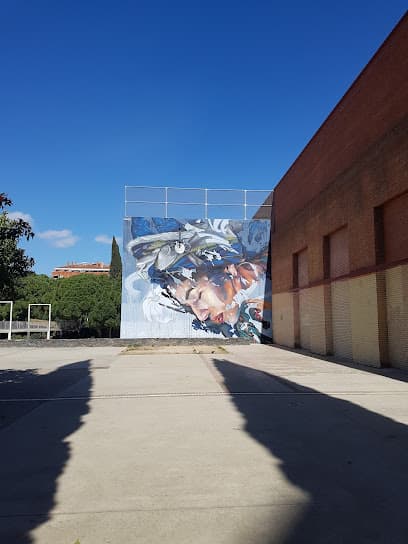
A sun-baked slab of concrete where the rhythmic thwack of a ball against stone serves as the soundtrack to a neighborhood still clinging to its gritty, industrial Poblenou soul.
0.0(0)
Park
ATTRACTION
Saraya Express
Sant Martí
A specialized travel outpost tucked away in Sant Martí. Saraya Express is where the logistics of a trip to Cairo meet the grit of Barcelona’s daily grind, far from the tourist-trap fluff.
0.0(0)
Tourist attraction
Frequently Asked Questions
Is Plaça de Josep Antoni Coderch worth visiting?
Yes, especially for fans of modern architecture and design. It offers a unique look at Barcelona's futuristic urban planning, though it lacks the traditional charm of the older neighborhoods.
What is the 'Stapler' building in the plaza?
That is the Disseny Hub Barcelona (DHUB), the city's premier design museum. Its distinctive cantilevered shape earned it the nickname 'La Grapadora' from locals.
How do I get to Plaça de Josep Antoni Coderch?
The easiest way is via the Metro L1 (Red Line) to the Glòries station. The plaza is located immediately outside the station exits.
Is there an entry fee for the plaza?
No, the plaza is a public open space and is free to enter. However, the Disseny Hub museum and other nearby attractions may require tickets.
Reviews
0 reviews for Plaça de Josep Antoni Coderch
No reviews yet. Be the first to share your experience!