About
Forget the Gothic Quarter. Forget the polished marble of Passeig de Gràcia and the choreographed chaos of La Rambla. If you want to see where the blood of Barcelona actually pumps, you have to head northeast, out to Sant Martí, to places like Plaça de Fernando de los Rios. This isn’t the Barcelona they put on the posters. There are no t-shirt shops here, no overpriced sangria, and nobody is going to offer you a selfie stick. It’s a slab of civic reality tucked away in the La Verneda i la Pau neighborhood, and it’s beautiful precisely because it doesn’t try to be.
When you walk into this square off Carrer de l'Empordà, the first thing that hits you isn't an architectural marvel, but the scale of the residential blocks surrounding it. These are the 'beehives' of the 1960s and 70s—functional, dense, and unapologetic. The square serves as the neighborhood’s collective living room. It’s a patch of green and grey where the air smells of laundry detergent from the balconies above and the faint, metallic scent of the nearby industrial zones. It’s a place where the trees—pines and tipuanas—have had to fight for their space, providing a canopy for people who actually live here.
The square is named after Fernando de los Ríos Urruti, a man who believed in education and social justice during the Second Republic. There’s a certain poetic weight to that. In a city that often feels like it’s being sold off piece by piece to the highest bidder, a public space like this feels like a holdout. It’s utilitarian. You’ve got the standard-issue Barcelona benches—the ones designed to be sturdy enough to outlast a revolution—and a playground where the local kids burn off energy while their grandparents argue about football or the price of bread. It’s the sound of the city without the filter: the screech of a scooter, the rhythmic thud of a ball against a wall, and the rapid-fire Catalan and Spanish of people who have known each other for forty years.
Is it 'worth visiting' in the traditional sense? If you’re looking for Gaudí, no. Stay on the blue bus. But if you’re the kind of traveler who finds more soul in a local bakery than a museum, then yes. This is one of the best things to do in Sant Martí if you want to understand the social fabric of the city. It’s a reminder that Barcelona is a city of workers, of migrants, and of families who fought for every square meter of green space they have. There’s a quiet dignity in the way the light hits the concrete at sunset, turning the utilitarian into something almost cinematic.
You come here to sit. You come here to watch the dogs sniff the tree trunks and the teenagers try to look cool while ignoring their parents. You come here to realize that the 'real' Barcelona isn't a museum—it's a living, breathing, sometimes messy, and always resilient organism. It’s a place where the history isn't written in stone carvings, but in the collective memory of the people sitting on the next bench over. It’s honest, it’s raw, and it’s exactly what a city square should be: a place for everyone, and a place for no one in particular.
Type
Garden
Duration
30-45 minutes
Best Time
Late afternoon or early evening when the neighborhood families and seniors gather in the square.
Features
Garden
Categories
Urban GardenLocal LifeNeighborhood Square
Ticket Prices
Free Admission
No tickets required
Must-See Highlights
The contrast between the lush pine trees and the surrounding high-rise residential architecture
The local playground scene which captures the essence of Sant Martí family life
The plaque dedicated to Fernando de los Ríos
Visitor Tips
Don't bring a camera and act like a tourist; just sit on a bench and blend in.
Visit a nearby local bakery on Carrer de l'Empordà for a cheap, authentic snack.
Combine this with a walk through the nearby Parc de Sant Martí for a full neighborhood tour.
Good For
Local culture seekersBudget travelersPeople watchingFamilies with children
Why Visit
Zero tourist crowds for a completely authentic local experience
A window into the 20th-century urban development and social history of Barcelona
A peaceful, shaded retreat used exclusively by neighborhood residents
Nearby Landmarks
- 10-minute walk from Parc de Sant Martí
- 5-minute walk from Rambla de Guipúscoa
- 15-minute walk from Besòs Metro Station
Accessibility
- Flat terrain
- Wheelchair accessible entrances
- Benches available
Location
Carrer de l'Empordà, 10X
Sant Martí, Barcelona
Nearby Hotels
Nearby Restaurants
In Sant Martí
ATTRACTION
LOS CERDINS HOUSE
Sant Martí
A raw, repurposed industrial relic in the heart of Sant Martí, Los Cerdins House is a testament to the neighborhood's manufacturing soul, where red-brick history meets the sharp, creative edge of modern Barcelona.
0.0(0)
Tourist attraction
ATTRACTION
Pista de frontó
Sant Martí
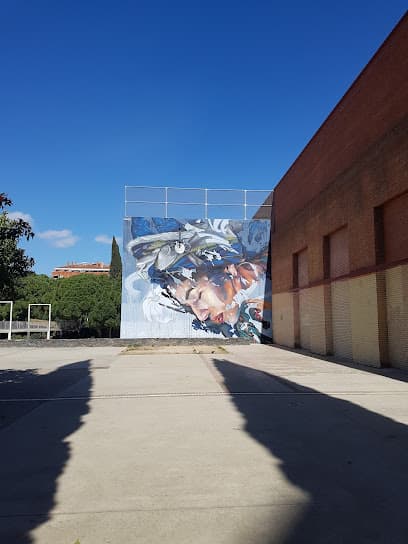
A sun-baked slab of concrete where the rhythmic thwack of a ball against stone serves as the soundtrack to a neighborhood still clinging to its gritty, industrial Poblenou soul.
0.0(0)
Park
ATTRACTION
Saraya Express
Sant Martí
A specialized travel outpost tucked away in Sant Martí. Saraya Express is where the logistics of a trip to Cairo meet the grit of Barcelona’s daily grind, far from the tourist-trap fluff.
0.0(0)
Tourist attraction
Frequently Asked Questions
Is Plaça de Fernando de los Rios worth visiting?
Only if you are interested in seeing the authentic, non-touristy side of Barcelona. It is a local neighborhood square, not a major landmark, offering a glimpse into daily life in Sant Martí.
How do I get to Plaça de Fernando de los Rios?
The easiest way is via the Barcelona Metro. Take the L2 (Purple Line) to Sant Martí or the L4 (Yellow Line) to Besòs, then it's a 10-15 minute walk through the neighborhood.
What is near Plaça de Fernando de los Rios?
It is located in a residential area near the Rambla de Guipúscoa and the Parc de Sant Martí, which offers more extensive green space and sports facilities.
Reviews
0 reviews for Plaça de Fernando de los Rios
No reviews yet. Be the first to share your experience!