
3.7
65 verified reviews
About
Forget the Gothic Quarter. Forget the polished stones of the Eixample and the carefully curated 'authenticity' of El Born. If you want to see the Barcelona that actually works for a living, you have to head northeast, out to Sant Martí. This is the land of the 'desarrollismo'—the massive housing blocks built during the mid-20th century to house the people who built this city. And in the middle of this grid of functional, brutalist ambition sits the Plaça de Conxita Badia.
Walking into this square isn't a 'gastronomic adventure' or a 'journey through time.' It’s an encounter with the present. The first thing you’ll notice isn't the architecture, but the sound. It’s the sound of a neighborhood breathing. It’s the rattle of a shopping trolley over paving stones, the distant hum of the L2 metro line vibrating beneath your boots, and the sharp, staccato rhythm of kids kicking a ball against a concrete wall. This is a place where laundry hangs like prayer flags from the balconies above, and the air smells faintly of diesel and whatever the neighbor on the third floor is frying for lunch.
The square is named after Conxita Badia, one of the greatest sopranos Catalonia ever produced. She was a woman who sang for Granados and Casals, a voice that moved audiences in the great halls of Europe and South America. There is a beautiful, almost heartbreaking irony in naming this utilitarian space after such a refined, ethereal talent. While her voice reached for the heavens, the square that bears her name is firmly rooted in the earth. It’s a patch of urban reality where the benches are occupied by old men in flat caps discussing the price of bread and the failures of the local football club.
Don’t expect lush botanical gardens or intricate Gaudí-esque mosaics. This is a park in Sant Martí, which means it’s designed for durability, not for Instagram. There are trees, yes—hardy specimens that have survived decades of city grime—and a playground that has seen better days but still serves its purpose. The 3.7 rating you see online is the most honest thing about this place. It’s not a five-star destination because it’s not trying to sell you anything. It’s a three-point-seven because it’s just a place to be. It’s a breathing hole in a dense urban forest.
The magic here, if you’re willing to look for it, is in the lack of pretension. There are no 'hidden gems' here, just the quiet dignity of a neighborhood that doesn't care if you’re there or not. You can sit on a weathered bench and watch the theatre of the ordinary unfold. You’ll see the dog walkers, the teenagers looking for a corner to smoke in peace, and the grandmothers who have lived in these blocks since they were first built, watching the world change from their perch in the sun. It’s a reminder that the heart of Barcelona doesn't beat in the tourist traps; it beats in these quiet, slightly gritty corners where life is lived at a human scale.
Is Plaça de Conxita Badia worth visiting? If you’re on a forty-eight-hour whirlwind tour of the 'must-sees,' then no. Stay on the bus. But if you’re the kind of traveler who finds beauty in the mundane, who wants to understand the texture of a city beyond the postcards, then take the purple line out to Sant Martí. Buy a cheap beer from the corner 'paki,' find a spot in the shade, and just watch. It’s not a fever dream. It’s not a feast for the senses. It’s just Barcelona, raw and unadorned, and sometimes, that’s exactly what you need.
Type
Park
Duration
30-45 minutes
Best Time
Late afternoon when the neighborhood comes alive with families and locals finishing work.
Features
Park
Categories
Urban SquareLocal LifeNeighborhood Park
Ticket Prices
Free Admission
No tickets required
Must-See Highlights
The local 'life'—watch the neighborhood dynamics
The surrounding residential architecture of the 1960s and 70s
The commemorative plaque or signage dedicated to Conxita Badia
Visitor Tips
Don't expect tourist amenities; this is a residential area.
Grab a coffee at one of the nearby local bars to soak in the atmosphere.
Combine this with a walk through the wider Sant Martí district to see the 'real' Barcelona.
Good For
Solo travelersArchitecture enthusiastsBudget travelersLocal culture seekers
Why Visit
Zero tourist saturation for a truly local experience
A window into the mid-century 'desarrollismo' architecture of Barcelona
A quiet, unpretentious atmosphere perfect for people-watching
Nearby Landmarks
- 3-minute walk from Sant Martí Metro Station (L2)
- 8-minute walk from Parroquia de Sant Martí de Provençals
- 12-minute walk from Parc de Sant Martí
Accessibility
- Flat paved surfaces
- Accessible by public transport
- Ramped access to the square
Location
Plaça de Conxita Badia
Sant Martí, Barcelona
Nearby Hotels
Nearby Restaurants
In Sant Martí
ATTRACTION
LOS CERDINS HOUSE
Sant Martí
A raw, repurposed industrial relic in the heart of Sant Martí, Los Cerdins House is a testament to the neighborhood's manufacturing soul, where red-brick history meets the sharp, creative edge of modern Barcelona.
0.0(0)
Tourist attraction
ATTRACTION
Pista de frontó
Sant Martí
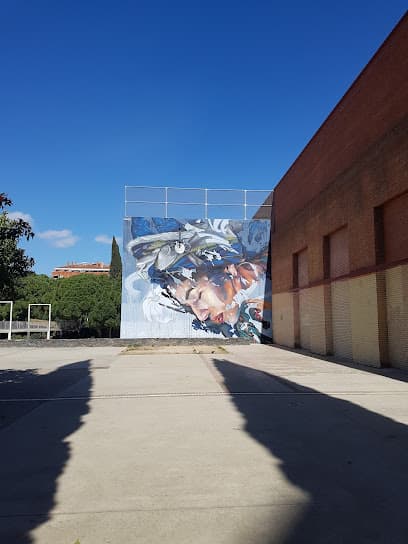
A sun-baked slab of concrete where the rhythmic thwack of a ball against stone serves as the soundtrack to a neighborhood still clinging to its gritty, industrial Poblenou soul.
0.0(0)
Park
ATTRACTION
Saraya Express
Sant Martí
A specialized travel outpost tucked away in Sant Martí. Saraya Express is where the logistics of a trip to Cairo meet the grit of Barcelona’s daily grind, far from the tourist-trap fluff.
0.0(0)
Tourist attraction
Frequently Asked Questions
Is Plaça de Conxita Badia worth visiting?
Only if you are interested in seeing an authentic, non-touristy neighborhood. It is a functional urban square, not a major landmark, offering a glimpse into the daily lives of Sant Martí residents.
How do I get to Plaça de Conxita Badia?
The easiest way is to take the Metro Line 2 (Purple Line) to the Sant Martí station. The square is just a short 3-minute walk from the station exit.
Who was Conxita Badia?
She was a famous Catalan soprano and pianist (1897–1975), known for her close collaborations with composers like Enrique Granados and Manuel de Falla.
Are there restaurants near Plaça de Conxita Badia?
Yes, the surrounding streets of Sant Martí de Provençals are filled with local tapas bars and unpretentious cafes that serve the neighborhood residents at fair prices.
Reviews
0 reviews for Plaça de Conchita Badia 1
No reviews yet. Be the first to share your experience!