About
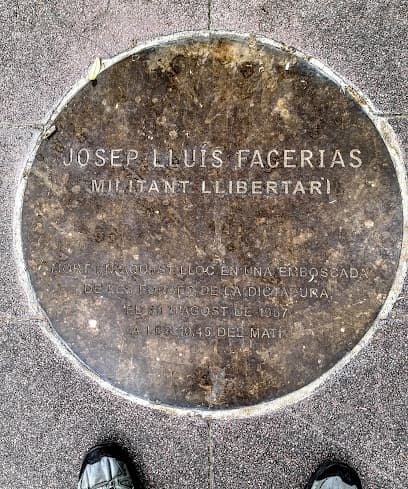
If you’re looking for the Barcelona of postcards—the sun-drenched plazas, the whimsical chimneys, the overpriced pitchers of neon-red sangria—then get back on the L3 and head toward the center. You’ve come to the wrong place. But if you want to understand the soul of this city, the part that doesn't care if you like it or not, you stand right here, at the intersection of Carrer del Doctor Pi i Molist and Nil Fabra. This isn't a 'square' in the traditional sense; it’s a scar. This is the Placa a Josep Lluís Facerias, and it’s a monument to a man who refused to stop fighting when everyone else had given up.
Josep Lluís Facerias, known to his comrades and the police who hunted him as 'Face,' was the last of the legendary anarchist guerrillas, the Maquis. On August 30, 1957, this very pavement was the site of his final stand. He wasn't some abstract historical figure; he was a man on a bicycle, lured into a police ambush, carrying a couple of pistols and a grenade that never got the chance to explode. They shot him down right here. For fifty years, the official history of Spain tried to bury his name under layers of silence and concrete. It wasn't until 2007 that the neighborhood finally reclaimed this spot, naming it after the man who died fighting a dictatorship that seemed like it would last forever.
Standing here today, you won't find a gift shop. You’ll find the real Nou Barris. This is a working-class stronghold, a place built by migrants and rebels who carved a life out of these hills. The air smells of diesel, strong coffee, and the roasting chickens from the nearby 'rostisseries.' It’s loud, it’s unpretentious, and it’s visceral. The memorial itself is a simple plaque and a space that forces you to acknowledge that the ground beneath your feet has a memory. It’s a reminder that Barcelona’s identity wasn't just forged in the studios of modernist architects, but in the desperate, violent struggle for freedom in the streets.
Is it 'worth it' to come all the way out here? That depends on what you value. If you want to see the Barcelona that tourists ignore, the one that actually keeps the city running, then yes. It’s a pilgrimage for those who care about anarchist history Barcelona and the hidden narratives of the Spanish Civil War’s aftermath. You come here to pay respects to a ghost, to see the bullet holes in the narrative of the 'peaceful' transition to democracy, and to breathe in the air of a neighborhood that has never been conquered by gentrification. It’s a quiet, heavy experience in the middle of a bustling, indifferent city.
To get here, take the L4 Metro to Llucmajor. Walk past the old men playing dominoes and the kids kicking footballs against graffiti-covered walls. When you reach the plaque, take a minute. Don't take a selfie. Just look at the traffic, listen to the city hum, and think about the man on the bicycle who met his end here in the shadows of the morning. This is the real thing. It’s not pretty, it’s not easy, and it’s exactly what you need to see if you want to claim you’ve actually been to Barcelona.
Type
Tourist attraction
Duration
15-30 minutes
Best Time
Late afternoon to experience the local neighborhood atmosphere as residents finish work.
Features
Tourist attraction
Categories
HistoryPolitical MemorialLocal Culture
Ticket Prices
Free Admission
No tickets required
Must-See Highlights
The memorial plaque dedicated to Facerias
The intersection where the 1957 ambush occurred
The surrounding working-class architecture of Nou Barris
Visitor Tips
Combine this with a visit to the nearby Parc de la Guineueta for a local experience.
Read up on the 'Maquis' before visiting to understand the gravity of the site.
Don't expect a park; it is a small urban space at a busy intersection.
Good For
History buffsPolitical travelersSolo explorersLocal culture seekers
Why Visit
Authentic anarchist historical site
Zero tourist crowds
Deeply rooted in local working-class identity
Nearby Landmarks
- Parc de la Guineueta (8-minute walk)
- Mercat de la Mercè (5-minute walk)
- Plaça de Madres de la Plaza de Mayo (2-minute walk)
Accessibility
- Public street access
- Flat pavement
- Wheelchair accessible
Location
Carrer del Doctor Pi i Molist, 2
Nou Barris, Barcelona
Nearby Hotels
Nearby Restaurants
In Nou Barris
ATTRACTION
Plaça Verda de la Prosperitat
Nou Barris
A concrete-and-chlorophyll middle finger to urban neglect, where Nou Barris locals reclaim their right to breathe, drink, and exist far from the suffocating Sagrada Familia crowds.
0.0(0)
Garden
ATTRACTION
Ascensor Canfranc - Paseo de Fabra y Puig 08031 Nou Barris
Nou Barris
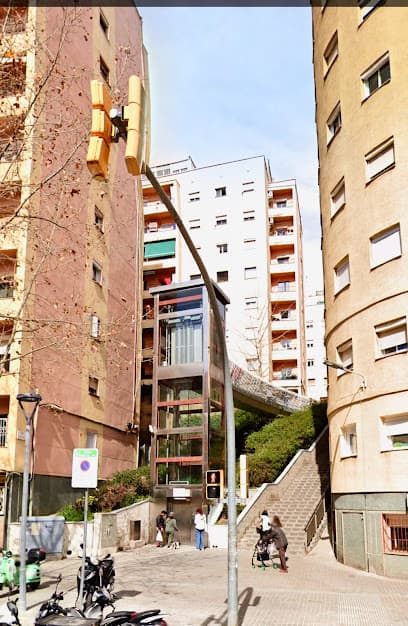
A glass-and-steel lifeline in Nou Barris that saves your knees and offers a gritty, honest view of the Barcelona tourists usually ignore. No gift shops, just gravity-defying utility.
0.0(0)
Hiking area
ATTRACTION
Carrer pimoli42
Nou Barris
The anti-tourist Barcelona. A gritty, honest stretch of Nou Barris where the Gaudí magnets disappear and the real city begins over cheap beer and the smell of rotisserie chicken.
0.0(0)
Tourist attraction
Frequently Asked Questions
Is Placa a Josep Lluís Facerias worth visiting?
Only if you are interested in the raw, political history of Barcelona. It is not a traditional tourist site with amenities, but a significant memorial for those studying the Spanish anarchist resistance.
Who was Josep Lluís Facerias?
He was a famous anarchist guerrilla fighter known as 'Face' who continued an armed struggle against the Franco regime long after the Civil War ended. He was killed at this location in a police ambush in 1957.
How do I get to the Facerias memorial?
Take the L4 Metro (Yellow Line) to the Llucmajor station. From there, it is a short walk to the intersection of Carrer del Doctor Pi i Molist and Nil Fabra in the Nou Barris district.
Reviews
0 reviews for Placa a Josep Lluís Facerias
No reviews yet. Be the first to share your experience!