4.4
70 verified reviews
About
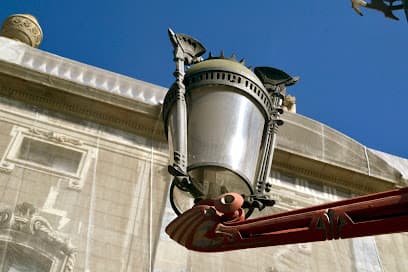
Before the soaring spires of the Sagrada Família, before the trippy curves of Casa Batlló, Antoni Gaudí was just another guy looking for a paycheck. In 1878, he landed his first official gig with the city council to design streetlights. Think about that for a second. The man who would eventually redefine the skyline of Barcelona and become the 'Architect of God' started his career by making sure people didn't trip over their own feet in the dark. These two lampposts in Pla de Palau, eventually inaugurated in 1890, are the physical evidence of a legend’s first professional steps.
You’ll find these two structures in Pla de Palau, a square that feels like it’s caught in a permanent identity crisis. On one side, you’ve got the heavy, bureaucratic weight of the Delegación del Gobierno; on the other, the salty, tourist-heavy pull of the Port Vell. Most people walk right past these things on their way to get overpriced paella by the water, never realizing they’re brushing shoulders with the first physical manifestations of a genius. If you're looking for things to do in Ciutat Vella that don't involve a queue or a ticket price, this is your spot.
These aren't the six-armed, flashy versions you see in Plaça Reial. Those are the ones that get the postcards and the Instagram filters. The Pla de Palau versions are the quieter, more industrial three-armed siblings. They’re made of wrought iron and sit on massive stone bases that look like they could survive a direct hit from a cannonball. At the top, there’s a crown—a nod to the city’s history—and the coat of arms of Barcelona. It’s Gaudí, but it’s Gaudí under restraint. You can see the hints of what’s to come—the obsession with craftsmanship, the way he manipulates metal like it’s clay—but he’s still playing by the rules here. Mostly.
Standing in Pla de Palau today, you get a sense of the old Barcelona. This was once the most important square in the city, the gateway for every merchant, sailor, and traveler arriving by sea. It’s less polished than the Gothic Quarter and less pretentious than Eixample. It’s got a bit of grime, a bit of noise, and a lot of history. The lampposts are part of that fabric. They aren't behind velvet ropes. They aren't ticketed. They’re just... there. Doing their job, standing in the middle of the urban chaos.
Is it worth the trek? If you’re a Gaudí completist, it’s a holy site. It’s the 'early demo tape' of a rock star. If you’re just looking for a pretty photo, you might be disappointed by the traffic and the lack of a gift shop. But there’s something honest about seeing art in the wild, stripped of the museum lighting and the audio guides. It’s a reminder that even the greats had to start somewhere, usually with a government contract and a deadline. It's one of the best free Gaudí sites in Barcelona precisely because it feels so un-curated.
Go at dusk. Watch the city lights flicker on and see if you can spot the difference between these and the generic modern poles nearby. Look at the ironwork and imagine a young, bearded Gaudí arguing with a blacksmith about the curve of a bracket. Then, turn around and walk into El Born for a glass of vermouth. That’s how you do Barcelona. No lines, no bullshit, just the ghosts of geniuses and a cold drink.
Type
Historical landmark, Tourist attraction
Duration
15-30 minutes
Best Time
Dusk, when the lights turn on and the port breeze kicks in.
What People Say
public lighting(4)art(2)area(2)
Features
Historical landmark
Tourist attraction
Categories
ArchitectureGaudíModernismePublic Art
Ticket Prices
Free Admission
No tickets required
Opening Hours
- MondayOpen 24 hours
- TuesdayOpen 24 hours
- WednesdayOpen 24 hours
- ThursdayOpen 24 hours
- FridayOpen 24 hours
- SaturdayOpen 24 hours
- SundayOpen 24 hours
Must-See Highlights
The wrought iron Barcelona coat of arms
The stone pedestal bases
The crown-shaped finials at the top
Visitor Tips
Don't confuse these with the 6-armed versions in Plaça Reial; these are more understated.
Combine this with a walk through the nearby El Born neighborhood for great tapas.
Look closely at the metalwork to see the early signs of Gaudí's organic style.
Good For
Architecture buffsBudget travelersGaudí completistsHistory lovers
Why Visit
Gaudí's first official commission for the city of Barcelona
Completely free to visit with no queues or crowds
Authentic industrial wrought-iron craftsmanship from 1890
Nearby Landmarks
- 5-minute walk from Santa Maria del Mar
- 2-minute walk from Port Vell
- 8-minute walk from the Picasso Museum
- 10-minute walk from Barceloneta Beach
Accessibility
- Fully accessible public square
- Flat paved surfaces
Location
Pla de Palau, 9997
Ciutat Vella, Barcelona
Nearby Hotels
Nearby Restaurants
In Ciutat Vella
ATTRACTION
Park
Ciutat Vella
A thousand years of silence tucked behind a Romanesque monastery, where the grit of El Raval dissolves into ancient stone, cool shadows, and the heavy weight of history.
0.0(0)
Park
ATTRACTION
BARSHELONA
Ciutat Vella
Forget the plastic bulls and tacky magnets. This is where Barcelona’s soul is bottled into art, a small sanctuary of local design hidden in the shadows of the Gothic Quarter.
0.0(0)
Tourist attraction
ATTRACTION
Minajoe art
Ciutat Vella
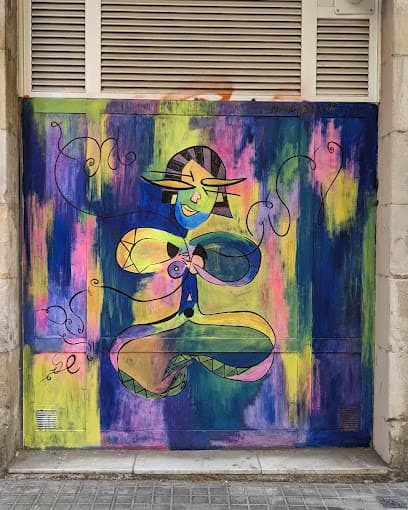
A raw, paint-splattered antidote to the sterile museum circuit. This is where pop-art meets the grit of the street, served straight from the artist’s hands in the heart of old Barcelona.
0.0(0)
Tourist attraction
Frequently Asked Questions
Is it worth visiting the Pla de Palau lampposts?
Yes, if you are an architecture enthusiast or a Gaudí fan. It is a rare chance to see his earliest work in a public, non-touristy setting without paying for a ticket.
How do the Pla de Palau lampposts differ from those in Plaça Reial?
The Pla de Palau lampposts have three arms and a more industrial look, whereas the ones in Plaça Reial have six arms and more ornate detailing. Both were designed by Gaudí as part of the same commission.
Do I need tickets to see the Gaudí lampposts?
No, they are located in a public square and are free to view 24 hours a day.
What is the best time to see them?
Dusk is the best time, as you can see the metalwork clearly before they light up, and the square feels more atmospheric as the sun sets over the port.
Reviews
0 reviews for Pla de Palau Lampposts Antoni Gaudí
No reviews yet. Be the first to share your experience!