4.2
14 verified reviews
About
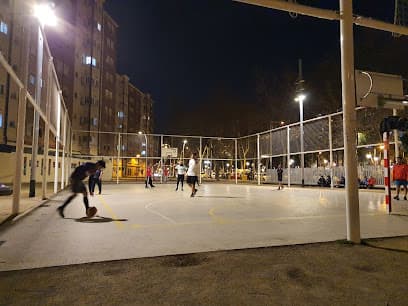
If you’ve spent your entire trip dodging selfie sticks in the Gothic Quarter, your soul probably needs a palate cleanser. You need to get on the L4 yellow line and head north, past the polished glass of Diagonal Mar, until the air starts to smell less like expensive sunblock and more like the sea and diesel. This is Rambla de Prim, the spine of a neighborhood that doesn’t give a damn about your travel itinerary. And right here, at number 171, is a simple, fenced-in rectangle of asphalt that tells you more about the city than a three-hour guided tour of a cathedral ever could.
This isn't a 'tourist attraction' in any sense that a brochure would recognize. It’s a public sports court—a pista de futbol and bàsquet. It is a cage of chain-link and iron, a theater of sweat and shouting where the stakes are nothing more than neighborhood pride and the next game on. The floor is hard, the hoops are often missing nets, and the football goals have seen better decades. But this is the socarrat of Barcelona—the crispy, burnt, flavorful bit at the bottom of the pan that everyone fights over. It’s the part of the city that is most intensely itself.
When you arrive, don't expect a welcome committee. You’ll see kids from the nearby housing blocks, immigrants from three different continents, and old men leaning against the fence with the kind of intensity usually reserved for a Champions League final. The sound is constant: the metallic *clack* of a basketball hitting the rim, the screech of rubber on concrete, and a polyglot symphony of Catalan, Spanish, and Arabic. It’s a beautiful, chaotic mess. This is where the next generation of local legends is forged, far away from the pampered academies and the bright lights of the Camp Nou.
Is it worth visiting? That depends on what you’re looking for. If you want 'charming' or 'breathtaking views,' keep walking toward the beach. But if you want to understand the social fabric of Sant Martí, sit on a nearby bench for twenty minutes. Watch the way the ball moves. Notice how the game transcends language. There is an honesty here that you can’t buy. It’s a reminder that for all its Gaudí-fied splendor, Barcelona is a working city, a place of grit and hustle.
The court is functional, brutal, and entirely necessary. It’s a pressure valve for the neighborhood. In a city that is increasingly being sold off to the highest bidder, these public spaces are the last line of defense for the people who actually live here. There are no reservations, no entry fees, and no VIP sections. You show up, you wait your turn, and you play until the sun goes down or your knees give out.
So, come here if you’re tired of the artifice. Come here to see the city breathe. It’s not pretty, it’s not comfortable, and it’s definitely not on any 'top ten' list. It’s just a patch of ground where people come to be alive. And in a world of curated experiences, that might be the most authentic thing you find in all of Barcelona. Just don't be surprised if the local twelve-year-olds make you look like a fool if you’re brave enough to step onto the court.
Type
Park
What People Say
association football goal(2)
Features
Park
Categories
SportsLocal LifeUrban CultureBasketballFootball
Opening Hours
- Monday8 AM to 10 PM
- Tuesday8 AM to 10 PM
- Wednesday8 AM to 10 PM
- Thursday8 AM to 10 PM
- Friday8 AM to 10 PM
- Saturday8 AM to 10 PM
- Sunday8 AM to 10 PM
Accessibility
- Wheelchair accessible entrance
- Flat concrete surface
Location
Rambla de Prim, 171
Sant Martí, Barcelona
Nearby
ATTRACTION
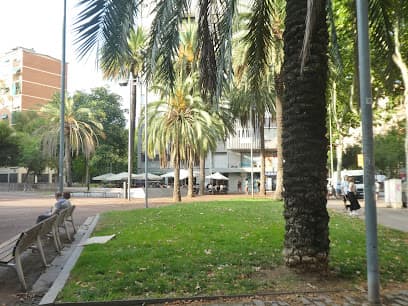
Plaça Llibertat Ródenas
100 m · Sant Martí
A gritty, concrete slab of real Barcelona named after an anarchist rebel. No Gaudí here—just strong coffee, screaming kids, and the smell of frying churros in Sant Martí.
4.0(212)
Park

ATTRACTION
Plaça de Conchita Badia 1
250 m · Sant Martí
A concrete slice of the real Sant Martí where the ghost of a legendary soprano haunts the shadows of high-rise apartments and local life unfolds without a filter.
3.7(65)
Park

RESTAURANT
Bar Moon
€€100 m · Sant Martí
A gritty, unvarnished neighborhood anchor in Sant Martí where the beer is ice-cold, the tapas are honest, and the sidewalk terrace offers a rare slice of real Barcelona life.
4.8(13)
Bar & grill
RESTAURANT
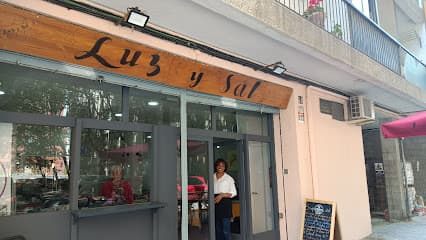
Restaurant Luz y Sal
€€100 m · Sant Martí
A no-nonsense Sant Martí sanctuary where the gazpacho is cold, the bocadillos are heavy, and the tourists are non-existent. This is the real, unvarnished Barcelona.
4.4(69)
Restaurant
HOTEL
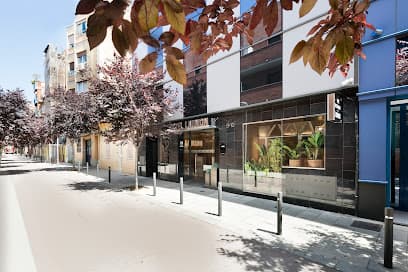
Acta Laumon
€1.1 km · Sant Andreu
A sharp, functional refuge in Sant Andreu for travelers smart enough to trade the chaos of the center for a real neighborhood and a direct metro line to the heart of the city.
4.0(658)
Hotel
HOTEL
Hotel Barcelona Condal Mar Affiliated by Meliá
€1.2 km · Sant Martí
A glass-and-steel cylinder in the tech-heavy Sant Martí, offering a rooftop escape from the Gothic Quarter’s claustrophobia and a cold drink with a view of the Mediterranean horizon.
4.1(1K)
Hotel
Frequently Asked Questions
Is the Rambla de Prim sports court free to use?
Yes, this is a public municipal facility and is completely free for anyone to use on a first-come, first-served basis.
What sports can you play here?
The court is designed for both association football (futsal style) and basketball, featuring goals and hoops at either end.
Is it safe for tourists to visit this area?
While Sant Martí is a working-class neighborhood further from the center, it is generally safe during the day. It offers a genuine look at local life away from the tourist crowds.
How do I get to the Rambla de Prim sports court?
The easiest way is via the L4 Metro (Yellow Line) to the Besòs Mar station, followed by a short walk down Rambla de Prim.
Reviews
0 reviews for Pista de futbol/bàsquet
No reviews yet. Be the first to share your experience!