4.8
13 verified reviews
About
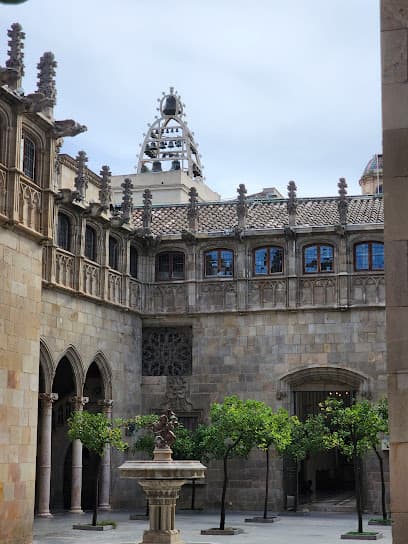
Plaça de Sant Jaume is a goddamn circus. On any given Tuesday, you’ve got protesters screaming for independence, tourists squinting at maps they don’t understand, and pigeons doing what pigeons do. It is the noisy, beating heart of Barcelona’s political life. But if you manage to slip past the heavy stone facade of the Palau de la Generalitat—the seat of the Catalan government—the world suddenly goes quiet. You find yourself in the Pati dels Tarongers, the Courtyard of the Orange Trees, and it’s like someone turned the volume of the 21st century down to zero.
This isn't just a garden; it’s a statement. Built between 1532 and 1547 by Pere Blai, this is Renaissance architecture at its most confident. While the rest of the Gothic Quarter is all dark corners and brooding stone, this courtyard is light, airy, and impossibly elegant. It’s a raised patio, an architectural flex that lifts the greenery above the street-level grime. The floor is a grid of white and grey marble, and the columns are slender, supporting arches that frame the sky. And then, of course, there are the trees. Rows of orange trees that have seen more political machinations than a season of any prestige TV drama you care to name.
When the trees are in bloom, the scent is intoxicating—a thick, sweet citrus perfume that masks the smell of old stone and bureaucracy. It’s the kind of place where you expect to see a Borgia plotting a murder or a modern-day president deciding the fate of a Mediterranean nation. In fact, this is exactly where the President of Catalonia often stands to address the people. It’s a stage for power, but one that feels human-scaled. You look up and see the gargoyles—monstrous, beautiful things carved into the stone—staring back at you, witnesses to five hundred years of stubborn Catalan identity.
Let’s be honest: getting in here isn't as easy as walking into a tapas bar. This is a working government building, not a theme park. You can’t just wander in with a half-eaten gelato and expect a tour. You have to plan. You have to look for the open house days—Sant Jordi in April is the big one, or La Mercè in September. Or you book a guided tour through the official channels. It’s a hurdle, sure, but that’s what makes it worth it. In a city that sometimes feels like it’s been sold off piece by piece to the highest bidder, the Pati dels Tarongers remains a sanctuary of genuine, un-commodified history.
Is it worth the effort? Absolutely. If you give a damn about architecture, or if you just want to feel the weight of history without a thousand selfie sticks in your peripheral vision, this is the spot. It’s a reminder that beneath the tourist-friendly veneer of Barcelona, there is a calcified core of tradition and power. It’s beautiful, it’s austere, and it smells like oranges. It’s the real deal. Just don’t try to pick the fruit; the Mossos d’Esquadra standing guard have many fine qualities, but a sense of humor about their citrus is not one of them. Come for the silence, stay for the ghosts of the men and women who built this place and the ones who still try to run it.
Type
Tourist attraction
Duration
1 hour
Best Time
During the Sant Jordi festival (April 23rd) when the palace is open to the public and decorated with roses.
Guided Tours
Available
Features
Tourist attraction
Categories
ArchitectureHistoryGovernment BuildingRenaissance
Ticket Prices
Free Admission
No tickets required
Must-See Highlights
The slender Renaissance columns and arches by Pere Blai
The rows of mature orange trees in the central patio
The Gothic gargoyles overlooking the courtyard
The marble flooring with its geometric patterns
Visitor Tips
Book your tour weeks in advance as spots are extremely limited.
Bring your ID or passport; security is tight as this is the President's office.
Visit during the 'Jornada de Portes Obertes' for a more festive, though crowded, atmosphere.
Look up at the ceiling of the surrounding galleries for intricate woodwork.
Good For
History buffsArchitecture loversQuiet seekersPolitical junkies
Why Visit
A rare Renaissance masterpiece hidden within a predominantly Gothic city center.
The literal and symbolic heart of Catalan executive power since the 16th century.
The iconic orange trees that provide a sensory, citrus-scented experience unique to the palace.
Nearby Landmarks
- Barcelona Cathedral (4-minute walk)
- Plaça del Rei (3-minute walk)
- MUHBA - Museum of the History of Barcelona (3-minute walk)
- Plaça de Sant Jaume (0-minute walk)
Accessibility
- Wheelchair accessible via specific elevators
- Guided tours can be adapted for limited mobility
Location
Pl. de Sant Jaume
Ciutat Vella, Barcelona
Nearby Hotels
Nearby Restaurants
In Ciutat Vella
ATTRACTION
Park
Ciutat Vella
A thousand years of silence tucked behind a Romanesque monastery, where the grit of El Raval dissolves into ancient stone, cool shadows, and the heavy weight of history.
0.0(0)
Park
ATTRACTION
BARSHELONA
Ciutat Vella
Forget the plastic bulls and tacky magnets. This is where Barcelona’s soul is bottled into art, a small sanctuary of local design hidden in the shadows of the Gothic Quarter.
0.0(0)
Tourist attraction
ATTRACTION
Minajoe art
Ciutat Vella
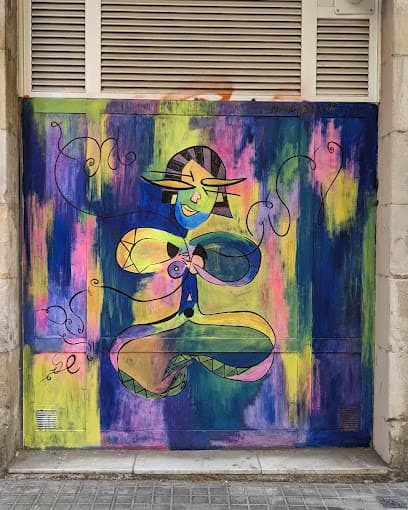
A raw, paint-splattered antidote to the sterile museum circuit. This is where pop-art meets the grit of the street, served straight from the artist’s hands in the heart of old Barcelona.
0.0(0)
Tourist attraction
Frequently Asked Questions
Is Pati dels Tarongers worth visiting?
Yes, it is one of the most beautiful Renaissance courtyards in Europe and offers a rare look inside the seat of Catalan government. It is a peaceful escape from the chaos of the Gothic Quarter.
How do I visit Pati dels Tarongers?
Access is limited as it is inside a government building. You must book a guided tour through the Generalitat's official website or visit during open house days like Sant Jordi (April 23) or La Mercè (September).
Where is Pati dels Tarongers located?
It is located inside the Palau de la Generalitat on Plaça de Sant Jaume in the heart of the Ciutat Vella (Gothic Quarter).
Is there an entry fee for Pati dels Tarongers?
Official guided tours and open house visits are typically free of charge, but they require advance registration and have very limited availability.
Reviews
0 reviews for Pati dels Tarongers
No reviews yet. Be the first to share your experience!