4.4
18 verified reviews
About
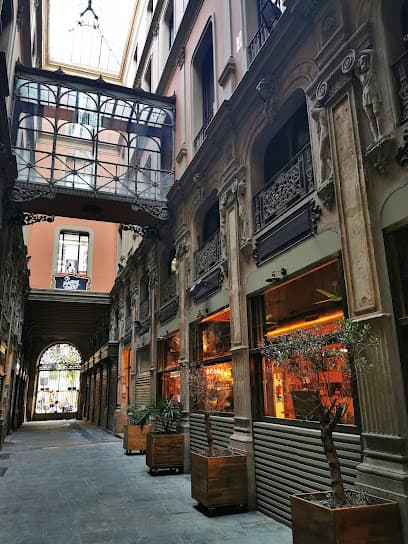
Most people walk right past it, their eyes glued to the neon misery of La Rambla or the human statues bleeding tourists dry for a selfie. They miss the entrance to Passatge de Bacardí entirely, and honestly, that’s probably how the locals like it. This isn't a destination with a gift shop and a velvet rope; it’s a forgotten artery of a Barcelona that once dreamed of being Paris. Built in 1856, it was the city’s very first covered shopping gallery, a bold statement of bourgeois sophistication in a neighborhood that was, at the time, still shaking off its medieval claustrophobia.
Step inside and the roar of the city drops by twenty decibels. It’s a jarring transition. One minute you’re dodging pickpockets and bad gelato stands, and the next, you’re standing under a skeletal canopy of iron and glass. This is the work of Francesc Daniel Molina, the same architect who gave us the grand, palm-fringed Plaça Reial just a few meters away. But where the square is public and performative, the passage feels private, almost illicit. It was commissioned by Ramon de Bacardí i de Janer—yes, of that Bacardí family—before the rum empire became a global behemoth and while the family was still deeply rooted in Catalan commerce.
For the architecture nerds, this is a holy site. It represents the first time Barcelona embraced the industrial aesthetic of the mid-19th century, using cast iron not just for support, but as a decorative element. The glass roof, though weathered and wearing a century of city soot, still filters the Mediterranean sun into a soft, melancholic amber. It’s a place that feels like it’s holding its breath. The shops that line the passage have changed over the decades, and some sections look like they’ve seen better days, but that’s the charm. It hasn't been scrubbed clean by a corporate PR firm. It’s raw, slightly peeling, and entirely real.
Walking through the Passatge de Bacardí is a lesson in urban pacing. It’s a two-minute walk that feels like a twenty-year jump back in time. You’ll see the occasional local taking a shortcut, their footsteps echoing off the stone floor, or a weary traveler who stumbled in by accident and looks confused by the sudden silence. There are no flashing lights here, no one shouting at you to buy a paella for two. It’s just stone, iron, and the weight of history. It’s one of those rare spots in the Gothic Quarter where you can actually hear yourself think.
Is it a 'must-see' in the traditional sense? Probably not if you’re looking for a thrill. But if you want to understand the DNA of Barcelona—the tension between its gritty past and its grand ambitions—you need to walk this stretch. It’s a reminder that before the city became a theme park for the world, it was a place of innovation and quiet elegance. It’s a small, beautiful fragment of a lost era, hiding in plain sight. Don’t look for it on a map; just look for the dark opening off the Rambla that looks like it leads somewhere important. Because it does.
The verdict is simple: if you’re the kind of person who finds beauty in a cracked tile or a rusted beam, this is your spot. If you want the polished, sanitized version of Spain, stay on the main drag. This passage is for the flâneurs, the history hunters, and anyone who needs a five-minute break from the 21st century. It’s free, it’s quiet, and it’s one of the few places left in Ciutat Vella that doesn’t feel like it’s trying to sell you something you don’t need.
Type
Tourist attraction
Duration
5-10 minutes
Best Time
Late morning when the sun hits the glass roof, creating beautiful light patterns on the floor.
Features
Tourist attraction
Categories
ArchitectureHistoryGothic Quarter
Ticket Prices
Free Admission
No tickets required
Opening Hours
- Monday8 AM to 7 PM
- Tuesday8 AM to 7 PM
- Wednesday8 AM to 7 PM
- Thursday8 AM to 7 PM
- Friday8 AM to 7 PM
- SaturdayClosed
- SundayClosed
Must-See Highlights
The original 1856 cast-iron support structures
The weathered glass ceiling that filters natural light
The transition from the narrow passage into the open expanse of Plaça Reial
Visitor Tips
Keep your voice down; the acoustics carry sound easily and it's a residential area above.
Look up to see the intricate ironwork that was revolutionary for its time.
Use it as a peaceful alternative to enter Plaça Reial instead of the crowded side streets.
Good For
Architecture enthusiastsHistory buffsPhotographersBudget travelers
Why Visit
Barcelona's first-ever covered shopping gallery, built in 1856
A rare example of mid-19th-century iron and glass architecture in the old city
A silent, atmospheric shortcut that bypasses the busiest sections of the Gothic Quarter
Nearby Landmarks
- 1-minute walk from Plaça Reial
- 1-minute walk from La Rambla
- 3-minute walk from Gran Teatre del Liceu
- 5-minute walk from La Boqueria Market
Accessibility
- Level ground
- Wheelchair accessible thoroughfare
Location
Passatge de Bacardí
Ciutat Vella, Barcelona
Nearby Hotels
Nearby Restaurants
In Ciutat Vella
ATTRACTION
Park
Ciutat Vella
A thousand years of silence tucked behind a Romanesque monastery, where the grit of El Raval dissolves into ancient stone, cool shadows, and the heavy weight of history.
0.0(0)
Park
ATTRACTION
BARSHELONA
Ciutat Vella
Forget the plastic bulls and tacky magnets. This is where Barcelona’s soul is bottled into art, a small sanctuary of local design hidden in the shadows of the Gothic Quarter.
0.0(0)
Tourist attraction
ATTRACTION
Minajoe art
Ciutat Vella
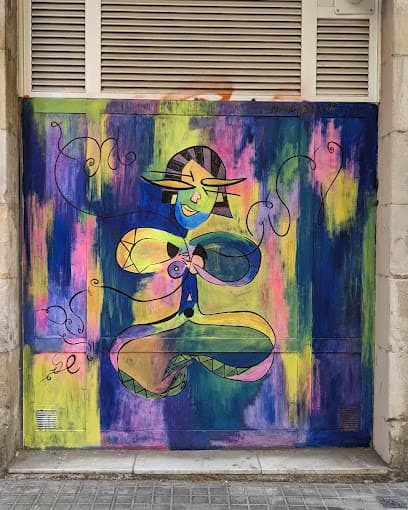
A raw, paint-splattered antidote to the sterile museum circuit. This is where pop-art meets the grit of the street, served straight from the artist’s hands in the heart of old Barcelona.
0.0(0)
Tourist attraction
Frequently Asked Questions
Is Passatge de Bacardí worth visiting?
Yes, if you appreciate 19th-century architecture and want a quiet escape from the crowds of La Rambla. It only takes a few minutes to walk through, making it an easy, free detour.
Where is the entrance to Passatge de Bacardí?
The passage connects La Rambla (near the Liceu Metro) with the corner of Plaça Reial. Look for a discreet, covered opening between the shops.
How much does it cost to enter Passatge de Bacardí?
It is a public thoroughfare and is completely free to walk through at any time during the day.
Reviews
0 reviews for Passatge de Bacardí
No reviews yet. Be the first to share your experience!