4.3
160 verified reviews
About
The wind off the Mediterranean doesn’t care about your feelings. At Parc del Camp de la Bota, it whips across vast expanses of concrete and stone with a relentless, salt-heavy indifference. This isn’t the Barcelona of postcard-perfect Gothic alleys or the whimsical curves of Gaudí. This is the edge of the world—or at least the edge of the city—where the urban fabric unravels into something harder, colder, and significantly more complicated.
You need to understand what happened here before you start judging the lack of shade. Between 1939 and 1952, this wasn't a place for jogging or taking the kids to the playground. It was a killing field. Over 1,700 people were executed by firing squads against a parapet that stood right where the sea now laps at the shore. For decades, it was a scar on the city’s soul, later becoming a sprawling shanty town known as Pekín. When the city decided to host the Universal Forum of Cultures in 2004, they paved over the pain with millions of tons of concrete and high-concept architecture.
Today, the park is a strange, atmospheric hybrid. On one hand, it’s a functional urban lung for the Sant Martí district. You’ll see skaters catching air on the smooth surfaces, runners pounding the pavement toward the Besòs river, and families colonizing the massive playgrounds. The presence of the massive Museu Blau breaks up the grey with its sharp angles, but the scale remains intimidating. It’s huge. It’s exposed. It’s the kind of place that makes you feel small, which might be exactly what the architects intended.
The anchor of the area is the Museu de Ciències Naturals de Barcelona, housed in the massive, triangular blue building known as the Edifici Fòrum. It’s a Herzog & de Meuron design that looks like a fallen chunk of the night sky, all jagged blue concrete and glass. Inside, it’s all about the 'Planet Life'—skeletons, minerals, and the slow crawl of evolution. It’s a good place to duck into when the sun gets too aggressive or the wind starts to bite.
Walking through Camp de la Bota requires a certain level of mental gymnastics. You’re standing on a site of immense tragedy that has been repurposed into a site of leisure. There’s a memorial—the 'Fraternitat' monument—but it feels quiet, almost drowned out by the sheer volume of the surrounding infrastructure. The nearby Port Fòrum adds a touch of yacht-club gloss, while the massive solar panel structure looms overhead like a giant, tilted mirror reflecting the Mediterranean sun.
Is it 'pretty'? No. Not in the traditional sense. But it is honest. It represents the Barcelona that had to reinvent itself, the city that pushed its industry and its trauma to the periphery. If you’re looking for a place to lose the tourist crowds and see how the city breathes when it’s not trying to sell you a souvenir t-shirt, this is it. Come for the history, stay for the weird, desolate beauty of the concrete coast, and maybe grab a beer at one of the nearby beach bars in El Maresme to wash down the weight of the past. It’s a place that demands you pay attention, not just to the view, but to the ground beneath your feet.
Type
City park
Duration
1-2 hours
Best Time
Late afternoon for the sunset over the Forum architecture and cooler temperatures.
What People Say
playground(3)museum(2)running(2)
Features
City park
Categories
HistoryArchitectureOutdoor ActivitiesMemorial
Ticket Prices
Free Admission
No tickets required
Opening Hours
- MondayOpen 24 hours
- TuesdayOpen 24 hours
- WednesdayOpen 24 hours
- ThursdayOpen 24 hours
- FridayOpen 24 hours
- SaturdayOpen 24 hours
- SundayOpen 24 hours
Must-See Highlights
The Memorial to the Executed (Fraternitat)
The massive Photovoltaic Cell (Solar Panel)
The 'Planet Life' exhibition at the nearby Museu Blau
The views of the Mediterranean from the concrete promenade
Visitor Tips
It gets very windy and there is almost no shade; bring sunscreen and a windbreaker.
Combine the visit with a trip to the Museu Blau or the nearby Diagonal Mar park.
The area is great for cycling or rollerblading due to the wide, flat paths.
Good For
History buffsRunners and skatersFamilies with childrenArchitecture enthusiasts
Why Visit
Historical site of the 'Parapet de les Execucions' with memorial markers
Proximity to the Herzog & de Meuron designed Museu Blau
Massive, unobstructed coastal views and sea-breeze-cooled running paths
Nearby Landmarks
- Museu de Ciències Naturals de Barcelona (2-minute walk)
- Diagonal Mar Shopping Centre (10-minute walk)
- Port Fòrum (5-minute walk)
- Platja de Llevant (8-minute walk)
Accessibility
- Fully wheelchair accessible
- Flat paved surfaces
- Accessible by public transport
Location
Ronda Litoral, 2219
Sant Martí, Barcelona
Nearby Hotels
Nearby Restaurants
In Sant Martí
ATTRACTION
LOS CERDINS HOUSE
Sant Martí
A raw, repurposed industrial relic in the heart of Sant Martí, Los Cerdins House is a testament to the neighborhood's manufacturing soul, where red-brick history meets the sharp, creative edge of modern Barcelona.
0.0(0)
Tourist attraction
ATTRACTION
Pista de frontó
Sant Martí
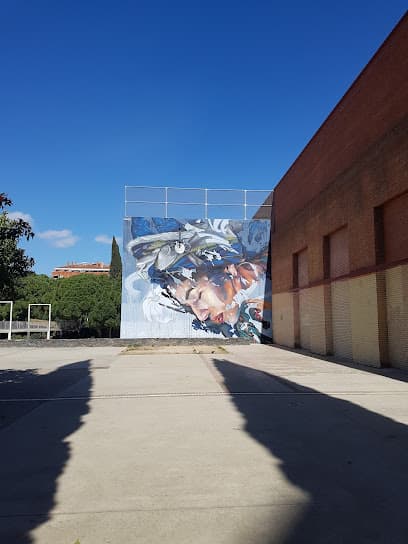
A sun-baked slab of concrete where the rhythmic thwack of a ball against stone serves as the soundtrack to a neighborhood still clinging to its gritty, industrial Poblenou soul.
0.0(0)
Park
ATTRACTION
Saraya Express
Sant Martí
A specialized travel outpost tucked away in Sant Martí. Saraya Express is where the logistics of a trip to Cairo meet the grit of Barcelona’s daily grind, far from the tourist-trap fluff.
0.0(0)
Tourist attraction
Frequently Asked Questions
Is Parc del Camp de la Bota worth visiting?
Yes, if you are interested in modern history, brutalist architecture, or need a massive open space for running or skating. It is not a traditional 'green' park, but its historical significance as a Civil War site makes it a powerful visit.
What is the history of Camp de la Bota?
It was primarily known as an execution site during the Franco regime, where over 1,700 people were shot. It later became a shanty town before being completely transformed for the 2004 Universal Forum of Cultures.
How do I get to Parc del Camp de la Bota?
The easiest way is via the L4 Metro line to El Maresme | Fòrum or the T4 Tram to the Fòrum stop. It is also easily accessible by bike along the coastal path.
Are there things for kids to do at the park?
Absolutely. The park features several large, modern playgrounds and plenty of open space for bikes and scooters, making it a popular spot for local families.
Reviews
0 reviews for Parc del Camp de la Bota
No reviews yet. Be the first to share your experience!