4.7
30 verified reviews
About
If you’re looking for manicured rose bushes and quaint gravel paths where you can feed pigeons, turn around and go back to the Ciutadella. The Parc de la Plaça del Fòrum isn’t that kind of park. It’s a vast, unapologetic expanse of concrete and steel, a 14-hectare slab of urban ambition that feels like the flight deck of an aircraft carrier docked at the edge of the Mediterranean. Built for the 2004 Universal Forum of Cultures, this place is a polarizing piece of Barcelona’s soul—a brutalist playground that some call a white elephant and others call a masterpiece of modern design.
When you arrive at this end of the Diagonal, the first thing that hits you isn’t the smell of flowers, but the salt air and the sheer scale of the thing. Dominating the skyline is the Pérgola Fotovoltaica, a massive, tilted solar panel that looks like a fallen monolith from a more advanced civilization. It’s the size of a football pitch, suspended in the air, casting long, geometric shadows across the pavement. Standing under it, you feel small, which is exactly what good architecture should do. It’s one of the most photographed things to do in Sant Martí, but photos don’t capture the way the wind whistles through the structure on a blustery day.
This isn't just a place to stare at concrete. It’s home to the Museu de Ciències Naturals de Barcelona, housed in the striking blue triangular building designed by Herzog & de Meuron. It’s a low-slung, brooding structure that seems to float above the ground. Inside, it’s a deep dive into the natural world, but the building itself is the real specimen. If you’re wondering if Parc del Fòrum is worth visiting, the answer depends on your tolerance for the industrial. If you appreciate the intersection of the city and the sea without the filter of palm trees and sand, this is your spot.
Down by the water, you’ll find the Zona de Banys. Forget the crowded, tourist-choked sands of Barceloneta. Here, the 'beach' is a series of concrete tiers leading directly into the deep blue. It’s a saltwater swimming pool carved out of the sea, where locals come to do laps or bake on the hot stone. There’s no sand in your shoes, no chiringuitos blasting bad house music—just you, the sun, and the water. It’s honest. It’s functional. It’s very Barcelona.
Of course, most people know this place as the heart of Barcelona’s festival circuit. When Primavera Sound or Cruïlla rolls into town, this concrete desert transforms into a pilgrimage site for thousands of music fans. There is something visceral about watching a band play as the sun sets over the Mediterranean, the industrial cranes of the nearby port framing the stage. It’s loud, it’s crowded, and it’s magnificent.
Is it flawed? Absolutely. On a mid-August afternoon, the heat reflecting off the pavement can feel like a physical assault. There’s precious little shade once you move away from the museum or the solar panel. It can feel lonely when there’s no event happening, a ghost town of 21st-century planning. But that’s the charm. It’s a break from the theme-park feel of the Gothic Quarter. It’s a place where you can breathe, where the horizon is wide, and where the city finally stops trying to sell you a postcard version of itself. It’s the best park in Barcelona for people who hate traditional parks.
Type
Park
Duration
1-2 hours
Best Time
Late afternoon to catch the sunset over the water and avoid the midday heat on the concrete.
What People Say
museum(3)shadow(2)
Features
Park
Categories
ArchitectureContemporary ArchitecturePublic SpaceEvents Venue
Ticket Prices
Free Admission
No tickets required
Opening Hours
- MondayOpen 24 hours
- TuesdayOpen 24 hours
- WednesdayOpen 24 hours
- ThursdayOpen 24 hours
- FridayOpen 24 hours
- SaturdayOpen 24 hours
- SundayOpen 24 hours
Must-See Highlights
The giant solar panel (Pérgola Fotovoltaica)
The 'Blue Building' architecture of the Natural Science Museum
The concrete bathing area with sea access
The view of the Mediterranean from the main esplanade
Visitor Tips
Bring sunscreen and a hat; there is almost no natural shade on the main plaza.
Check the event calendar before going, as large sections are often closed for music festivals.
Visit the bathing area if you want to swim without dealing with sand.
Good For
Architecture enthusiastsSkatersPhotographersMusic festival fansFamilies visiting the museum
Why Visit
Iconic Pérgola Fotovoltaica solar structure
Sand-free seawater bathing area (Zona de Banys)
Home to the Herzog & de Meuron designed Blue Museum
Nearby Landmarks
- Museu de Ciències Naturals de Barcelona (2-minute walk)
- Diagonal Mar Shopping Centre (8-minute walk)
- CCIB - Centre de Convencions Internacional de Barcelona (5-minute walk)
- Port Fòrum (10-minute walk)
Accessibility
- Fully wheelchair accessible
- Flat paved surfaces
- Elevators in the museum area
- Accessible bathing ramps
Location
Unnamed Road, 08019
Sant Martí, Barcelona
Nearby Hotels
Nearby Restaurants
In Sant Martí
ATTRACTION
LOS CERDINS HOUSE
Sant Martí
A raw, repurposed industrial relic in the heart of Sant Martí, Los Cerdins House is a testament to the neighborhood's manufacturing soul, where red-brick history meets the sharp, creative edge of modern Barcelona.
0.0(0)
Tourist attraction
ATTRACTION
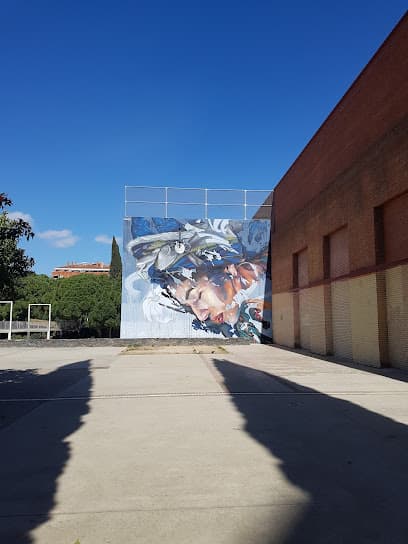
Pista de frontó
Sant Martí
A sun-baked slab of concrete where the rhythmic thwack of a ball against stone serves as the soundtrack to a neighborhood still clinging to its gritty, industrial Poblenou soul.
0.0(0)
Park
ATTRACTION
Saraya Express
Sant Martí
A specialized travel outpost tucked away in Sant Martí. Saraya Express is where the logistics of a trip to Cairo meet the grit of Barcelona’s daily grind, far from the tourist-trap fluff.
0.0(0)
Tourist attraction
Frequently Asked Questions
Is Parc de la Plaça del Fòrum worth visiting?
Yes, if you appreciate brutalist architecture, massive urban spaces, or want to visit the Natural Science Museum. It's not a traditional green park, but its scale and seaside location make it unique.
What is the big yellow structure at Parc del Fòrum?
It is a massive photovoltaic (solar) panel, one of the largest in Europe, designed to symbolize Barcelona's commitment to sustainability during the 2004 Forum of Cultures.
Can you swim at Parc del Fòrum?
Yes, there is a designated 'Zona de Banys' which is a paved bathing area with direct access to seawater, offering a sand-free alternative to traditional beaches.
How do I get to Parc del Fòrum?
The easiest way is via the L4 Metro (Yellow Line) to the El Maresme | Fòrum station, or by taking the T4 tram.
Reviews
0 reviews for Parc de la Plaça del Fòrum
No reviews yet. Be the first to share your experience!