
4.3
3 verified reviews
About
Forget the whimsical chimneys of Casa Milà for a second. Forget the curated, ticketed perfection of Park Güell in nearby La Salut, where every inch of stone has been buffed for a postcard. If you want to see how Barcelona actually functions—how it breathes, screams, and scrapes its knees—you have to go to places like the Parc de Jocs infantils on Carrer de la Farigola. This isn't a 'destination.' It’s a neighborhood utility, a concrete-and-rubber sanctuary for the parents of Vallcarca who are just trying to get through the afternoon without a meltdown.
Located in the steep, gravity-defying northern reaches of the Gràcia district, this playground is a far cry from the boutique-lined streets of the Vila de Gràcia. This is Vallcarca, a neighborhood that feels like it’s clinging to the side of a mountain by its fingernails. To get here, you’re going to sweat. You’re going to hike up streets that make your calves scream, passing graffiti that actually means something and apartment blocks where laundry hangs like urban flags.
The park itself is simple. It’s got the standard-issue equipment: a couple of swings that have seen better days, a slide that gets blisteringly hot in the July sun, and that ubiquitous recycled rubber flooring that smells faintly of old tires and industrial progress. But the setting is what hits you. You’re sitting in the literal shadow of the Viaducte de Vallcarca, a massive, imposing piece of early 20th-century engineering that looms over the valley like a concrete titan. It’s a reminder that this city was built on sweat and stone, not just tourism euros.
There is a profound lack of pretension here. You won't find a gift shop selling miniature mosaics. You won't find a kiosk charging five euros for a lukewarm bottle of water. What you will find are local grandmothers—the 'iaias'—sitting on benches with the posture of queens, watching their grandkids with hawk-like intensity. You’ll hear the rapid-fire staccato of Catalan, the rhythmic thud of a football against a fence, and the occasional argument over who’s been on the swings for too long. It is a cacophony of real life, unedited and unapologetic.
Is it 'worth visiting' for the average tourist? Probably not. If you’re on a three-day sprint to see every Gaudí building, stay away. You’ll find it boring, maybe even a little bleak. But if you’re traveling with kids who are tired of being told not to touch the art, or if you’re a traveler who finds more beauty in a well-used public space than a sanitized museum, this is your spot. It’s a place to sit, breathe the slightly cooler air of the hills, and realize that the best parts of Barcelona aren't the ones you pay to enter. They’re the ones where the locals let their guard down.
Coming here is an exercise in cultural excavation. You’re seeing the resistance of a neighborhood that has fought hard against gentrification and neglect. The park is clean but worn, loved but used. It’s a testament to the fact that even in a city as globalized as Barcelona, the local 'barrio' still reigns supreme. Grab a cheap coffee from a nearby bodega, find a patch of shade, and watch the sun dip behind the hills. It’s not a fever dream; it’s just Tuesday afternoon in Gràcia, and that’s more than enough.
Type
Park
What People Say
swings(2)
Features
Park
Categories
PlaygroundFamily FriendlyLocal Life
Accessibility
- Steep street access
- Flat rubberized play surface
- Benches available
Location
Carrer de la Farigola, 66
Gràcia, Barcelona
Nearby
ATTRACTION
Hort de Turull
100 m · Gràcia
A rugged, dirt-under-the-fingernails community garden where Gràcia’s elders grow tomatoes and sanity, a defiant green sanctuary far from the selfie-stick circus of Park Güell.
0.0(0)
Community garden
ATTRACTION
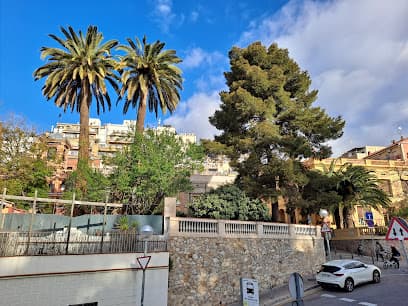
Arbre centenari catalogat "Pi Josep"
150 m · Gràcia
A massive, century-old stone pine towering over a quiet Gràcia street, a silent survivor of the city's concrete sprawl that most tourists walk right past without a second glance.
4.8(5)
Arboretum
RESTAURANT
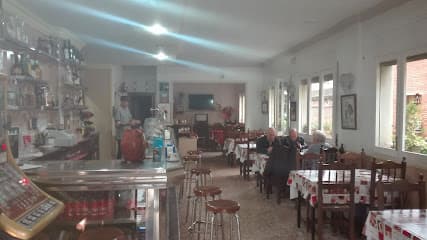
Bar Restaurant El Rincón del Cazador
€€300 m · Gràcia
A gritty, no-nonsense refuge in the hills of Gràcia where the beer is cold, the snails are spicy, and the menu del día is a middle finger to overpriced tourist traps.
4.1(176)
RestaurantBeer store
RESTAURANT
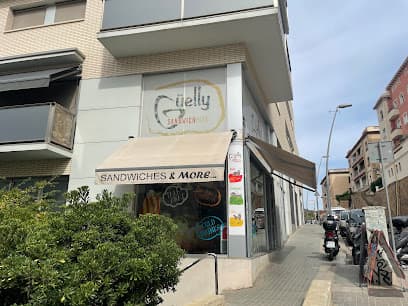
Güelly sandwichpark
€350 m · Gràcia
An honest, no-bullshit refuge near Park Güell where the empanadas are hot, the beer is cold, and the owner actually gives a damn about your lunch. Grab a bag and head up the hill for a proper picnic.
4.7(469)
RestaurantFast food restaurant

HOTEL
Hotel Catalonia Park Güell
€250 m · Gràcia
Perched on the steep hills above the tourist fray, this is where you trade the chaos of the Ramblas for a rooftop pool and a view of Tibidabo’s neon glow.
3.9(2K)
HotelRestaurant
HOTEL
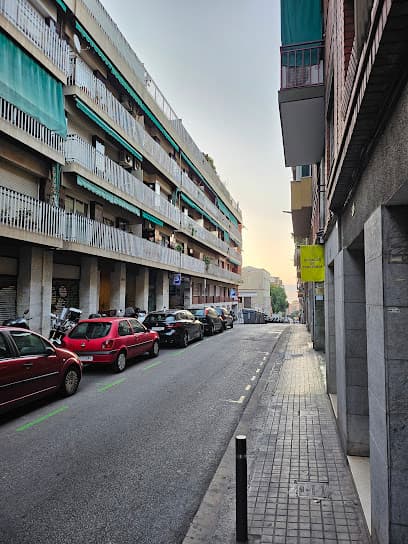
Rocket Hostels - Gràcia
€550 m · Gràcia
Forget the sweaty dorms of your youth; this is Gràcia’s space-age sanctuary where privacy curtains and communal dinners prove that budget travel doesn't have to be a total dumpster fire.
4.3(269)
Hostel
Frequently Asked Questions
Is Parc de Jocs infantils worth visiting?
Only if you are traveling with children and need a break from the tourist crowds. It is a standard local playground, not a major sightseeing attraction, but it offers an authentic look at neighborhood life.
How do I get to the playground on Carrer de la Farigola?
Take the L3 Metro (Green Line) to the Vallcarca station. From there, it is a steep 5-10 minute walk uphill. Be prepared for significant inclines.
What is near this park?
The park is located directly near the impressive Viaducte de Vallcarca and is a 15-minute walk from the back entrance of Park Güell in the neighboring La Salut district, making it a good 'decompression' stop after visiting the monument.
Reviews
0 reviews for Parc de Jocs infantils
No reviews yet. Be the first to share your experience!