About
The Raval is a punch to the face. It’s a neighborhood that doesn’t care if you like it or not. It’s loud, it’s crowded, and it smells of frying oil, stale beer, and the frantic energy of a thousand different cultures colliding in narrow, sun-starved streets. But then, you turn into Carrer del Carme, 47, and the world suddenly goes quiet. You’ve stepped into the Jardins de Rubió i Lluch, and if you have any soul left in you, you’ll feel the temperature drop and your heart rate slow.
This isn’t a park in the way a suburbanite thinks of one. There are no manicured lawns or 'keep off the grass' signs. This is a courtyard of the Antic Hospital de la Santa Creu, a complex of 15th-century Gothic buildings that served as the city’s main hospital for half a millennium. It’s a place of heavy stone, soaring arches, and a history so thick you can almost taste it. When you walk through those gates, you’re walking into the old Barcelona—the one that existed long before the cruise ships started vomiting thousands of people onto La Rambla every morning.
In the center of the courtyard, orange trees provide a canopy of green and gold. You’ll see students from the Escola Massana art school sitting on the ground, charcoal-stained fingers flying across sketchbooks. You’ll see old men sitting on tiled benches, staring into the middle distance, and locals hiding from the midday heat with a book from the Biblioteca de Catalunya, which occupies one of the grand stone halls. It’s one of the best things to do in El Raval if you actually want to see how the city breathes when it thinks no one is looking.
There is a specific kind of melancholy here, too. This is where Antoni Gaudí died in 1926. Not as the celebrated architect of the Sagrada Familia, but as an old man mistaken for a beggar after being struck by a tram. He was brought here, to the hospital for the poor, and he drew his last breath within these walls. That weight—the intersection of genius and tragedy—hangs in the air, grounding the place in a way that the shiny, renovated parts of the city can’t match.
If you’re looking for hidden spots near La Rambla, this is the ultimate prize. You can sit at the small café, El Jardí, tucked into a corner of the courtyard. The chairs are mismatched, the service can be leisurely (to put it politely), and the prices are higher than the dive bars outside the walls, but you’re paying for the privilege of sitting in a space that feels untouched by the 21st century. It’s where you nurse a vermut while watching the light shift across the weathered stone.
Is Jardins de Rubió i Lluch worth it? Absolutely. But don't come here if you're looking for a checklist attraction. Come here if you want to sit still. Come here if you want to see the scars of the city. It’s a reminder that even in a city as hyper-commercialized as Barcelona has become, there are still pockets of silence and shadows where the past refuses to be paved over. It’s honest, it’s beautiful, and it’s exactly what you need after an hour of fighting the crowds on the main drag.
Type
Park
Duration
45-60 minutes
Best Time
Late morning or late afternoon when the light hits the Gothic arches and the student crowd is sketching.
Features
Park
Categories
HistoryArchitectureGothicGardens
Ticket Prices
Free Admission
No tickets required
Must-See Highlights
The Gothic arches of the old hospital cloisters
The tiled benches depicting historical scenes
The entrance to the Biblioteca de Catalunya
The orange tree grove in the central courtyard
Visitor Tips
Enter through Carrer de l'Hospital for a more dramatic reveal of the architecture.
Grab a coffee at El Jardí café inside the courtyard, but be prepared for slow service.
The library inside is worth a peek if you can maintain total silence.
Good For
History buffsArchitecture loversBudget travelersSolo travelers looking for peace
Why Visit
15th-century Gothic hospital courtyard
Site of Antoni Gaudí's final days
Home to the magnificent Biblioteca de Catalunya
Nearby Landmarks
- 5-minute walk from La Boqueria Market
- 5-minute walk from MACBA (Museum of Contemporary Art)
- 6-minute walk from Gran Teatre del Liceu
Accessibility
- Wheelchair accessible courtyard
- Flat stone paving
- Accessible entrance from Carrer de l'Hospital
Location
Carrer del Carme, 47
Ciutat Vella, Barcelona
Nearby Hotels
Nearby Restaurants
In Ciutat Vella
ATTRACTION
Park
Ciutat Vella
A thousand years of silence tucked behind a Romanesque monastery, where the grit of El Raval dissolves into ancient stone, cool shadows, and the heavy weight of history.
0.0(0)
Park
ATTRACTION
BARSHELONA
Ciutat Vella
Forget the plastic bulls and tacky magnets. This is where Barcelona’s soul is bottled into art, a small sanctuary of local design hidden in the shadows of the Gothic Quarter.
0.0(0)
Tourist attraction
ATTRACTION
Minajoe art
Ciutat Vella
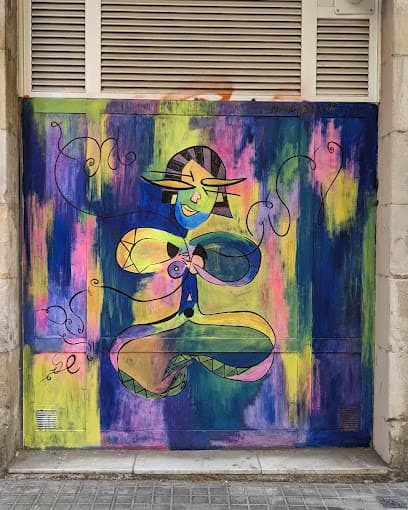
A raw, paint-splattered antidote to the sterile museum circuit. This is where pop-art meets the grit of the street, served straight from the artist’s hands in the heart of old Barcelona.
0.0(0)
Tourist attraction
Frequently Asked Questions
Is Jardins de Rubió i Lluch worth visiting?
Yes, it is one of the most peaceful and historically significant courtyards in Barcelona. It offers a rare escape from the chaos of the city center and houses the beautiful Biblioteca de Catalunya.
Do I need tickets for Jardins de Rubió i Lluch?
No, the gardens are a public space and entry is completely free. You can walk in during daylight hours to enjoy the courtyard and the architecture.
What is the history of this site?
This was the site of the Hospital de la Santa Creu from the 15th century until 1926. It is famously where Antoni Gaudí was taken and died after his tram accident.
How do I get to Jardins de Rubió i Lluch?
The gardens are located at Carrer del Carme, 47. The easiest way to get there is a 5-minute walk from the Liceu Metro station (L3) on La Rambla.
Reviews
0 reviews for Płac do odwiedzenia
No reviews yet. Be the first to share your experience!